The Game Plan:
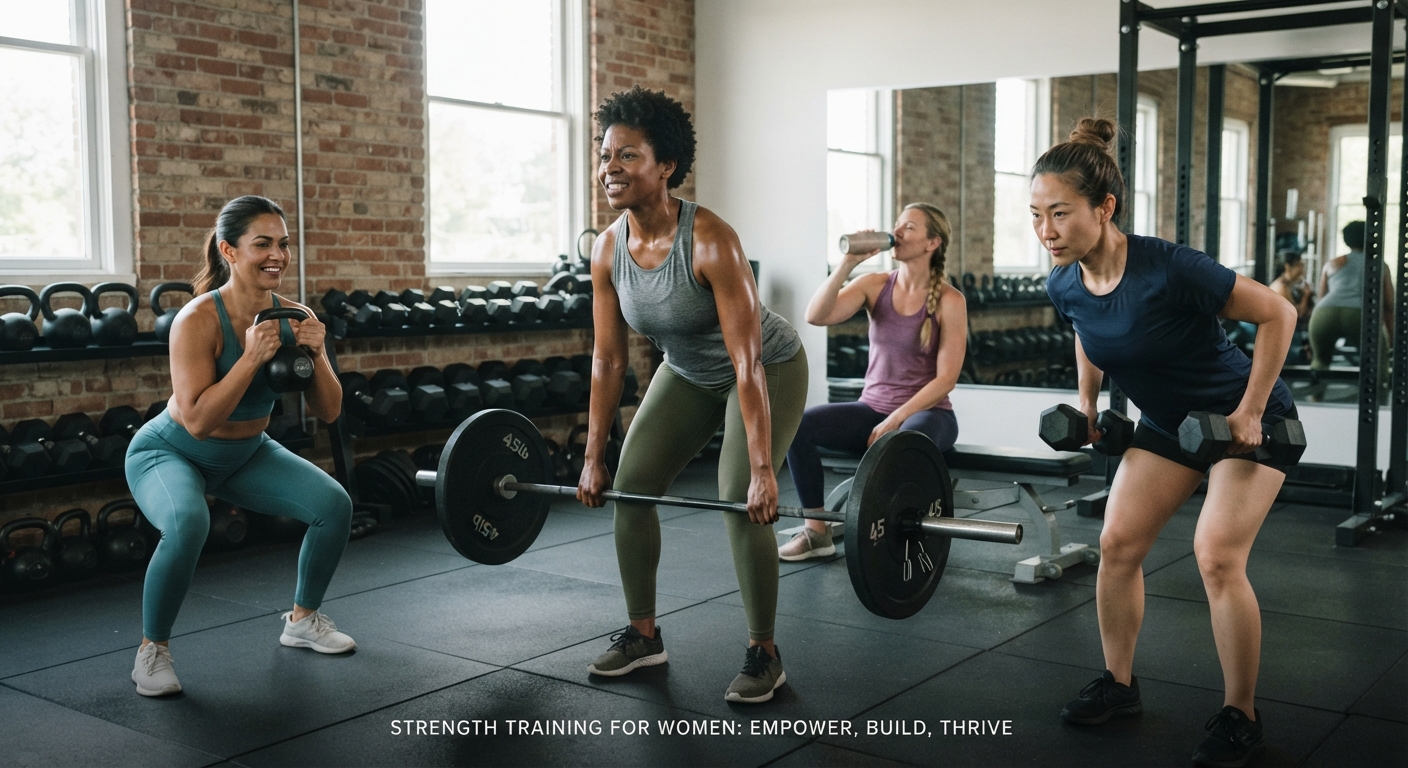
For women over 40, lifting can make a real difference in how you change your body, get fit, and see better results from your effort. Strength training is beneficial for people of all ages, but it becomes especially useful as women get older. In your 40s and forties, starting strength training with simple strength movements can help rebuild muscle, speed up metabolism, and support your body as it changes.
Muscle and bone naturally need more attention after 40, and resistance training is an effective tool for holding onto muscle and holding onto bone while also helping you burn calories. In everyday life, that can mean stronger knees on the stairs, and making lifting a suitcase into an overhead locker feel less demanding.
A practical starting point is two workouts a week using manageable, full-body workouts that train your major muscle groups. Give yourself enough recovery time, then gradually increase the weight or repetitions when the movements feel easier. The goal is to feel comfortable and keep going, rather than turning every session into a test of willpower.
How To Get Started with Strength Training?
If you are new, returning after a long break, or simply unsure where to begin, keep strength training simple and focus on consistency before intensity. For women over 40, beginner-friendly bodyweight exercises such as squats, lunges, step-ups, and wall push-ups are useful for learning good technique and controlled movement while building strength safely. In the early stages, a chair or wall can provide support, balance, and confidence.
As strength develops, gradually progress to challenging variations, such as adding weight to squats, trying floor push-ups, or using a stair climber machine. Resistance bands are another practical choice because they provide consistent tension, encourage muscle engagement, and reduce excessive strain on the joints. They are versatile, portable, easy to adjust, and well suited to home-based training.
I usually recommend focusing on full-body workouts with minimal equipment and movements that resemble daily life. Practice pushing, pulling, hinging, squatting, and carrying at a pace that feels challenging but manageable; this is the foundation of functional strength training and works multiple muscle groups at once. If the gym or weights feel daunting, a Personal Trainer or weight based fitness class can make the weight training journey easier and introduce new exercises while reducing gym nerves.
What Are the Benefits of Strength Training for Women Over 40?
- Preserves muscle mass: After 30, women can lose around 3-8% of muscle mass per decade, with losses often increasing after menopause. Regular strength training can help increase muscle mass, support muscle strength, and combat age-related muscle loss, also known as sarcopenia.
- Improves bone density: Strength exercises provide load-bearing movement that supports bone health. This is particularly important after menopause, when lower oestrogen levels can increase bone loss and the risk of osteoporosis.
- Supports heart health: Weight training can support healthier blood pressure, cholesterol profiles, and blood sugar levels, helping protect against some chronic diseases, including type 2 diabetes and CVD.
- Supports metabolic health: More muscle mass can contribute to a higher metabolism and better metabolic efficiency, helping the body use energy more effectively. This can also support weight management without making exercise solely about calories.
- Makes everyday activities easier: Building more strength can make day to day activities such as carrying shopping, moving furniture, and other daily tasks feel easier. This helps you stay independent, in shape, and confident in your ability to handle normal life.
- Improves joint stability and posture: Stronger muscles can provide better joint stability and support posture, making everyday activities more comfortable and controlled.
- Helps protect against falls: Maintaining muscle strength, balance, and control can increase protection against falls as you age, supporting independence and helping you remain capable in daily life.
- Enhances sleep quality: Strength training can improve sleep quality and sleep duration, which may be especially useful when sleep becomes more difficult during and after menopause.
- Boosts mood and confidence: Regular physical activity can help boost mood, relieve stress, and improve confidence. A consistent routine can also support the emotional aspects of getting older.
- Helps you stay independent: Strength follows a simple use it or lose it principle. Regular resistance exercise helps you maintain strength, bone health, posture, and the ability to handle life independently as you continue getting older.
Best Strength Training Exercises for Women Over 40
The best strength training exercises for women over 40 do not need to be complicated. I prefer functional movements that train several muscles together and make normal tasks such as getting up, climbing stairs, lifting, reaching, and carrying easier.
1. Romanian Deadlift (RDL)
The RDL is a hip-hinge movement that can be done with dumbbells or a barbell. It is especially useful for women over 40 because it teaches the hip hinge, strengthens the hamstrings and glutes, and helps prevent the lower back from compensating during lifting.
- Stand with dumbbells or a barbell in front of your legs.
- Keep your back flat and slowly push your hips backward while lowering weight along your legs.
- Keep a slight bend in your knees and stop when you feel your hamstrings stretch.
- Drive your hips forward and return to standing.
- Keep your core engaged throughout the movement.
2. Dumbbell Row
The dumbbell row is a pulling movement that builds a strong upper back. This can be particularly helpful if a desk job leaves you with a weak upper back, rounded shoulders, neck pain, or upper back tension.
- Hold a dumbbell and bend at the hips, keeping your back stable.
- Let the weight move toward the floor, then pull it toward your hip.
- Keep your elbow close to your body as you row.
- Lower the dumbbell slowly and repeat.
- Focus on the back muscles rather than using momentum.
- Keep the movement slow and controlled.
- The exercise can help pull the shoulders into a more correct position and support better posture.
3. Glute Bridge
The glute bridge is a simple floor exercise that works the glutes, hamstrings, and core. It is useful for women who spend many hours sitting because prolonged sitting can make it harder to feel the glutes firing properly. Some coaches call this gluteal amnesia, where the glutes become less active after being sat on for long periods.
- Start by lying on your back with your knees bent and feet on the floor.
- Keep your feet stable and drive your hips toward the ceiling.
- Focus on squeezing glutes at the top.
- Pause briefly, then lower your hips with control.
- Keep your core involved instead of allowing your lower back to take over.
4. Squat and Goblet Squat
The squat is one of the most useful functional movement patterns in human movement. You perform some version of it whenever you sit down, stand up, or get in and out of a car. A goblet squat, using a dumbbell or kettlebell held at your chest, is an easy way to learn the pattern while keeping an upright torso.
- Hold a dumbbell or kettlebell at your chest.
- Stand with your feet in a comfortable position.
- Engage core and lower your hips as though you are going to sit down.
- Keep your chest lifted and maintain an upright torso.
- Drive through your feet to return to standing.
- Keep your knees tracking over your feet rather than allowing them to move inward.
- Think about pushing your knees gently toward your pinky toes during the descent.
5. Lunges
Lunges are useful for training unilateral movements, meaning one side works more independently than the other. This single legged pattern has practical value because walking, climbing stairs, and getting up from the floor all require each leg to contribute separately.
- Stand tall with your feet under you.
- Step forward with one foot.
- Lower straight down until both knees are close to 90 degrees.
- Keep your back knee hovering just above the floor.
- Push through your front heel to return to standing.
- Repeat on the opposite side.
- If balance is difficult, hold a chair or wall while learning the movement.
- Take a slightly longer step so your front shin remains close to vertical.
- A short step can push the knee forward and place more load on the joint instead of the muscle.
6. Step-Ups
Step-ups are another practical unilateral exercise that closely resembles climbing stairs or getting up from the floor. They can be performed with or without weights, making them useful for building leg strength at home.
- Stand facing a sturdy box or step.
- Place one whole foot securely on top.
- Drive through that leg to stand up on the box.
- Bring the other foot through and stand tall.
- Step down under control rather than dropping quickly.
- Repeat while alternating the leading leg.
- Start with a step around knee height or lower.
7. Floor Dumbbell Press
The floor press is a useful chest exercise that can be performed at home, and no bench is needed. The floor limits how far your arms travel behind you, which can make the movement more comfortable for people with cranky shoulders.
- Lie on the floor with your knees bent.
- Hold a dumbbell in each hand at chest level.
- Keep your palms facing forward.
- Press the weights upward until your arms are extended.
- Lower them slowly until your upper arms touch the floor.
- Pause briefly before pressing again.
- The floor stops your arms from travelling too far backward.
- This can be a useful starting point if pressing has bothered your shoulders in the past.
- The controlled movement can build upper-body pressing strength without requiring a bench.
8. Shoulder Press
The shoulder press, also called a standing press, seated press, or overhead press, trains the ability to push weight from shoulder height to overhead. Strong shoulders can support useful upper-body strength, while avoiding pressing altogether may contribute to shoulder instability and reduced upper body strength.
- Sit or stand while holding dumbbells at shoulder height.
- Keep your palms facing forward.
- Press both weights overhead until your arms are extended.
- Lower them under control back to shoulder height.
- Brace core and squeeze glutes when standing.
- Avoid arching your lower back to compensate for limited shoulder movement.
- If your back tends to arch, a supported back position while seated can be a better place to start.
9. Lateral Raise
The lateral raise focuses on the shoulder muscles and works best when you use light resistance rather than trying to lift as much as possible.
- Stand with a dumbbell in each hand at your sides.
- Keep a slight bend in your elbows.
- Raise your arms out to the sides until they reach about shoulder height.
- Lead with your elbows rather than your hands.
- Lower the weights slowly.
- Use controlled reps instead of swinging the weights.
- Light dumbbells are usually enough for this exercise.
- If you are swinging the weights upward, you are relying on momentum rather than making the shoulders do the work.
10. Calf Raise
Calf raises are simple but useful for lower-leg strength and can be performed with bodyweight before adding resistance.
- Stand with the balls of your feet on the edge of a step.
- Allow your heels to hang slightly off the edge.
- Rise onto your toes as high as you can.
- Pause at the top.
- Lower your heels slowly below the level of the step for a full stretch.
- Take about three seconds during the slow lower.
- Hold a wall for balance while learning the movement.
- Once body weight becomes easy, hold a dumbbell in your free hand.
- The controlled lowering phase is where much of the training benefit comes from.
Common Concerns and How to Overcome Them
- “Strength training will make me bulky.” Building bulky muscle mass and a large muscular frame usually requires years of consistency, patience, intense training, and suitable nutrition. For many women, hormones also make significant muscle gain more difficult. Over 40 female weight training can instead support a toned physique, better strength, and healthier body fat levels.
- “I’m too old to start.” Research shows that adults can build muscle and improve strength at any age. As we get older, regular resistance training becomes especially useful for helping increase strength and muscle mass and supporting the body against age related declines. Learning new skills and techniques can also provide benefits for cognitive health.
- “Strength training is bad for my joints.” Done correctly, resistance exercise can strengthen the supporting muscles around the joints. If joint pain is a concern, you may want to limit high impact exercises, choose suitable movements, and progress gradually. Proper strength work can help alleviate joint pain and prevent joint pain in some people.
- “I don’t have enough time.” Strength training does not need to be time consuming. Just two to three 30 minute sessions per week can provide a practical routine and help you work toward meaningful results without taking over your schedule.
- “I’m worried about injury.” This is a common concern with weight training over 40, but smart programming can reduce risk. Choose an appropriate load, begin starting light, use good technique and proper form, focus on controlled movement, and keep progressing gradually rather than rushing to heavier weights.
- “I feel too old to make a start.” Beginners in their 40s, 50s, or beyond can respond positively to resistance training. Starting at a level that feels manageable is not only possible but can be actively encouraged when the goal is to build long-term strength and confidence.
- “I don’t know where to begin.” You do not need a complicated programme or gym membership. Body weight exercises, resistance bands, and a few simple core exercises can provide a useful starting point. Begin with a small number of movements, build confidence and consistency, then try new movements to discover what works best for you.
Supporting Your Training With Nutrition & Supplements
Strength training and nutrition work best together because your body needs adequate fuel for recovery and adaptation. From my experience, keeping meals simple and consistent often works better than chasing a perfect diet: sufficient protein intake supports muscle maintenance and muscle repair, while a balanced diet with carbohydrates and healthy fats provides the energy you need to train consistently. Staying well hydrated is also important for physical performance and joint comfort.
A varied diet should remain the foundation of balanced nutrition, while supplements can provide additional support when appropriate. They are complementary, not essential, and should support overall nutrition rather than replace a good diet.
Collagen is a structural protein found throughout connective tissues, including the joints, tendons, ligaments, muscles, and bones. With aging, natural collagen production declines, which may affect joint comfort and tissue resilience. People doing regular strength training sometimes use collagen from dietary sources or supplements to support connective tissue alongside muscle development; Vitamin C contributes to normal collagen formation.
Other options include protein powder for increased protein needs and muscle recovery, Vitamin D and calcium for bone health, Omega-3 fatty acids for supporting exercise inflammation management and joint health, and magnesium for muscle function, energy production, recovery, and better sleep. Creatine monohydrate is another well-studied option that may support strength and performance.
Summary
For women over 40, strength training after 40 works best when you focus on working with your body rather than working against your body. From my experience with practical fitness planning, shorter workouts and smarter equipment can make it easier to stay consistent and support longevity without making exercise feel overwhelming. The goal is to become stronger, healthier, and comfortable with looking strong while staying healthy, well-rested, and balanced, especially during menopause and after menopause.
A conscientious approach to exercise, nutrition, and recovery supports overall health and helps you find a rhythm that lets you build muscle while feeling your best. Instead of chasing quick changes, prioritize well-being, feel strong, and use strength training as a steady part of life so you can enjoy every stage of life to the fullest.
FAQ’s
Can I start strength training and building muscle after 40?
Yes. Strength training, building muscle, muscle growth, and getting stronger remain possible with consistent strength training, good nutrition, rest, and consistent effort at 40, 40s, 50s, or 60s. A 40-year-old woman can improve muscle strength, energy, posture, and overall health with lifting, a simple plan, and the right tools at home, supporting a gradual body transformation.
Is resistance training safe for beginners after 40?
Research on post-menopausal women shows meaningful gains from resistance training, including women in their sixties and seventies; beginners can often make the fastest progress because movements are new to the body. An earlier start can help, but starting now still matters; follow basic principles, choose suitable programmes, allow recovery, and protect joint comfort during weight training.
How heavy should my dumbbells be?
A practical starting point is often 4 to 8kg for squats and rows, and 2 to 4kg for raises, but choose heavier weights or lighter weights according to your ability and whether the last two reps feel challenging. Adjustable dumbbells can be more useful than a fixed pair because you may outgrow them within a couple of months.
Can strength training help with menopause weight gain?
During menopause and perimenopause, hormonal changes can influence menopause weight gain, metabolic rate, muscle retention, and body composition; the scale is only one measure, so watch measurements and clothes fit too. Calorie intake also affects weight change, while resistance training can support the underlying cause of better body composition and help retain muscle mass.
Do I need a gym, and should I stop cardio?
No gym is required: home workouts can use a sofa, sturdy chair, bench, step, or bottom stair for step overs, while a gym provides a wider weight range as you become stronger; you can begin starting this week. Keep cardio for your heart, mood, and general health; walking on non-lifting days works as an addition, not a replacement, supporting muscle protection, bone protection, and a useful combination.