The Game Plan:
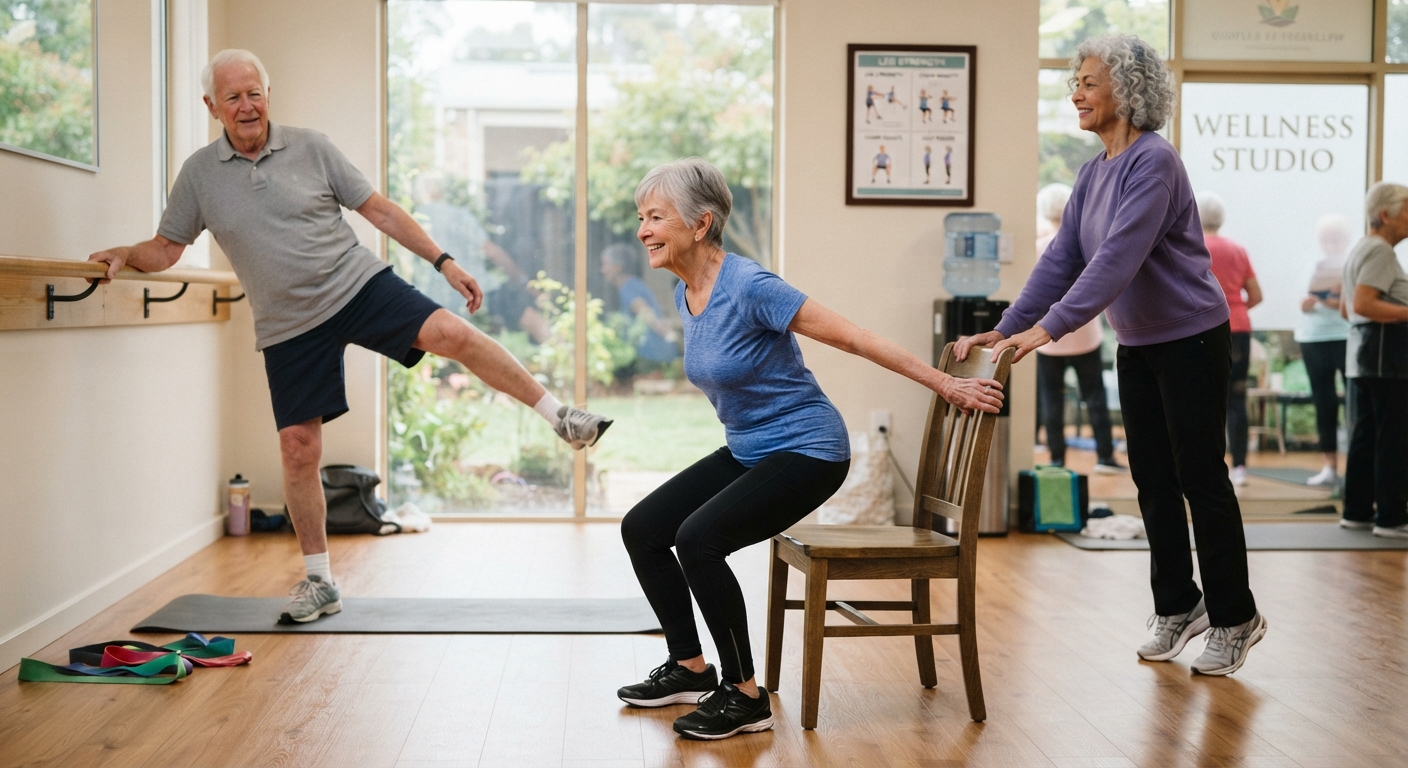
For seniors and older adults, staying active can make everyday movement feel easier and help support independence through different stages of life. I’ve found that simple leg strength exercises can be especially useful because leg strengthening exercises build functional strength, lower-body strength, and mobility needed for daily activities and everyday activities.
With guidance from physical therapists, a balanced exercise routine can include cardio, strength training, and stretching, while coordination and mindfulness-based activities such as yoga and tai chi can add variety.
Strong legs support physical activity, physical fitness, and active aging, while regular leg strengthening can contribute to healthy aging. In my experience, the goal is not simply to make the legs stronger; it is to make ordinary movements feel more secure and manageable. When stronger legs support daily movement, older adults may find it easier to keep staying active and maintain independence as life changes.
Why Leg Strength Exercises Matters More as We Age
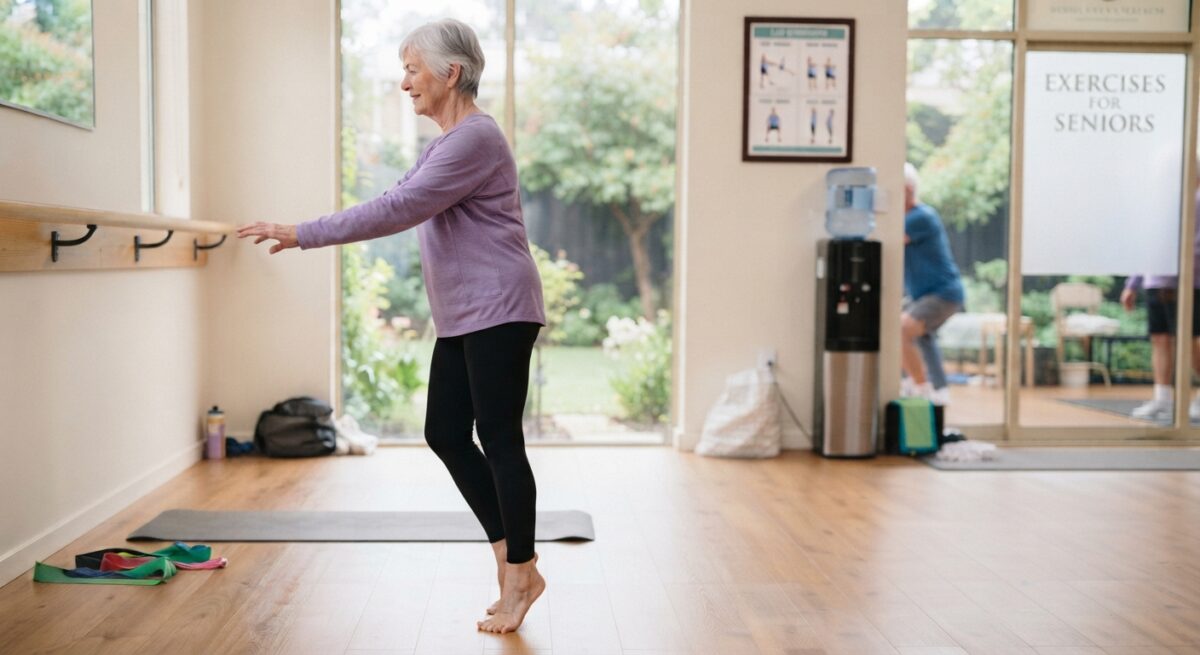
As aging changes the body, leg strength becomes a practical safeguard for independence, balance, and recovery after stumbles. Strong leg muscles and strong lower-body muscles support better balance, stability, faster reaction times, and fall prevention, helping reduce dangerous falls while easing pain, muscle weakness, body compensation, instability, chronic discomfort, and a shrinking life radius.
Good leg power also helps with basic daily tasks such as standing up from a chair, walking, and climbing stairs, making everyday tasks easier and supporting preserving independence. There is also a link with metabolic health, because large leg muscle groups use glucose and support insulin sensitivity, which can help lower the risk of type 2 diabetes.
Leg Strength Exercises
Chair Squat
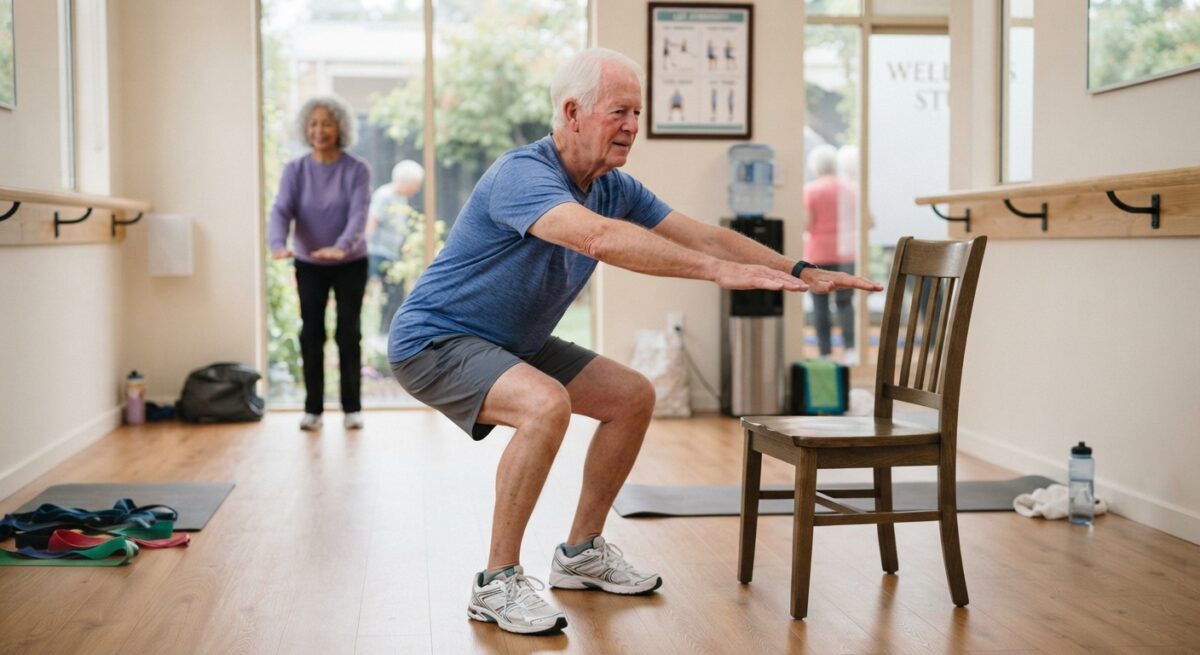
- Stand in front of a chair with your feet shoulder-width apart.
- Slowly lower toward the seat, then push back to standing for 8–10 reps.
- This simple movement supports daily independence and practical leg strength.
Calf Raises
- Stand behind the back of the chair and use it for support.
- Rise onto your toes, lift your heels, pause briefly, then lower down.
- This works the calves and can improve balance during everyday movement.
Side Leg Lift
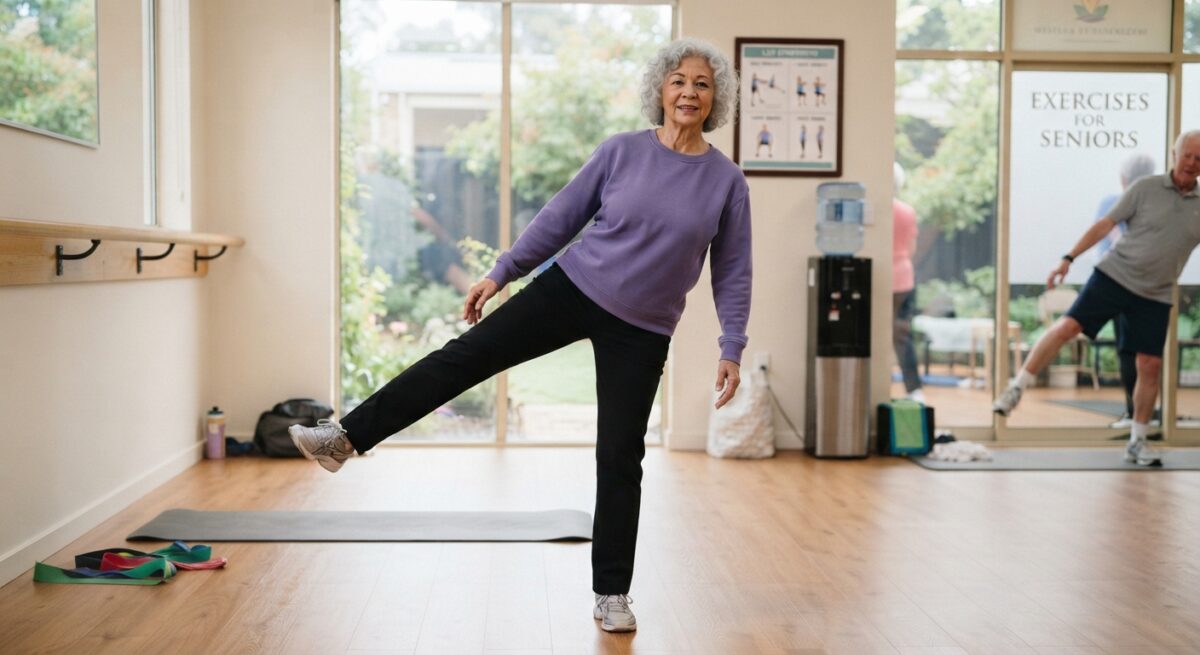
- Hold the chair while keeping your body upright.
- Slowly move one leg outward to target the outer hip muscles, then return it to the starting position.
- This can help with stability on uneven ground.
Seated Heel Slide
- Sit with your feet flat on the floor. Slowly slide your heel forward until the knee is comfortably extended, then bring it back.
- This gently works the range of motion around the joint.
Step Back
- Begin on the platform with both feet.
- Keep the hips square, move the left leg down while keeping the right foot firmly planted, then use your strength to step back up to the starting position.
Side-Step
- Stand on the platform with your feet parallel.
- Keep the right foot planted while stepping down and stepping to the side with the left.
- Press through the planted leg to return to the starting position.
Sit to Stand
- Start in a seated position near the edge of the chair.
- Without using momentum, use your leg strength to reach a standing position, then bend your knees, hinge at the hips, and lower back down with stable support if needed.
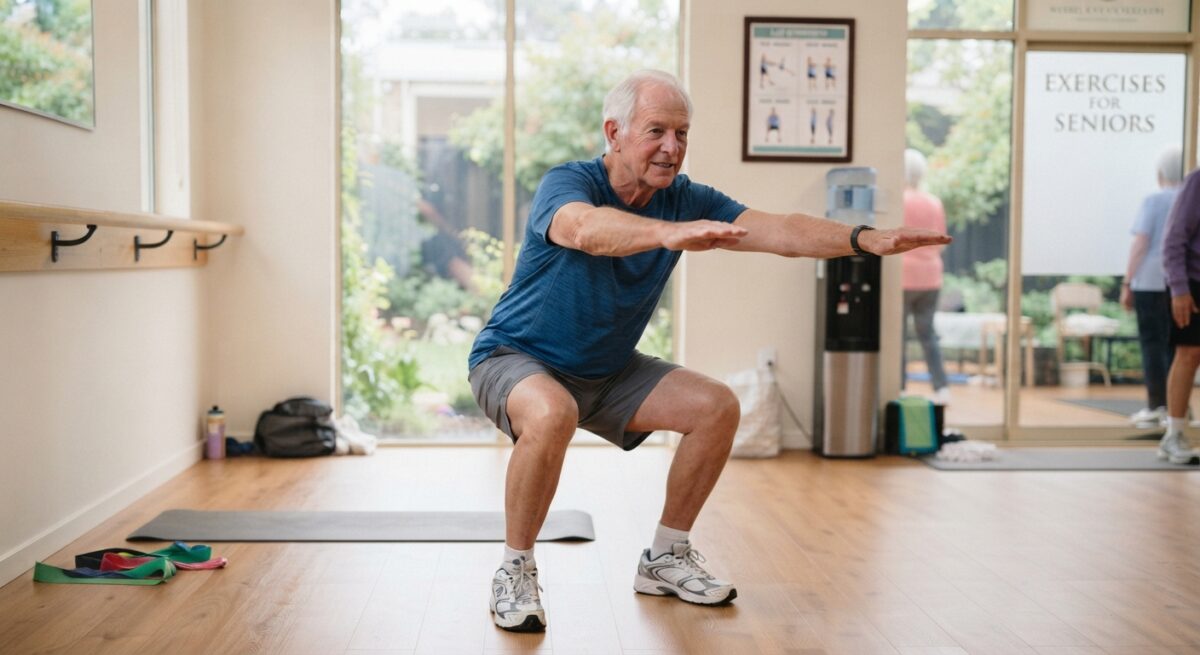
Air Squats
- Stand a few inches in front of a chair with a neutral spine, square hips, and engaged core.
- Raise your arms to counterbalance your weight, bend your knees, lower into a squat, then use your legs and glutes to return to standing without resting on the chair.
Lateral Band Walk
- Use a resistance band as an abductor exercise to improve mobility and strength in the hips and glutes.
- Place it under your shoe arches at waist height, stand with knees slightly bent, keep the band tense and weight on heels, and keep your upper body relaxed.
- Breathe and take a large step right with your right foot, keeping your feet pointed straight ahead.
- During the movement, lift feet instead of trying to drag feet, hold the stance, then bring the left foot back to the starting position; continue stepping 50 feet right and 50 feet left as appropriate for your ability.
How Seniors Can Build a Leg Strengthening Routine Safely
A better approach for seniors is starting small with a few exercises at a comfortable pace. The following short routine supports leg strength, balance, and confidence while giving the muscle time to adapt.
| Day/Step | Routine | Safety focus |
| Start | Choose 3–4 bodyweight exercises | Keep a chair nearby as a safety practice |
| During exercise | Work for a few minutes at a comfortable pace | Mild muscle effort is normal; stop if there is sharp pain |
| Weekly | Add one exercise each weekly | Follow gradual improvement, not too much too soon |
| Ongoing | Keep regular movement and exercise | Consistency helps build strength and confidence |
| Progress | Add gentle progressive resistance when exercises become easier | Keep building strength safely |
Benefits of Strength Training for Seniors
- Bone density and bone health: Strength training exercises, weight-bearing exercises, and resistance exercises can support bone strength and bone loss prevention, helping protect bones from fractures and bone breaks.
- Fall prevention: Better strength, balance, mobility, and flexibility can help seniors manage falls, including situations like walking up stairs, stepping off a curb, or side-stepping after a person-to-person collision.
- Stronger muscles: Regular strength training helps maintain muscles, muscle strength, and muscle function, which can be especially useful for the senior population and elderly population.
- Sarcopenia support: As sarcopenia reduces muscle mass and muscle tissue with age, suitable exercise can help seniors stay stronger and physically active.
- Better movement: Stronger muscles and improved mobility can support a steadier gait and better walking speed, making everyday movement feel more comfortable.
- Greater independence: Maintaining physical strength and mobility can support independence, confidence, better posture, and a stronger quality of life while helping with reduced pain.
- Broader health benefits: Weight training can provide overall health benefits, while combining it with aerobic exercise supports a well-rounded fitness routine.
- Long-term health: Research discussed by the Center for Disease Control (CDC) highlights the importance of preventing falls, while regular activity may also support health factors linked with mortality risk, cardiovascular disease, and cancer.
Summary
Leg strength supports everyday activities such as standing up, climbing stairs, and maintaining balance. This guide offers a simple way to use exercises at home without equipment to build strength and maintain strength.
In practice, consistency matters most: begin with bodyweight movements, progress gradually as strength improves, and add progressive resistance when needed to support long-term mobility and independence.
FAQ’s
Can seniors do leg exercises with knee pain?
Yes, but care is important. Gentle options such as seated leg extensions, heel slides, and calf raises usually place less stress on the knee joint. Shallow wall sits and other seated movements can be a safest starting point, but stop if sharp pain occurs.
How long does it take to see results from leg exercises?
With consistent training, many seniors may notice better everyday ease of movement within four to six weeks. Strength gains can appear before visible muscle changes, so improvements in daily activities are a useful way to track progress.
Is it safe to exercise your legs every day?
Light movement and gentle exercises can often be done as daily exercise when sessions are short sessions and comfortable sessions. Listen to your body, and avoid exercising through pain or excessive fatigue.
What is the safest starting point for an inactive senior?
For someone inactive, seated exercises are often a practical safest starting point. A seated leg extension, seated heel slide, or seated ankle circle requires little standing balance and places low demand on the joints; standing exercises can be added gradually as comfort improves.
Can leg exercises reduce the risk of falls?
Yes. Regular strength training can improve balance and stability, which can help lower the risk of falls. Stronger legs can also make falls less likely and help everyday movements feel more controlled.