The Game Plan:
During pregnancy, it is natural to think about weight gain, especially if you are pregnant and starting out overweight. Still, trying to lose weight or focus on losing weight without medical advice is generally not recommended. Pregnant people usually need some pregnancy weight gain, although people with higher BMI may be advised to aim for gaining less.
The inevitable weight gain associated with pregnancy can create a weight dilemma, but the focus should be on nourishing you and your growing baby, rather than pursuing safe weight loss. From a practical health perspective, nourishing you, supporting the baby, and maintaining good nutrition are more useful goals than trying to control the scale.
Pregnancy is not the time to make major changes to diet on your own; instead, work with your healthcare team to decide what is appropriate for you and your baby.
What weight is healthy during pregnancy?
A healthy weight in pregnancy depends partly on your body mass index (BMI) at the start of pregnancy. For someone who is underweight (less than 18.5), the pregnancy weight gain guidelines suggest 28–40 pounds (lb). A person with a typical weight and a BMI of 18.5 to 24.9 is generally advised to gain 25–35 pounds (lb). For someone who is overweight, with a BMI of 25.0 to 29.9, the recommended weight gain is 15–25 pounds (lb).
If you are obese or have obesity, with a BMI of 30 or above or 30.0 or more, the suggested range is 11–20 pounds (lb). These ranges are based on guidance from the Centers for Disease Control and Prevention (CDC) and are useful for tracking pregnancy weight gain, rather than trying to lose weight, losing weight, or pursuing weight loss while pregnant. The goal is to gain weight naturally within an appropriate range while supporting your health and your baby’s development.
Healthy lifestyle During Pregnancy
Cut down on calories
During pregnancy, your daily calorie intake changes with each trimester, so cutting calories to lose weight should never be done without a healthcare professional. If you had a suitable weight for your height before becoming pregnant, you may need different calories per day.
- Trimester 1: Usually no additional calories are needed.
- Trimester 2: About extra 340 calories per day may be needed.
- Trimester 3: About extra 450 calories per day may be needed.
Exercise 30 minutes daily
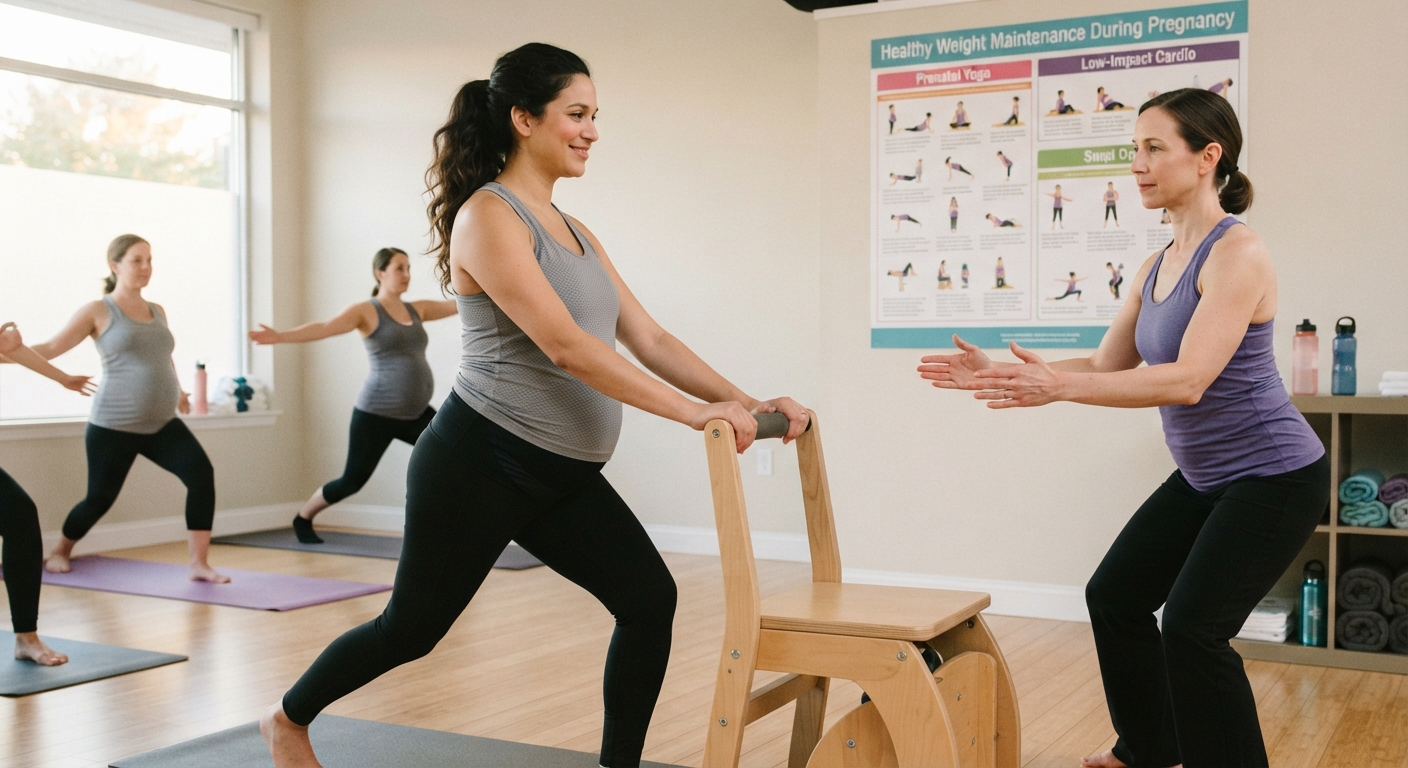
Regular exercise can be beneficial during pregnancy and may help you maintain weight, support your body, and reduce some aches and pains. The general target can be 30 to 60 minutes of physical activity per day on 3–5 days per week, but your health care provider should guide your exercise programs.
Swimming
- Move through the water at a comfortable pace.
- Keep the effort gentle enough that you can breathe normally.
- Stop if you feel pain, dizziness, or unusual discomfort.
Walking
- Start with a short, easy walk and slowly build your time.
- Keep your posture comfortable and choose a safe, level route.
- Take short breaks whenever your body needs them.
Gardening
- Use light tasks and avoid lifting anything that feels too heavy.
- Change positions regularly and drink enough water.
- Avoid high temperatures and rest when needed.
Prenatal yoga
- Choose prenatal yoga designed for pregnant people.
- Use gentle movements and slow deep breathing.
- Avoid positions that cause pain, dizziness, or strain.
Jogging
- Continue only if jogging is already comfortable for you.
- Keep the pace easy and pay attention to your body.
- Ask your health care provider whether it is appropriate for you.
Pregnancy is also a time to care for your emotional health and your connection with your baby. A developing baby can respond to the sense of touch from around ten weeks of pregnancy, and later may react to light, your voice, music, and other sounds.
Lose Weight During Pregnancy: Warning signs
In my experience with pregnancy-health guidance, the important point is not to panic over one reading on the scale, but to look at the full picture, including diet, activity habits, and symptoms. Nausea, heartburn, bloating, and constipation can make eating difficult for expecting moms, but persistent symptoms still deserve medical attention.
- Overweight raises the chance of complications.
- A higher BMI means higher chance.
- Risks include miscarriage.
- Gestational diabetes may occur.
- High blood pressure may develop.
- Pre-eclampsia can affect pregnancy.
- Blood clots are another concern.
- Shoulder dystocia can complicate labour.
- The baby’s shoulder may get stuck.
- Heavier bleeding can follow birth.
- Postpartum bleeding requires medical attention.
- The Royal College of Obstetricians and Gynaecologists provides guidance.
- Babies may be born early.
- This means before 37 weeks.
- There is an increased chance of stillbirth.
- A health condition may occur.
- A neural tube defect can occur.
- Spina bifida is one example.
- Obese patients have increased risks.
- Obesity can raise pregnancy risks.
- Most pregnancies still have healthy baby outcomes.
- Complications do not always occur.
- An increased chance is not certain.
- A higher chance needs monitoring.
Summary
During pregnancy, it can be beneficial to monitor your calorie intake and stay active with suitable exercise, but overdoing either can potentially cause harm to your baby. If you have significant extra weight, doctors generally do not recommend intentional weight loss during pregnancy without medical guidance.
Discuss your concerns with your doctor so you can choose the safest decision for yourself and your baby. Rather than starting a strict weight loss plan, focus on healthy habits now and revisit weight loss after birth, once your baby is born. This balanced approach helps keep pregnancy nutrition and your baby’s needs at the center of care.
FAQ’s
Can I try to diet or lose weight while pregnant?
It is usually not recommended to diet or intentionally lose weight while pregnant. During pregnancy, you and your baby need enough nutrients to stay healthy and strong. If you have a high BMI, health professionals, including your doctor, midwife, or dietitian, can help you eat well and reduce risks. Pregnant women and birthing people can also ask about weight-management programmes in their area.
What if I have an eating disorder?
Tell your healthcare team if you have an eating disorder or a history of eating disorders. A doctor, midwife, nutritionist, dietitian, or specialist can provide extra support during pregnancy.
What should I do if I am losing weight during pregnancy?
A small amount of weight loss in early pregnancy can happen because of pregnancy sickness. Even when being sick, try to eat small meals and frequent meals with plain foods that contain carbohydrates and are low in fat, such as bread, rice, crackers, and pasta.
Is it harder to lose weight after pregnancy?
Losing weight after pregnancy can be harder because major hormonal shifts, lack of sleep, and high stress levels may affect weight loss. During this period, the body is recovering, so gradual weight loss is often more realistic than trying to lose weight quickly.
Is it normal to gain 20kg during pregnancy?
A 20kg (44 lb) weight gain during pregnancy is higher than the standard average for a single pregnancy, but it may still be normal or expected in some cases. Your pre-pregnancy weight, carrying multiples, such as twins, and fluid retention can all affect how much weight gain occurs during pregnancy.