The Game Plan:
Stretches before bed can be a simple part of an evening routine that helps the body relax and prepare for sleep. I have found that a few minutes of calm stretching can feel more useful than pushing through a hard exercise session late at night. Better blood flow may help ease muscle tension, support muscle recovery, and improve sleep quality.
While sleep experts often suggest different ways to wind down after a busy day, gentle stretching, reading, a warm bath, or other quiet activities can provide useful stress relief. Like other natural sleep remedies, such as chamomile tea and essential oils, stretching can sometimes be overlooked, even though this simple act may help you fall asleep faster and support better quality of sleep.
The key is to keep your stretches easy rather than turning bedtime into a big workout, which can have the opposite effect. Gentle movements may relieve muscle tension, help prevent sleep-disrupting cramps, and reduce discomfort caused by muscles that experience overuse during the day.
7 Stretches to Do Before Bed
Neck Stretch
A neck stretch is a gentle way to release tension from the neck, upper trapezius muscles, and shoulders, especially after the majority of the day spent sitting at a desk. I find that moving slowly and keeping good posture makes this stretch feel much more comfortable. Use these steps:
- Sit in a comfortable chair or stand in a neutral position with your body alignment straight.
- Keep your face forward and gently move your right ear toward your right shoulder.
- Place your right hand on the top of your head or near your left ear and gently guide your head toward the right shoulder.
- Reach your left hand toward the floor to create a gentle stretch through the neck and shoulders.
- Hold for 20 to 30 seconds, then repeat two to three times on the right side.
- Switch to the left side and repeat the same movement.
- You can also hold each side for five breaths.
- Turn to look over your right shoulder while keeping the rest of your body facing forward, hold for five breaths, and repeat on the opposite side.
- Use a mirror to check that you are starting in a neutral position, with your neck alignment in line with your body.
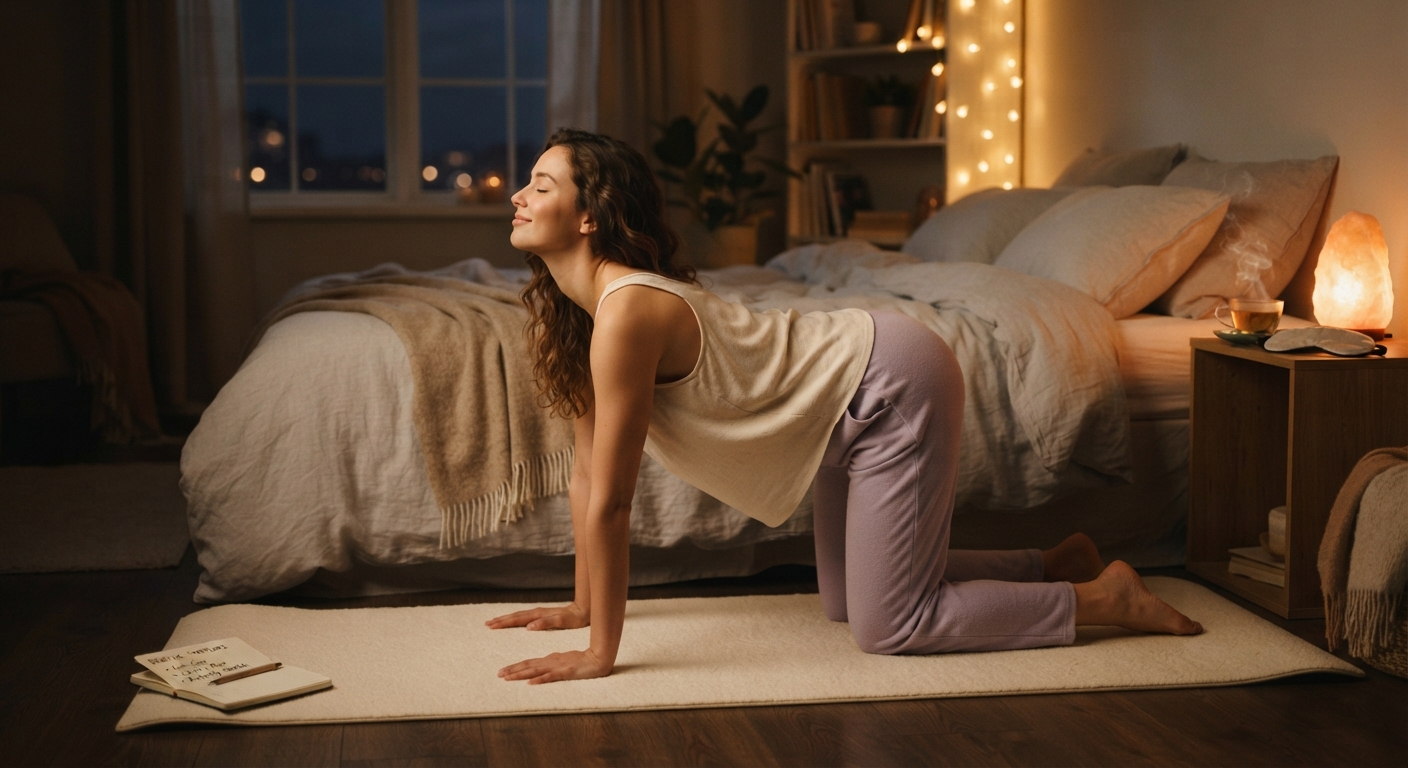
Cat-Cow
Cat-Cow gently moves the lower back and can be useful when your back feels stiff after sitting, standing, or walking. The movement uses the hands and knees, placing the body in an unweighted position where there is less risk of forcing the spine. Move slowly and let your breathing guide the movement:
- Start on your hands and knees, with your hands under your shoulders and your knees under your hips.
- Find your neutral position and keep your spine comfortable.
- For the cat pose, tighten your abdominal muscles, squeeze your buttocks, and tuck your tailbone while you round your back.
- Bring your chin gently toward your chest and hold the position for 10 seconds.
- For the cow pose, breathe in and let your belly move toward the floor.
- Create a gentle concave back, rotate your tailbone upward, and lift your gaze toward the ceiling.
- Stretch the front of your neck without forcing the movement.
- Breathe out, return through the movement, and round your back again.
- Repeat the spinal movement five to 10 times, or continue gently for 1 minute.
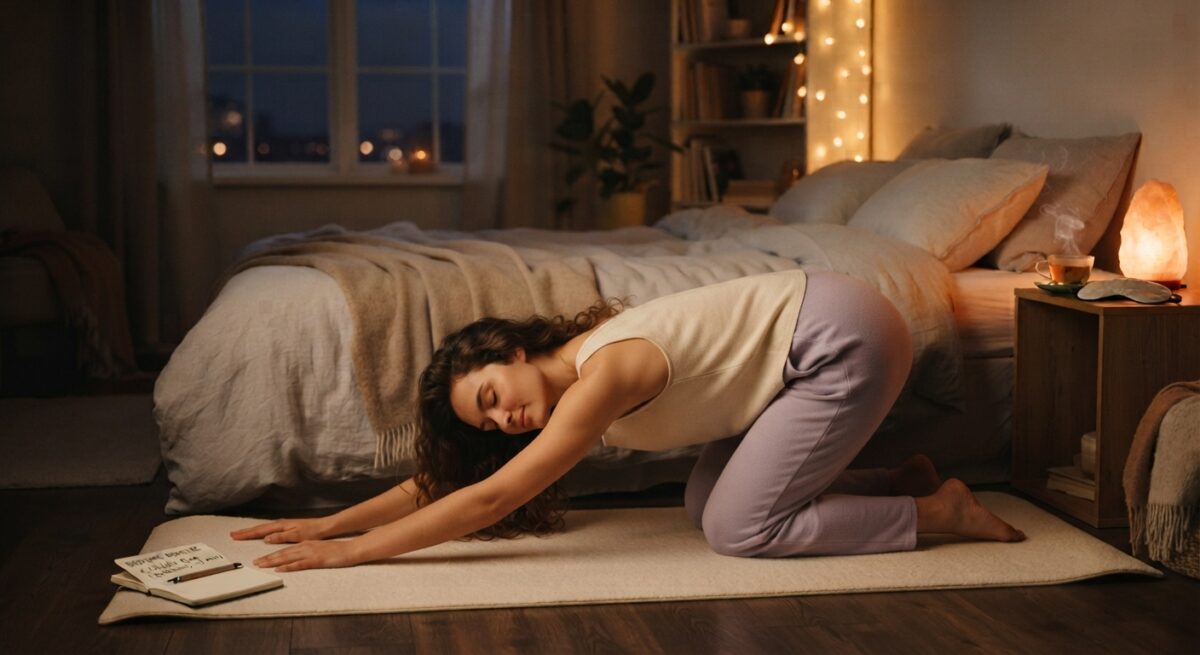
Child’s Pose
Child’s Pose is a calming position that can reduce tension in the lower back while gently stretching the glutes and upper body. The aim is relaxation, not forcing your head or chest toward the floor. A slow approach can help keep the spinal alignment comfortable:
- Begin on your hands and knees in a neutral position.
- Slowly move your butt backward toward your feet and heels.
- Keep the movement comfortable and allow your lower back to relax.
- Let your upper body move forward naturally while keeping your spine comfortable.
- Do not force your head or chest to touch the floor, because this can create extra strain instead of relaxation.
- Hold the position for 30 seconds.
- Return to the neutral position and repeat three times.
- As Ribaudo recommends, focus more on moving your butt toward your heels than trying to reach the floor with your upper body.
Lying Single Knee to Chest
The Lying Single Knee to Chest stretch focuses mainly on the hips, while also helping the glutes, back, neck, and shoulders open up. I prefer keeping this movement slow because a gentle pull usually feels better than trying to force the knee close to the chest.
- Lie on your back with your legs extended.
- Keep your body relaxed and bring your right knee upward.
- Place both hands behind the right knee and gently pull it toward your chest.
- Hold the stretch for 30 seconds.
- Repeat three times on the right side.
- Switch to the opposite side and repeat the same steps.
- If you feel discomfort in your lower back, bend the opposite leg.
- Keep the opposite foot supported as needed to help stabilize your pelvis.
Kneeling lat stretch
The Kneeling lat stretch is useful for loosening the muscles around the back and shoulders. It can also help reduce pain and discomfort after a long day. A chair, couch, or low table gives your arms somewhere to rest while you gently lengthen your spine.
- Come into a kneeling position in front of a chair, couch, or low table.
- Keep your knees directly under your hips.
- Place a blanket or cushion under your knees if you need extra support.
- Lengthen your spine as you gently hinge at your hips.
- Fold forward and rest your forearms on the chosen surface.
- Keep your palms facing together.
- Stay relaxed instead of pushing deeply into the stretch.
- Hold for 30 seconds.
- Repeat one to three times, depending on how your back and shoulders feel.
Low lunge
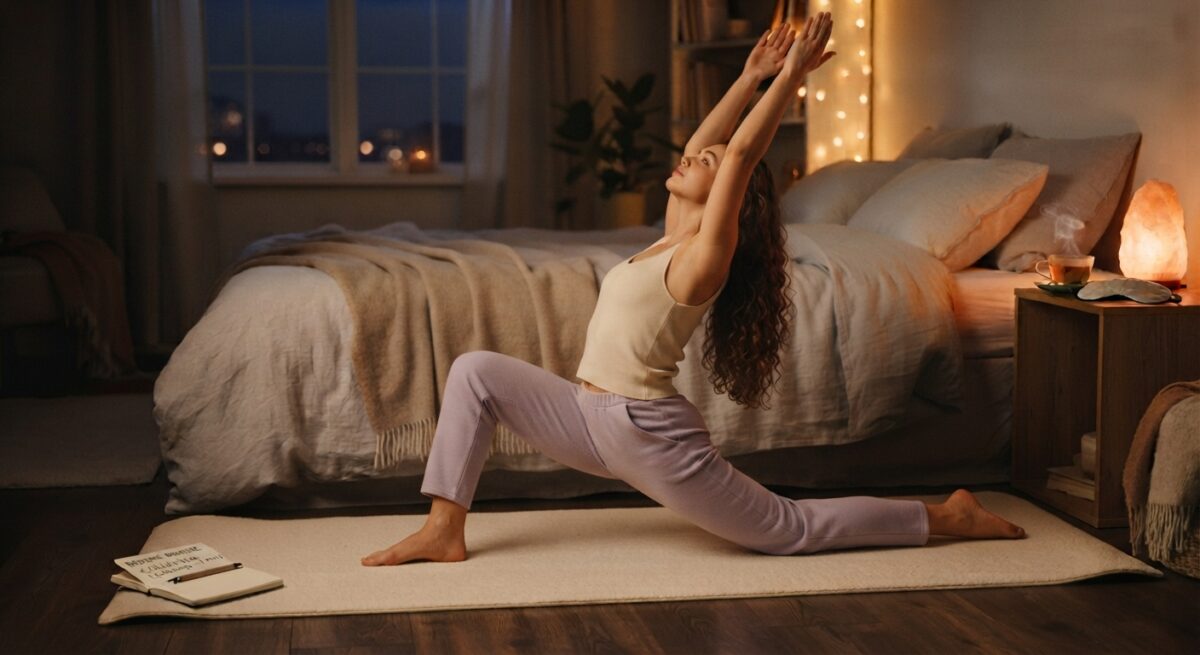
The Low lunge gently stretches the hips, thighs, and groin. It also opens the chest, which can help ease tension and pain around the chest, back, and shoulders. For a bedtime routine, keep the pose relaxed and avoid pushing yourself too hard.
- Come into a low lunge with your right foot below your right knee.
- Extend your left leg back while keeping the left knee on the floor.
- Place your hands on the floor beneath your shoulders, on your knees, or reach them toward the ceiling.
- Breathe deeply as you gently lengthen your spine.
- Focus on opening your chest without forcing the movement.
- Imagine a line of energy extending through the crown of your head.
- Stay relaxed and hold the pose for five breaths.
- Repeat on the opposite side.
Legs-up-the-wall pose
The Legs-up-the-wall pose is a restorative pose that can be a peaceful way to finish your evening stretching routine. It may help reduce tension in the back, shoulders, and neck while encouraging relaxation. The position should feel comfortable, so adjust your distance from the wall rather than forcing your hips against it.
- Sit with the right side of your body against a wall.
- Slowly lie on your back while swinging your legs up against the wall.
- Keep your hips against the wall or move them a few inches away, choosing the distance that feels most comfortable.
- Place a cushion under your hips if you want extra support or slight elevation.
- Rest your arms in any comfortable position.
- Let your back, shoulders, and neck settle naturally.
- Stay in this comfortable pose for up to 1 minute.
- Keep your breathing slow and allow your whole body to settle into relaxation.
When and How to Stretch before Bedtime
The best time and best place for nighttime stretches are the ones that help you stretch consistently. A simple plan is to stretch 30 minutes to one hour before bedtime, rather than waiting until the last minute when you are too tired and may skip it. Think of stretching as part of winding down, not another task to rush through.
Start with deep breaths and, if you feel anxious or stressed out, take five to 10 minutes to relax your whole system before beginning. From my experience, this small pause can make each stretch feel calmer and more useful.
Summary
The main benefit of bedtime stretching is that you can gently extend your muscle groups without trying to overextend them. A little discomfort may happen, but pain is a sign to ease off, and you should always be able to breathe normally.
Regular bedtime stretches may offer several benefits, including improving sleep, supporting flexibility, helping reduce stress and anxiety, improving posture, and easing muscle stiffness and muscle pain. They can also create a quiet moment for mindfulness and self-care, supporting your overall wellbeing and quality of life.
FAQ’s
How should I breathe while stretching before bed?
Use calm breathing techniques while stretching, focusing on slow breathing in and breathing out. Some yoga practitioners prefer breathing through the nose, while others use different breathing practices. For deep breathing as a relaxation technique at bedtime, inhale until your stomach begins to lift.
When should I stretch before bed?
About one hour before bed is a practical time to begin your nightly bedtime routine. You can combine stretching with other relaxation practices, such as yoga or gentle meditative practices, to help your body prepare for sleep.
What stretches should I avoid before bed?
Avoid dynamic stretches when your main goal is relaxation at bedtime. These movements use a wide range of motion and may include activities such as aerobic dance and calisthenics. Because this type of exercise can raise your heart rate, it is better to avoid it within about two hours of bed.
Can I stretch while injured?
If you are injured, do not assume every stretch is suitable for your body. Speak with a health care provider, such as a physical therapist, before stretching an injured area. They can recommend appropriate stretches for your specific injury and tell you which movements to avoid until you have recovered.
How do I know when I have stretched enough?
Many stretches can be held for around 10 seconds to 30 seconds, depending on the movement and your comfort. A slight discomfort can be normal, but stretching should never feel painful. If you are unsure about how much stretching is appropriate for you, ask your health care provider.
What type of stretching is best for bedtime relaxation?
Although stretching at bedtime can be beneficial, avoid vigorous stretches or highly stimulating stretches that raise your heart rate and energize the body. A nighttime stretching routine should focus on gentle movements and relaxing movements that encourage calm and relaxation. Save high-intensity stretches and workouts for earlier in the day.