The Game Plan:
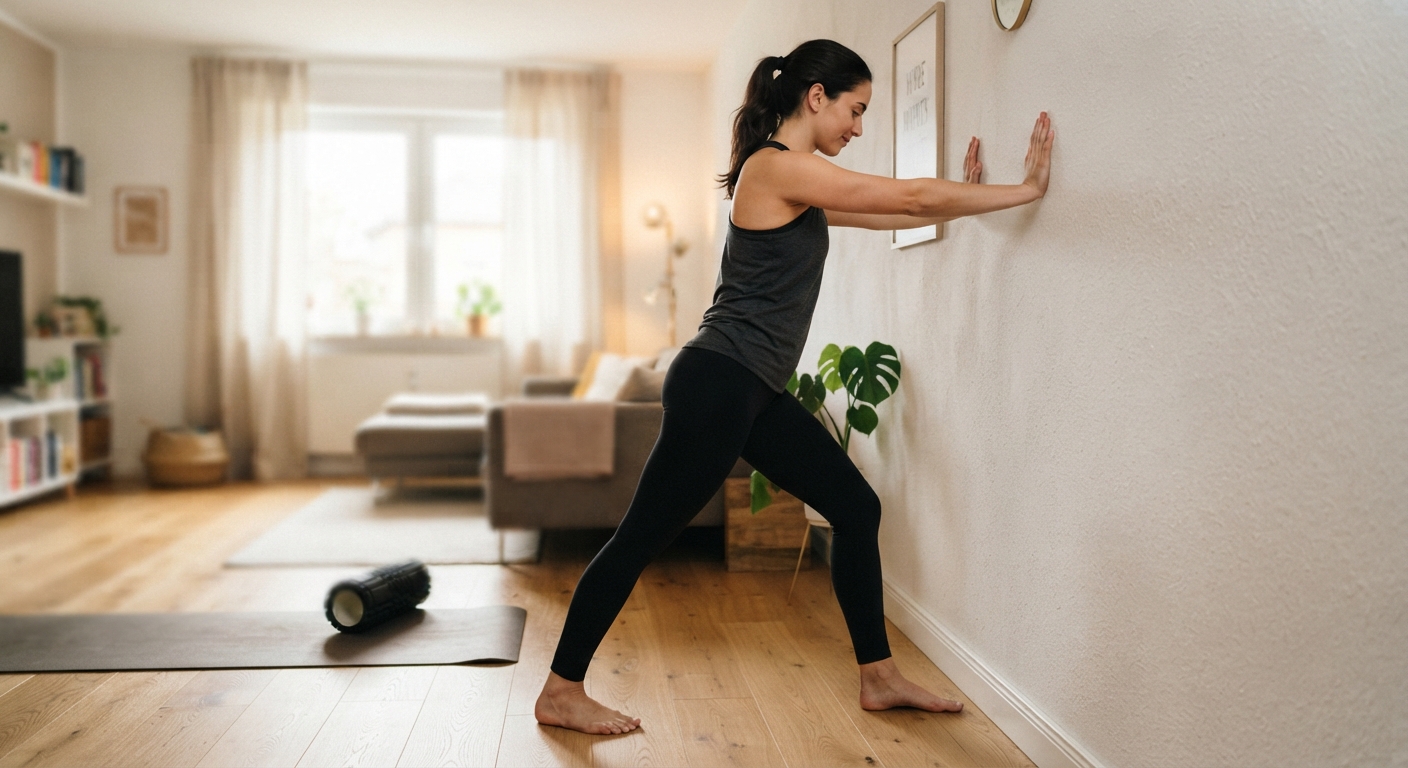
Wall stretches are one of those underrated tools that can make a flexibility routine feel easier, safer, and more controlled. Unlike stretches done in the middle of a room or on a mat, the wall gives your body something stable to work with, creating stability during each movement. For a beginner, it can be an accessible entry point for trying new stretches, while experienced people can use it to deepen their flexibility work without needing extra equipment at home. I often think of the wall as more than a backdrop; it becomes an active partner in your stretching practice, helping you improve flexibility and mobility with greater confidence.
The wall also provides proprioceptive feedback, or your body’s sense of where it is in space, while giving you better control over the intensity of each stretch and greater precision in your position. That added security can reduce compensating and poor form, especially when working with a tight chest, shoulders, hip flexors, hamstrings, calves, lats, quads, or thoracic spine.
Why Wall Stretches Are Such a Game Changer
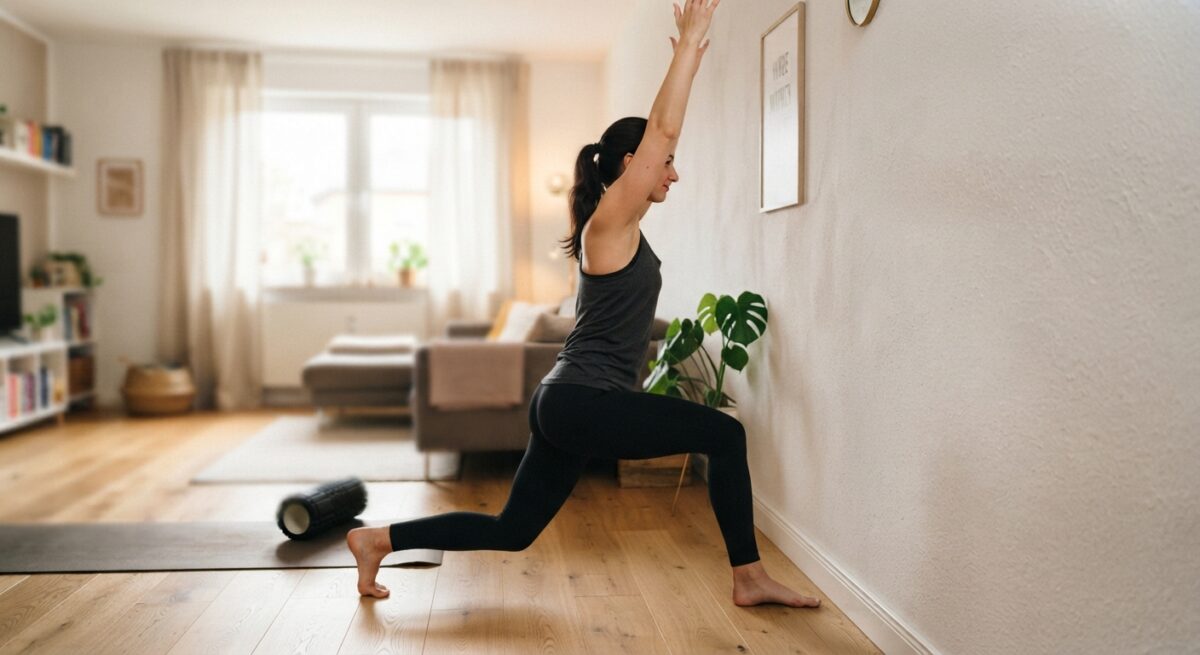
Wall stretches make wall stretching surprisingly practical because the wall acts as a reference point for stability, alignment, safety, and effectiveness. In my experience, this simple setup makes stretching easier to control than many specific stretches done without support. For example, during a chest stretch, you can notice when your shoulders creep toward your ears, giving you real-time feedback about your form and whether you are reaching the intended muscles.
There is also a useful sensory side to this approach. Proprioceptive grounding gives your nervous system clear sensory input, while proprioception and this tangible contact can encourage deeper relaxation; this helps explain why physical therapists and yoga instructors often use wall-assisted stretches when people are recovering from injury or managing tension. Regular stretching helps keep muscles flexible, strong, and healthy, supporting flexibility and range of motion in the joints.
Best of all, wall stretches are quick and easy, require no need to use the floor, and can suit people with limited mobility. Just remember that standing wall stretches are weight bearing, which creates a different kind of stress on the low back. If you experience lower back pain, middle back soreness, or discomfort around the upper back and shoulders, gentle wall stretches can be a useful option when performed comfortably.
8 Essential Wall Stretches for Total-Body Flexibility
1. Wall Chest Opener
The wall chest opener is a simple way to loosen the pectoralis major, pectoralis minor, anterior shoulders, and front of chest. I like this stretch because the wall provides a stable surface and useful tactile feedback, helping you notice whether your shoulder and upper back stay in good alignment.
How to do it:
- Stand facing the wall with your feet hip-width apart, about 12-18 inches away.
- Place your right forearm on the wall at shoulder height, keeping your elbow bent to about 90 degrees.
- Keep your chest open and gently rotate your torso to the left. You should feel the chest stretch across the right chest and shoulder.
- Keep both sides level and avoid letting the stretched shoulder move forward.
- Hold briefly, then repeat on the other side.
This controlled rotation and attention to positioning can make the movement more effective than unsupported chest stretches. It may be especially useful for desk workers who develop forward shoulder posture or upper cross syndrome, where good stability cues can help maintain better shoulder posture.
2. Wall Shoulder Flexion Stretch
The wall shoulder flexion stretch focuses on the latissimus dorsi, shoulders, and back of chest while encouraging better flexibility for overhead movement. The wall also provides support, making it easier to avoid compensation, especially unwanted arching through the lower back.
How to do it:
- Stand facing the wall with your feet about 12 inches away.
- Raise both arms and place your hands on the wall at head height, about shoulder-width apart.
- Keep your hips steady as you gently move your chest and head toward the wall.
- Keep your core engaged rather than allowing your lower back to sag.
- You should feel the stretch through your lats, shoulders, and back of your chest without forcing the movement.
This position gives your body a clear target and can support healthier overhead movement patterns. Research has connected shoulder and lat flexibility with reduced shoulder impingement risk, which is one reason this stretch can fit nicely into a regular mobility routine.
3. Wall Hip Flexor Stretch
The wall hip flexor stretch works the iliopsoas, rectus femoris, and anterior hip. It is particularly useful if long periods of sitting have left your hip flexors chronically tight. From my experience, having the wall nearby makes it easier to concentrate on the stretch instead of worrying about balance.
How to do it:
- Stand with your right side next to the wall, around 12-18 inches away.
- Place your right hand on the wall for balance.
- Step your right leg back into a small lunge position.
- Keep the back knee straight without locking it, and maintain an upright torso.
- Gently move the right hip forward until you feel the stretch through the front of hip and thigh.
- Repeat on the opposite side after holding comfortably.
This approach can work well for people with limited mobility or balance issues. Regular hip flexor stretching can also be part of a comprehensive flexibility program, particularly when tight hip muscles are associated with anterior pelvic tilt or lower back pain.
4. Wall Hamstring Stretch
The wall hamstring stretch targets the hamstrings, including the biceps femoris, semitendinosus, and semimembranosus, while also involving the glutes. Unlike an aggressive standing stretch, this gravitational stretch lets your body use gravity to gradually lengthen the muscles.
How to do it:
- Lie on your back with your hips close to the wall.
- Extend your legs upward so your calves and thighs rest against the wall.
- Move your hips as close to the wall as feels comfortable.
- Let gravity create the stretch instead of forcing your legs farther.
- If you have very tight hamstrings, move back a few inches to reduce the intensity.
- For a slightly deeper stretch, gently press your hamstrings into the wall for a moment, then relax.
This can be a comfortable option for people who are new to stretching. Research on passive hamstring stretches has found improvements in hamstring flexibility over 4-6 weeks, even without adding other stretching methods.
5. Wall Calf Stretch
The wall calf stretch works the gastrocnemius and soleus, the two main muscles of the calf. Keeping the feet and knees in the right position matters because calf flexibility can influence ankle mobility, as well as movement through the knees, hips, and lower back.
How to do it:
- Stand facing the wall, about 2-3 feet away.
- Put your hands on the wall at shoulder height.
- Step your right leg back while keeping both feet flat on the ground and pointing forward.
- Keep your back leg and back knee straight without locking the knee.
- Maintain good alignment and gently lean toward the wall.
- To target the soleus, slightly bend the back knee while keeping the same basic position.
- Repeat the stretch on the other side.
A controlled approach helps prevent overstretching while creating a genuine calf stretch. This can be especially valuable for athletes and sedentary individuals, since calf tightness has been associated with plantar fasciitis and lower leg pain.
6. Wall Quad Stretch
The wall quad stretch targets the quadriceps, particularly the rectus femoris, while the wall provides extra balance during a single-leg position. That support can make it easier to focus on the quality of the stretch instead of constantly correcting your balance.
How to do it:
- Stand with your right side toward the wall, approximately 12 inches away.
- Place your right hand on the wall for light balance.
- Bend your right knee and bring your heel toward your glutes.
- Use your right hand to gently bring your foot closer if comfortable.
- Keep your knees aligned and do not allow the right knee to move outward.
- Keep your torso upright and avoid forcing the movement.
- Switch sides after holding the stretch comfortably.
The wall removes much of the balance component, which can make this exercise more approachable for older adults and people with balance concerns. Maintaining quadriceps flexibility may also support better knee tracking and help reduce patellofemoral pain, especially among runners and cyclists.
7. Wall Thoracic Spine Rotation Stretch
The wall thoracic spine rotation stretch focuses on the thoracic spine, obliques, and mid-back rotation. It can be useful when prolonged desk posture and anterior shoulder dominance make the upper body feel stiff. The wall acts as a clear target and provides feedback, helping your brain recognize how much thoracic rotation is actually happening.
How to do it:
- Stand with your back toward the wall, keeping your feet about 12-18 inches away.
- Place your hands behind your head.
- Keep your hips facing forward.
- Gently rotate your torso to the right and try to bring your right elbow toward the wall behind you.
- You should feel movement through your thoracic spine and obliques, rather than forcing your lower body to turn.
- Repeat toward the left side.
Improving thoracic mobility can support overall movement quality. Limited thoracic movement has been associated with shoulder pain, neck tension, and poor movement patterns, while dedicated stretching may help reduce compensatory tension through the neck and shoulders.
8. Wall Hip and Glute Stretch
The wall hip and glute stretch targets the glutes, piriformis, and hip external rotators. The floor and wall combination provides a supported setup, helping you keep your spine and torso upright instead of rounding your lower back to chase a deeper stretch.
How to do it:
- Sit on the floor with your back against the wall and your legs extended.
- Bend your right knee and cross your right ankle over your left knee.
- Let your right foot rest across your left thigh.
- Keep your back against the wall and maintain an upright torso.
- Gently press your right knee down and forward.
- You should feel the movement mainly around the right hip and glute.
- Hold comfortably, then switch sides.
This setup helps keep the stretch focused on the hip rather than allowing the lower back to do the work. Since tightness around the piriformis and glutes can contribute to sciatic nerve compression and lower back pain, consistent glute stretching can be a useful part of pain prevention.
How to Use Wall Stretches in Your Routine
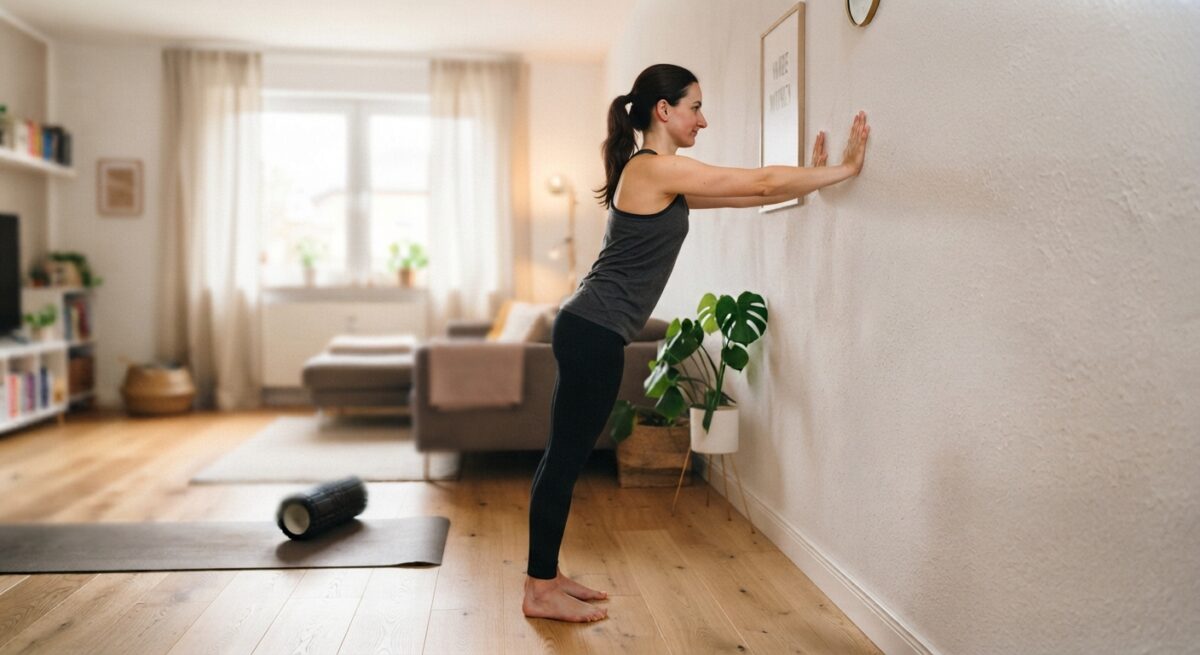
For wall stretches, consistently following a simple plan matters more than chasing high intensity. I usually recommend doing them after a workout when your muscles are warm, or as a standalone flexibility session in the evening.
| Routine | Best approach |
| Timing | After a workout with warm muscles, or an evening flexibility session |
| Duration | Hold each stretch 30-60 seconds, 2-3 times |
| Wall stretching routine | Complete all eight stretches in about 10-15 minutes |
| Frequency | 3-5 times per week for best results; a daily wall stretch routine can also support other flexibility work |
| Target areas | Add back stretches when dealing with sitting-related tension |
| Progression | As you become more flexible, move closer to the wall to deepen stretches |
| Advanced work | Add gentle isometric holds by pushing into the stretch briefly, then relaxing |
| Adaptation | Avoid advanced variations too soon; give your tissues 2-3 weeks to adapt |
Common Wall Stretching Mistakes to Avoid
- Bouncing and forcing are old habits from traditional stretching advice that can reduce the effectiveness of wall stretches. A sudden bounce may trigger the stretch reflex, causing the muscles to tighten instead of lengthen. In my experience, a slow approach works better: hold the position gently and let your tissues relax naturally.
- Losing alignment is another common mistake. Use the wall as a guide, and watch your hips, spine, and shoulders. If you change your position just to reach farther, you may create compensation patterns and move beyond your comfortable range of motion. Move back slightly and keep the position controlled.
- Do not ignore breathing. If you hold your breath, your nervous system may interpret the sensation as something threatening. Instead, breathe slowly and deeply throughout the stretch, allowing your body to settle rather than fight the movement.
- Avoid stretching cold muscles whenever possible. Good blood flow and warm muscles generally make stretching more comfortable. For a standalone session, try 5 minutes of light cardio first instead of immediately starting your wall routine.
- Finally, do not attack problem areas by stretching them constantly. If you have tight hamstrings or tight hip flexors, one or two sessions per week may be enough for extra-tight areas. Too much daily stretching can aggravate the tissue rather than help it recover.
Summary
Wall stretches are a practical way to improve flexibility without special equipment, a gym membership, or much floor space. A wall at home can provide stability, feedback, and progressive leverage while helping address tight muscles and movement restrictions linked to sedentary life. The eight stretches can target specific muscle groups in the shoulders, chest, core, and legs, supporting overall flexibility, mobility, muscle health, daily movements, and athletic performance.
I recommend starting with three or four stretches, practicing them consistently for 2-3 weeks, and then building a 10-minute wall stretching routine into your fitness routine. With enough variety, you can create a well-rounded, effective stretching routine that fits your unique needs and goals, even when you have little open space.
FAQ’s
Which wall stretches are best for overall flexibility?
For chronically tight areas, start with the wall hamstring stretch and wall hip flexor stretch for the hamstrings and hip flexors. Add chest openers, shoulder stretches, and calf work to include the chest and calves. Using gravity, stability, and deep passive stretching can support balanced flexibility development across major muscle groups.
Can consistent wall stretching improve range of motion?
Yes. Regular static stretching can improve range of motion, while the wall provides proprioceptive feedback that helps you control each position. With consistent practice, many people can notice noticeable changes within 4-6 weeks, although results vary from person to person.
Are wall stretches suitable for beginners without equipment?
Yes. A simple wall provides useful safety and alignment cues, so you do not need special equipment. Beginners can start with the wall hamstring stretch, wall hip flexor stretch, and chest opener for about 30 seconds, 2-3 times per side, covering common tight areas in roughly 5 minutes.
How can I fit wall stretches into a complete fitness routine?
You can use them as part of a morning stretching routine, after exercise, or alongside other flexibility methods. Adding back stretches can be especially useful if sitting leaves you stiff.
Should beginners use dynamic or static stretching?
Understanding dynamic vs. static stretching helps you choose the right approach. Dynamic movements generally fit better before activity, while controlled static wall stretches are useful when you want to work on flexibility. Start slowly to build confidence, then gradually expand your routine as your body becomes more comfortable.