The Game Plan:
Understanding Calories In vs Calories Out starts with seeing calories, calories in, and calories out as part of a bigger picture of weight loss, health, and fitness. CICO is often called the pinnacle of weight loss by some people, while critics call it an oversimplified quip that misses metabolic nuances, metabolic changes, hormones, food quality, individual metabolism, and overall well-being.
From my experience working through nutrition concepts, the basic idea is simple: eating fewer calories than your body expends creates a caloric deficit, but the real math involves expenditure, calories from food, and calories from exercise rather than one fixed formula.
Every weight loss method, including keto, intermittent fasting, paleo, vegan, carnivore, and Weight Watchers, works around the same underlying mechanism: when you consume less energy than your body expends, your body uses stored energy, mainly body fat, to make up the difference. This is connected to thermodynamics and findings from a metabolic ward and metabolic ward study, although the topic remains a source of controversy in fitness circles.
The decades-old strategy of 3,500 calories equaling one pound of weight loss is often presented as simple math, but experts now recognize that cutting calories, energy, metabolism, and changing expenditure can make the real process more complex.
Does calories in vs calories out work for weight loss?
Yes, weight loss occurs when you maintain a calorie deficit, meaning you are consuming fewer calories than your body can expend. The basic idea is simple, but calculating the right amount can be complicated because several factors influence your energy needs, including exercise, general activity level, and metabolic rate.
If you are consuming more calories than calories you use, the result can be weight gain; if you consistently eat less, weight loss can occur. In practice, it can be hard to know exactly how much you need to eat, how much to move, and how your metabolism affects calorie intake and calorie expenditure, which is why misinformation can make the process harder to manage properly.
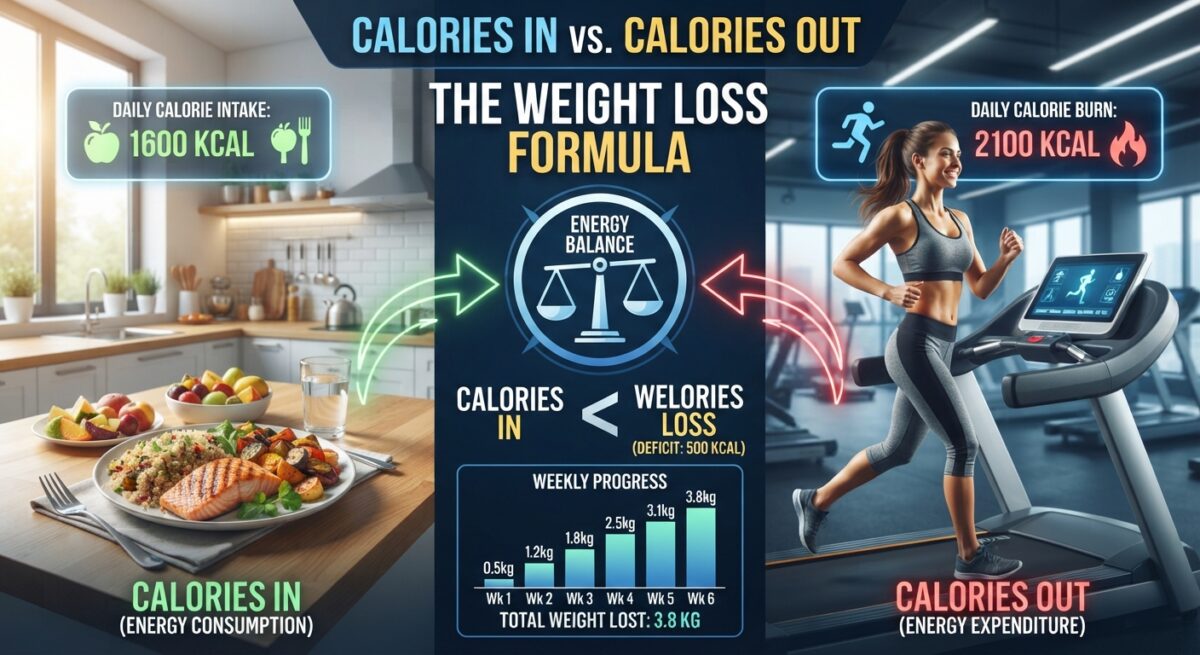
How to use CICO to actually lose weight: A calorie deficit
From a biological perspective, you need to use fewer calories than you burn to lose weight. Your body first meets its energy needs, while extra calories can be stored for future use, including in your muscles as glycogen and as fat. Eating more calories can lead to weight gain, while eating fewer calories supports weight loss. For successful weight loss, accuracy and consistency matter, so start by calculating the calories burned and calories taken in daily.
Online calorie calculators usually use weight, height, sex, age, and activity level to provide a general calorie recommendation, but your results can vary. Your CICO plan can be guided by TDEE (total daily energy expenditure), which includes BMR (Basal Metabolic Rate), TEF (thermic effect of food), and TEA (thermic effect of activity). For example, a 2000 kcal TDEE with a 500 kcal calorie deficit gives a 1500 kcal calorie goal.
For better calorie intake, focus on protein, a satiating macronutrient that preserves muscle, along with vegetables, whole foods, and naturally filling food choices; you do not need to remove a whole food group. On the calories outside, exercise, strength training, HIIT, and daily walking can increase daily burn, while NEAT adds movement outside planned workouts.
Your metabolic rate is also linked to body composition, so preserving muscle matters during a deficit. A DEXA scan or RMR test may provide useful information for estimating an RMR figure, while sleep also deserves attention. Low-carb diets, diet journals, nutrition professionals, calorie content, carbs, fat, water losses, and fat loss can all affect how people understand their results, so compliance and the real-world efficacy of CICO should be judged from consistent progress rather than one number alone.
Not all calories are created equal
Researchers have found that gut microbiota may differ between people who are naturally thin, lean, and those who are overweight or have obesity, and these organisms may affect how the gut can break down and use calories from different foods. Body metabolism is also influenced by a set point, with factors such as genes, environment, and behaviors playing a role.
The hypothalamus in the brain helps regulate body temperature and body weight, which may contribute to weight plateauing during dieting and exercising and make weight regain more likely. One reported finding involving The Biggest Loser followed contestants after a large amount of weight loss through a stringent plan of diet and exercise; their resting metabolic rate, which measures the calories used for basic everyday functions, dropped after dramatic weight loss. One report stated that 96% of people who lose substantial weight regain it, although individual outcomes vary.
The idea of calories in, calories out is also more nuanced because the number shown by a calorie counter is not always identical to the calories actually absorbed. Different calorie sources can affect hormones, brain response, energy expenditure, and food intake differently.
For example, 180 calories from nuts and 180 calories from pizza provide the same stated energy intake, but digestion and absorption differ: much of the energy from nuts is less available because some fat is enclosed within fibrous cell walls, while their fiber can increase fullness. Pizza generally has a low fibre content, which may leave someone wanting more food sooner. In my view, this is why calorie numbers are useful, but the type and quality of food can still matter when managing appetite and body weight.
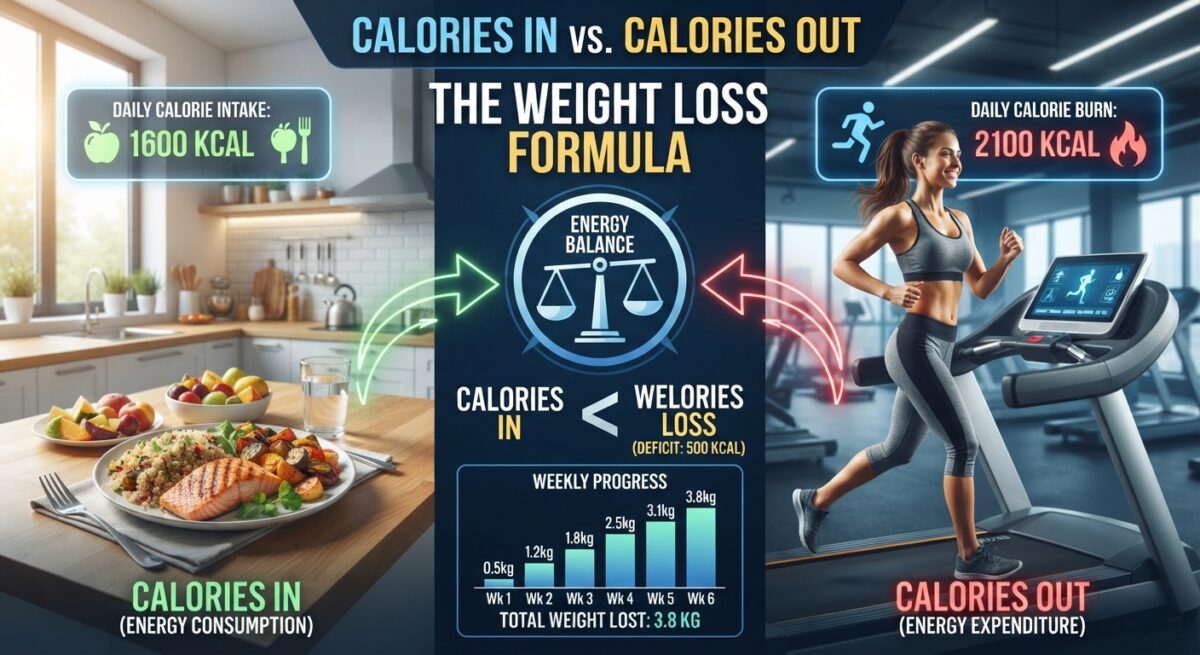
Factors that affect CICO
- Sleep can affect weight loss, BMI, weight gain, and poor health outcomes. Regularly getting enough sleep may help control hunger and satiety, while poor sleep can increase cravings for high-calorie foods containing sugar and fat, making a calorie deficit and weight loss goal harder to maintain.
- Stress management matters because stress and chronic stress can affect insulin resistance, metabolic changes, and eating habits. Pressure from work, family, or illness can reduce the time and energy available for exercise and to eat well. For people dealing with Binge Eating Disorder (BED), activities such as meditation, yoga, and enjoyable movement may support better stress levels.
- Macronutrient balance can shape how a diet feels and performs. Although total calories remain important, the macronutrient ratio can influence satiety, metabolic rate, athletic performance, and muscle recovery. A balanced diet may include carbohydrates, proteins, and healthy fats, with 40% carbs, 30% protein, 30% fat used as one possible target.
- Calorie goals and food quality work together when tracking intake and tracking macros. If you are always hungry, increasing protein and healthy fats may improve satiety, while eating overall calories that are too low may make the calorie deficit unnecessarily difficult. A varied diet with fruits, vegetables, and other foods can also help prevent nutritional deficiencies that leave you tired and reduce energy or workout performance.
- Energy homeostasis is controlled by short-term signals and long-term signals that help regulate meal patterns, feeding, and energy intake. Signals such as ghrelin, peptide YY, and glucagon-like peptide 1 (GLP-1) influence short-term appetite, while leptin helps regulate longer-term energy balance through neural regulation.
- Calories out depends on several parts of calories burned, including resting energy expenditure, the thermal effect of food, and physical activity. Resting energy expenditure (REE) supports basal metabolism and makes up a large part of total energy expenditure, with lean body mass, fat-free mass, metabolic rates, and internal organ sizes affecting individual needs.
- Reduced energy intake can trigger metabolic adaptation, also called adaptive thermogenesis, which may lower energy expenditure. Training intensity also changes calorie use: a high intensity workout can burn more calories than a low intensity session of the same duration, particularly when you are breathing heavily and cannot maintain a conversation. Even covering the same distance during exercise does not guarantee that two people burn the same number of calories.
Summary
Calories in vs calories out is a useful biological perspective on weight loss, but it is not the whole story. The complex process of calculating energy intake and energy expenditure involves many mechanisms in our bodies, and a reduction in calories may lead to short-term weight loss without guaranteeing that the result will last.
In practice, calorie counting can sometimes reduce the pleasure of eating or contribute to an unhealthy relationship with food, while nutrient density, hormones, metabolism, hunger, and fullness can all influence calorie intake and the ability to maintain a healthy weight. The basic principle remains that you need to consume fewer calories than you burn, but choosing nourishing foods also matters for overall health, making the formula more useful when viewed as part of a broader approach rather than a guarantee against regain.
FAQ’s
Is weight loss really just calories in vs calories out?
At a fundamental level, weight loss happens when you are consuming fewer calories than you burn. Still, food quality, hunger, satiety, exercise type, metabolic rate, sleep, stress, hormones, and individual genetics can affect the equation. In my experience, combining caloric awareness, adequate protein, and structured exercise is more practical for sustainable weight loss than simply counting numbers.
How many calories should I eat to lose weight?
A common starting point is a 300-500 calories deficit below your maintenance level, which may support around 0.5-1 pound of fat loss per week. For an average adult, 1,500-2,000 calories per day can vary according to size, age, and activity level. Going below 1,200 calories for women or 1,500 calories for men may increase the risk of metabolic adaptation and muscle loss, so protein-rich whole foods can help support fullness at lower calorie levels.
Do you need to count calories to lose weight?
No. You can build habits that create a moderate deficit by having adequate protein at each meal, filling your plate with vegetables, reducing liquid calories, eating slowly, and following a consistent exercise program. Calorie counting can still work as an awareness tool for understanding portion sizes, but you may not need to track it long-term.
What happens if I eat 1,500 calories and burn 500 through exercise?
Eating 1,500 calories and burning an additional 500 calories through exercise does not by itself determine your final weight loss. Your total daily burn depends on your Total Daily Energy Expenditure, which includes your normal energy needs and physical activity, so the overall balance matters.
How many kcal do I need to lose 1 kg?
A commonly used estimate is a cumulative deficit of about 7,700 kcal for 1 kg of body fat. This is a useful planning estimate rather than an exact rule because actual fat loss can vary with metabolism, body composition, activity, and other factors.