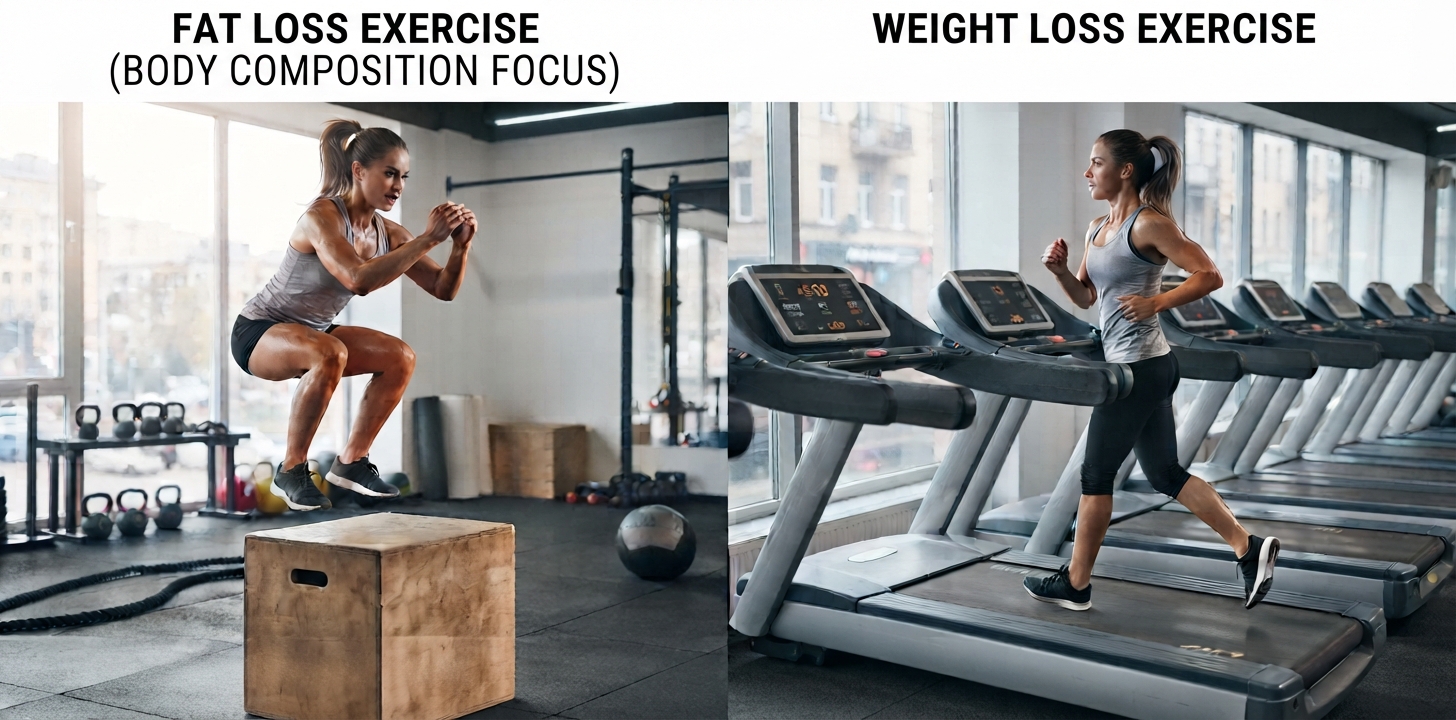
The Game Plan:
When you begin a weight loss journey, it is easy to think that every decrease in body weight means you are losing body fat. The number on the scale may go down, and that can feel like clear progress. However, the scale does not show exactly what your body has lost. Weight loss can include changes in muscle, water, and other parts of the body, while fat loss focuses specifically on reducing excess fat.
This difference becomes especially important when you are keeping track of your progress over several weeks. You may follow your programme carefully and still see little change in your weight. That does not always mean your efforts are failing. For example, you may be building muscle while losing water, or your body may simply be experiencing normal changes in water levels. In my experience of looking at how body-composition changes work, the scale is useful, but it is only one piece of the picture.
What Is Weight Loss?
Weight loss is the process in which you become lighter. For some people, the purpose is to lose weight because they are overweight and want to improve their health. In other cases, weight loss can be unintentional, such as when someone has been unwell and loses weight without trying. So, weight loss does not always mean that someone is actively trying to lose weight.
From a practical point of view, I would treat the scale as one useful measurement rather than the complete picture. If you are following diets or making changes to your eating habits, a short-term change in weight can come from several sources. Understanding this makes it easier to see why weight loss and fat loss are related but not identical processes.
What is fat loss?
Fat loss means reducing body fat, especially the stored fat found around the body. Your body gets energy from food, including carbohydrates and proteins, and your cells use that energy for many daily functions. When nutrients are not needed for immediate use or energy needs, some can contribute to stored body fat. This makes the balance between energy intake and energy use important when your goal is fat loss.
Focusing on fat loss can be beneficial because preserving muscle while reducing excess fat can support health and improve certain health effects associated with excess body fat. The goal is therefore not simply to make the scale move down as quickly as possible. A more useful approach is to understand where that weight change is coming from and aim for a healthier change in body composition.
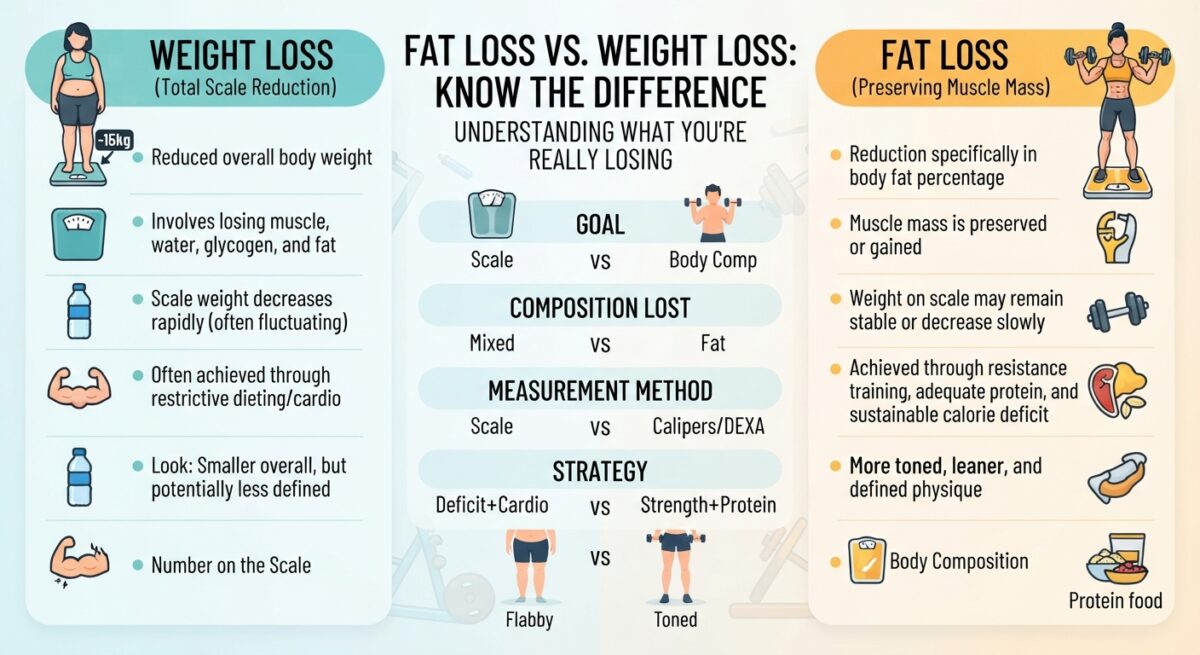
How to distinguish between fat loss & weight loss
| Factor | Weight Loss | Fat Loss |
| Main change | Weight loss can include water, muscle, fat, bone density, and other tissues. | Fat loss focuses on reducing adipose tissue and fat mass. |
| What is measured | Regular bathroom scales and weighing scales show total body weight. | Specialised smart scales can estimate body fat percentage using electrical impulses. |
| Body components | Weight can change because of water, muscle tissue, fat, bones, and other components. | The focus is on fat molecules while preserving lean body mass and fat-free mass. |
| Lean tissue | Weight loss may include a reduction in lean body mass, including muscle tissue. | Good fat-loss progress aims to preserve or build lean muscle. |
| Body fat | A lower scale number does not prove that body fat has decreased. | A reduction in body fat percentage can provide evidence of fat loss. |
| Smart-scale technology | A normal scale only measures overall body weight. | Smart scales use electrical impulses that move through the body at different speeds depending on tissues. |
| Impulse readings | Not applicable to basic weighing scales. | Impulse speed can help estimate body composition because signals travel differently through water, blood, muscle, and fat. |
| Muscle and fat | Losing weight does not necessarily mean losing fat. | Building muscle while losing fat can make the scale change slowly. |
| Calories | A reduction in body weight can occur from several changes, not only calorie-related fat loss. | Calories and energy balance influence fat loss, while maintaining muscle can support metabolism. |
| Resting metabolism | Losing muscle may affect the number of calories the body uses at resting levels. | Maintaining lean muscle can help support metabolism during fat loss. |
| Progress tracking | The scale is useful, but it does not tell the whole story. | Hip measurements, waist measurements, and thigh measurements can help show changes as you become leaner. |
| Body composition | Total weight does not explain the proportions of fat and lean tissue. | Body composition gives a clearer view of the relationship between fat, muscle, water, and other tissues. |
| Long-term goal | Fast weight changes may not always represent the type of change you want. | Fat loss with muscle preservation can be more sustainable for weight management. |
What Is Water Weight?
Water weight is the amount of water held in the body, contributing to total body weight. During the first few weeks of a weight loss programme, you may lose weight quickly after lowering calories and increasing exercise, partly because the body uses glycogen stores for energy; glycogen, a stored form of glucose found mainly in the liver and muscles, holds water that is released when glycogen is used, causing temporary water loss and temporary weight loss.
This can change body weight without meaning the same amount of body fat was lost, so hydration and efforts to stay hydrated remain important rather than trying to remove extra water by drinking less. Drinking water also helps transport carbohydrates and proteins through the bloodstream so the body can metabolise them. Meanwhile, sodium intake matters because excess sodium can increase water retention as the body works to maintain the correct salt-water ratio and correct ratio of fluids and sodium.
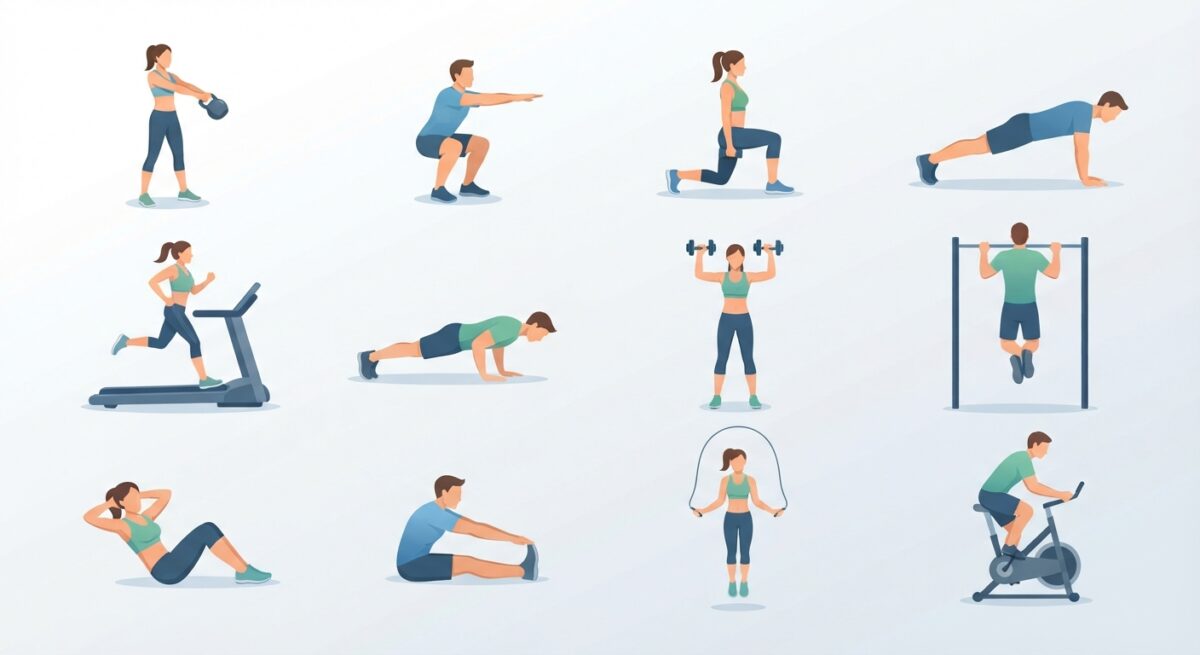
How to Lose Fat and Gain Muscle
- Reduce calories carefully: If you are overweight, losing weight usually involves reducing calories while staying active. Rather than trying to burn calories through excessive exercise, focus on a sensible calorie intake that you can maintain.
- Use strength exercises: Strength exercises and resistance exercise can help you build muscle while supporting fat loss. Simple strengthening exercises such as lifting weights, push-ups, sit-ups, and squats can work several muscles and help you burn calories.
- Eat enough protein: Protein is a key building block for muscle, so adequate protein intake matters when you want to preserve or increase muscle mass. A high-protein diet can support fat loss while helping reduce lean mass loss.
- Choose useful protein foods: Foods such as chicken, fish, pulses, nut butters, high-protein yoghurt, eggs, milk, and cottage cheese can add protein to your meals. Whey protein, protein shakes, and protein powders can also be convenient around a workout, but check the ingredients for excess sugars and calories.
- Protect lean body mass: Losing fat while maintaining lean body mass and muscle mass is useful because these tissues support normal body function. This approach can also help address obesity and some related adverse health effects without focusing only on the number on the scale.
- Avoid extreme diet thinking: Low-carbohydrate diets, ketogenic diets, and high-fiber diets can produce weight loss, but diet results can vary between people. A useful goal is to focus on sustainable fat loss rather than simply making body weight fall quickly.
- Be careful with supplements: Some dietary supplements, such as chromium picolinate and green tea catechin, have been studied for their possible role in helping preserve lean mass during fat loss. They should not replace a balanced diet, adequate protein, and regular training.
- Build a comprehensive strategy: A comprehensive strategy combines evidence-guided food choices, appropriate calorie intake, suitable macronutrient intake, and regular resistance exercise. The NHS gives general calorie guidance, including around 1400 calories for women and 1900 calories for men, but individual needs can differ, so these figures should not automatically be treated as personal targets.
Summary
Losing weight can help reduce obesity and the risk of some chronic diseases, but scale changes may include fluid, muscle, and lean body mass, not only fat. For better health, strength, and overall vitality, the focus should also be on losing fat while trying to maintain muscle. This becomes especially important for older adults, who have a higher risk of sarcopenia and muscle loss.
In my view, a balanced approach using adequate protein, suitable protein intake, sensible macronutrients and calories, plus regular strength training, provides a more useful path to lose fat while protecting muscle. A nutritionist or exercise professional can also provide individual advice and tailored recommendations based on a person’s needs.
FAQ’s
What is the main difference between fat loss and weight loss?
Weight loss means a reduction in scale weight, which can come from body fat, muscle, water, or glycogen. Fat loss specifically means reducing body fat while keeping muscle as much as possible.
Does losing weight always mean losing fat?
No. Aggressive dieting can cause muscle loss along with fat loss, especially without strength training. A sensible calorie deficit, adequate protein, and resistance training can help protect muscle while losing fat.
Can I lose fat without losing weight?
Yes. Body recomposition happens when you are building muscle while losing fat. In this situation, your scale or body weight may change very little even though your waist, measurements, and how your clothes fit may change.
How can I tell if I am losing fat or muscle?
Track your strength in the gym, along with your waist and other measurements. If strength drops quickly while body weight falls rapidly, you may be sacrificing muscle. Looking at several signs together gives more useful information than relying on the scale alone.
Why is preserving muscle important during fat loss?
Maintaining muscle can support metabolism, physical performance, and long-term metabolic health. This is why combining adequate protein, a moderate calorie deficit, and resistance training is generally more useful than trying to lose pounds as quickly as possible.
Should I focus on fat loss or weight loss?
For many people, focusing on fat loss and keeping muscle gives a clearer picture of body-composition changes. The scale is useful for watching trends, but it should not be treated as a daily verdict, because changes in water, glycogen, and other factors can affect scale weight.