The Game Plan:
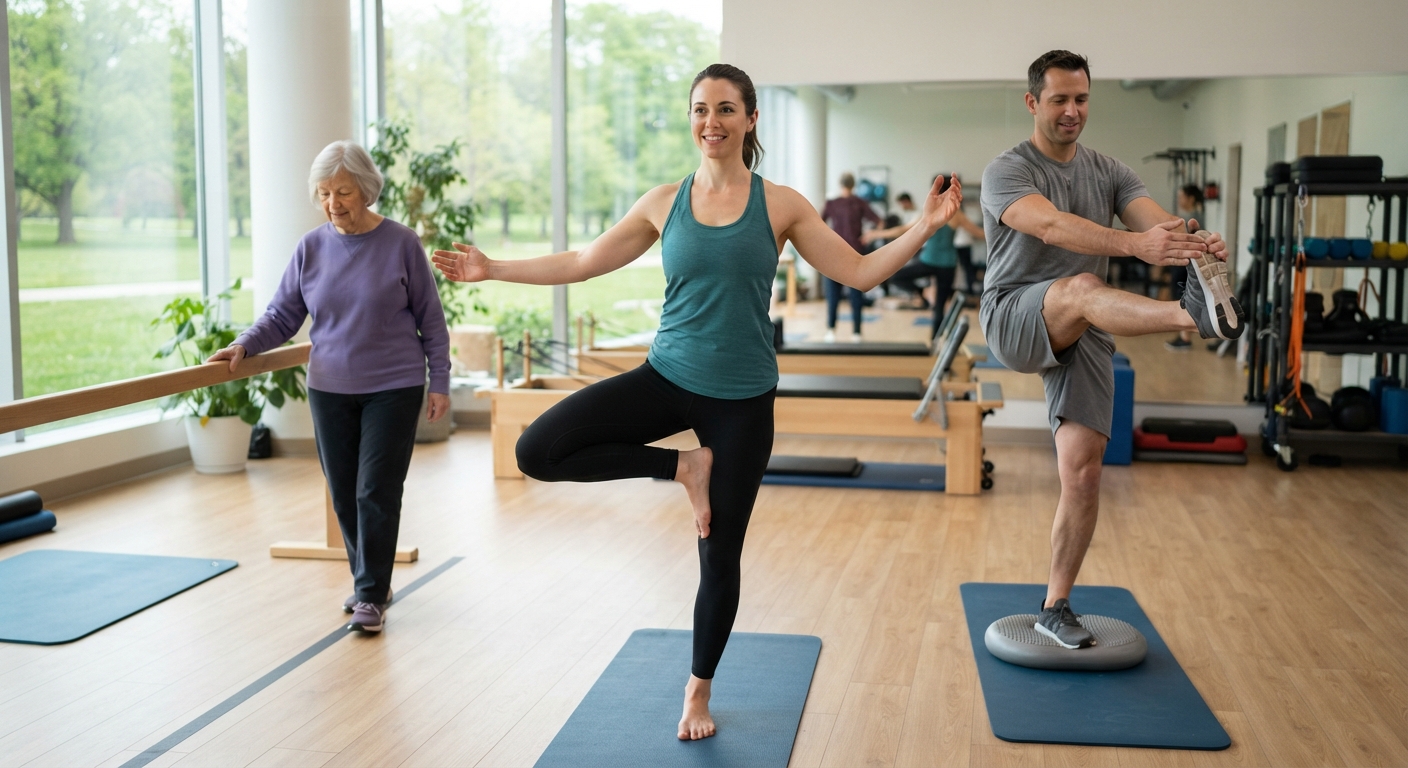
Balance is a fundamental aspect of daily life and plays an integral role in simple actions such as walking and standing, as well as complex activities like playing soccer and lifting weights. I often think of balance as the invisible glue connecting our movements, because it helps us navigate our environment while staying stable.
It depends on a complex system involving vision, proprioception, or body awareness, and the vestibular system in the inner ear, which work together to maintain equilibrium. This system controls your movement, body response, ability to adjust to various surfaces, and recovery after disturbances affect your stability, such as a trip or stumble.
Poor balance can increase the risk of falls, which can cause fatal injuries and non-fatal injuries, particularly among older adults. A lack of balance can also affect younger individuals, contributing to sports injuries and reduced physical performance. Improving balance supports maintaining good health, longevity, healthy aging, and active aging, while helping make movement an enjoyable life skill.
Good balance becomes especially important because falls are a common cause of injury, and reducing the risk of falling is one reason to include balance training alongside regular physical activity, strength training, and a consistent daily routine.
What are the Ways to Improve Balance
- Build a strong foundation: Balance starts with mobility, strength, and posture. Good posture is the cornerstone of balance because it creates a strong foundation through proper body alignment and stability. If poor mobility makes it hard to hold correct posture, work toward a neutral spine, keeping head alignment over the shoulders and hips. A regular mobility routine can also help reduce the effects of repetitive motions, sitting, computer work, desk work, and texting on your spinal posture.
- Strengthen your core: Strong core muscles provide body stability and body support, helping with weight transfer from one leg to another when moving across uneven terrain. Core-strengthening exercises such as planks, bridges, and abdominal curls can improve body control and make everyday movements feel steadier. I find that combining these exercises with single-leg exercises is a practical way to challenge balance while developing core engagement.
- Add mindful movement: Mindfulness during daily activities can improve body awareness and make mindful movement easier to include throughout the day. Try movement snacks, which are short stints of activity spread across the day rather than relying on one long workout. This approach makes regular physical activity easier to manage and can gradually turn balance practice into a natural part of your routine.
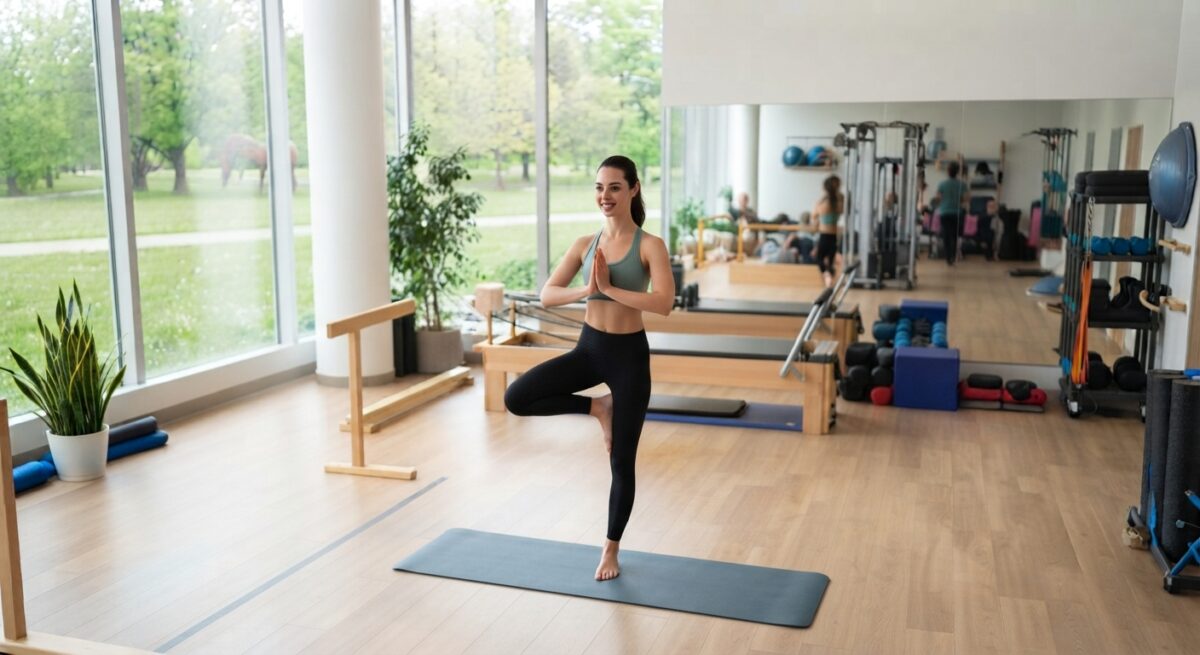
- Try yoga and Tai chi: Yoga can develop flexibility, help you maintain a steady body, and improve control during disciplined movements. Tai chi uses fluid movements, choreographed movements, and controlled poses that challenge balance while building muscle strength and stamina. Both can be useful options when you want balance practice to feel more like a skill-building activity than a repetitive workout.
- Use Pilates and strength training: Pilates exercises can develop strong core muscles and flexibility, which are useful for good posture and balance. Strength training can also support balance using free weights, machines, bands, or your own body weight. These options allow you to gradually increase the challenge while keeping your movements controlled.
- Practice active movement: Simple activities such as stair-climbing, walking, and cycling can add useful movement to your week while supporting muscle strength and coordination. Adding stretching and core exercises can complement these activities by supporting mobility and posture. Regular practice is especially helpful for healthy aging, because maintaining strength, movement, and balance can make everyday physical tasks easier to manage.
Best Balance Improving Exercises
Walking
Walking is a simple activity for moving the lower extremities while supporting balance. It strengthens the lower body, builds muscle strength, and supports good balance; biking, swimming, and stair climbing can add variety.
Balance-specific exercises
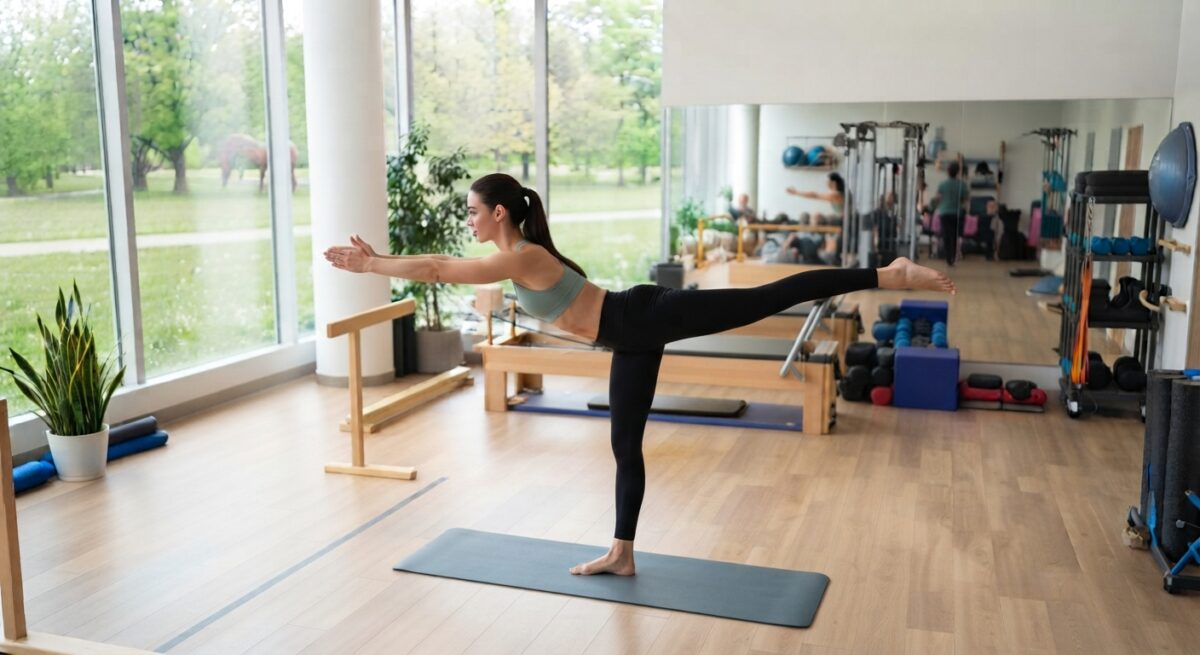
Balance-specific exercises can improve muscle strength, flexibility, and range of motion. Try to stand on one foot with one foot off the ground, practice heel-to-toe walking in a straight line, and work on stability, control, and balance skills while standing still, sitting upright, moving, or changing positions without relying heavily on your hands.
Yoga
Yoga offers balance-building benefits through strengthening muscles and improving flexibility. It develops static balance and dynamic balance, along with stability and control of the body during standing still, sitting upright, moving, and changing positions; useful yoga poses include tree pose, mountain pose, chair pose, warrior pose, standing pigeon, and downward-facing dog.
Tai chi
Tai chi is a balance-improving activity using slow movements and deliberate movements that shift your center of gravity. It supports lower body strength, flexibility, range of motion, coordination, stability, balance, and proprioception, helping you sense your body position in space.
Standing balance
For standing balance, begin this balance exercise by standing on one foot while using a counter or wall for support if needed. Gradually aim for 30 seconds on one leg, then repeat with the other leg.
Heel-toe walking
For heel-toe walking, stay near a wall for support and keep your feet aligned with every step. Place the heel of your front foot directly before the toes of your back foot, and work toward 20 steps.
Step-ups
For step-ups, stand at the bottom of a step near a wall or secure railing. Step up with your right foot, bring your left foot up, return to the starting position, and repeat for 5 step-ups on each side.
Grapevine walking
Grapevine walking means walking sideways while crossing one foot over the other, such as the right foot over the left foot, then reversing the pattern. Try five steps in each direction so both sides of the body get a workout; smaller steps make the exercise more challenging for balance.
Strength training
Strength training helps maintain muscle mass, including changes that can begin in the early 30s. You can train at home without a gym or weights using strength-training exercises such as squats, lunges, and step-ups; use correct form and controlled movement to support injury prevention, while strengthening the muscles, lower limbs, hip joints, and knee joints for better balance and other benefits.
Benefits of Improving Balance Exercises
- Improved posture: Regular balance exercises can support health benefits such as improved posture by strengthening the core muscles. A strong core helps you maintain a healthy posture and may reduce chronic back pain, while also lowering the risk of falling.
- Stronger bones: Balance training supports stronger bones and more stable bones and joints. Better stability can help reduce the risk of injuries and fractures if you experience a fall.
- Faster reactions and better coordination: Balance work can improve increased reaction times and coordination, giving you better control of your limbs and body. It can also support flexibility and good balance, helping you respond more safely when facing unexpected situations, such as a variance in elevation or steps, and potentially reducing falls.
- Improved brain function: Regular exercise can support improved brain function by helping maintain brain function and cognitive ability. Adding balance practice to your routine gives your body and mind another useful way to stay active.
Summary
Balancing issues and falls do not have to control everyday life as we age. For older adults, a balanced exercise program in a weekly routine can help reduce the risk of falls and fall-related injuries. When starting a new exercise, remember to listen to your body, follow exercise safety, and ask your doctor how to perform balance exercises safely. Strengthening your body and muscles can help prevent falls in the future, while good balance can support you through aging and help you protect yourself.
FAQ’s
Which vitamins may support physical balance?
B12 and D3 are vitamins linked with physical balance and preventing falls. If you are concerned about deficiencies, discuss appropriate testing and supplementation with a healthcare professional.
What muscles help improve balance?
Your muscles work as a coordinated network, including the core, hip muscles, leg muscles, and ankle muscles. They make constant micro-adjustments that help keep your center of gravity steady.
Which exercise is useful for testing balance?
The single-leg stand is a simple foundational exercise to test balance. Start with support nearby and progress gradually as your stability improves.
What treatment can help with balance problems?
Treatment depends on the underlying cause of balance problems. Vestibular Rehabilitation Therapy (VRT) may be used for inner ear, dizziness, and imbalance concerns, so a healthcare professional can help identify the appropriate treatment.
How can I improve balance during aging?
Regular daily exercises that build strength in the lower body, along with strength exercises, stability exercises, single-leg stances, and sit-to-stand movements, can support balance in old age. Since aging can affect muscles, joints, and inner ear function, consistent practice can help maintain strength and reduce falls.