The Game Plan:
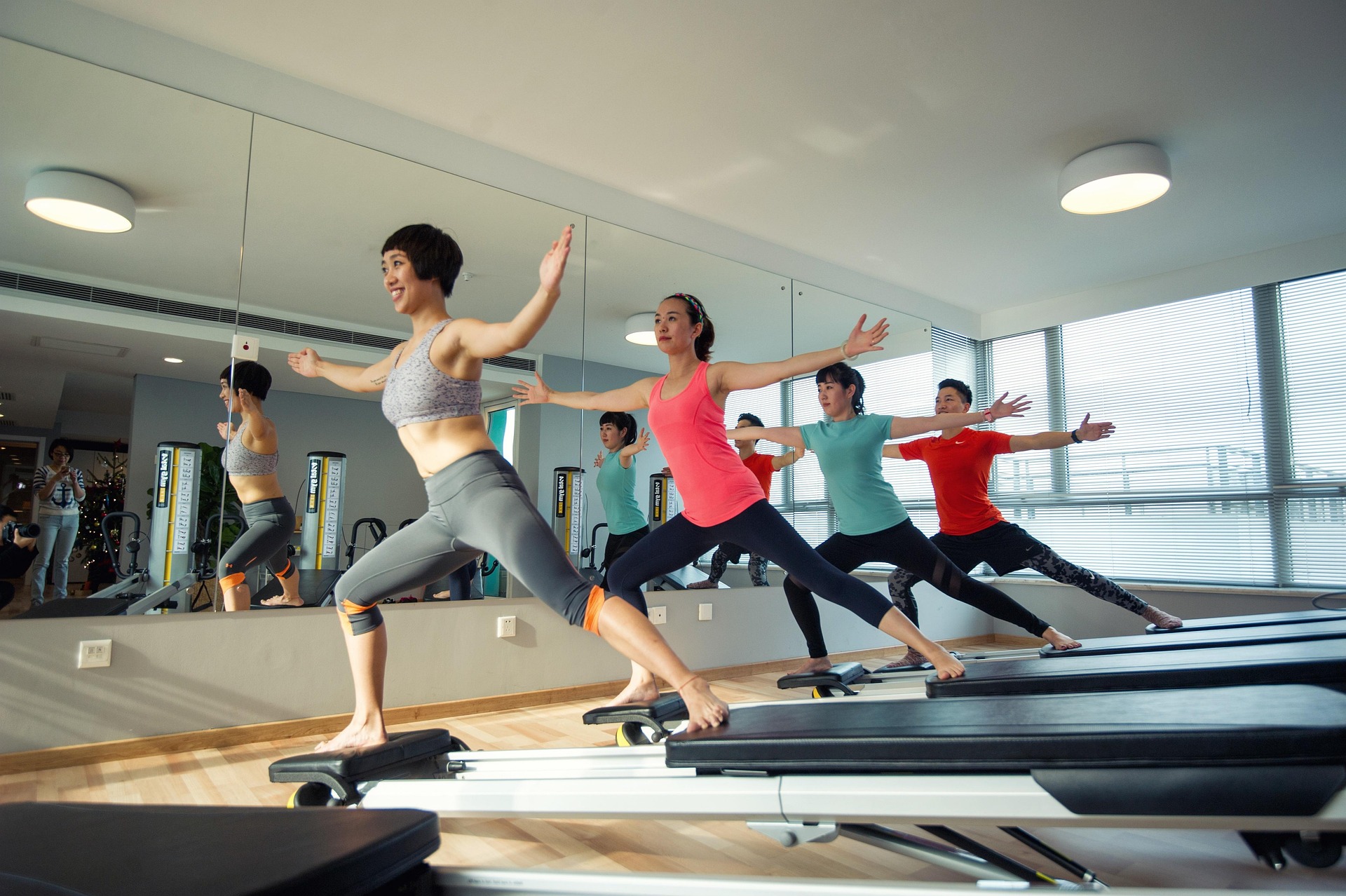
If you are new to Pilates exercises, you do not need a fancy studio, Reformer machine, or expensive Pilates classes to get started. A simple mat, your own body weight, and a little space can turn your home into a useful place for home workouts. Pilates has become popular globally, with bookings rising as more people discover that a low-impact workout can support strength-building, muscle-toning, and better movement without putting heavy stress on the joints. A 20-minute Pilates workout can be enough to build a regular Pilates practice, especially for beginners who want something practical and easy to fit into the day.
Beginners can also use Mat Pilates videos and books to guide their Pilates training and create a consistent Pilates workout routine. For someone seeking safe exercise, a generally injury-free person can often begin a home practice, although anyone with an injury, chronic back pain, or other chronic pain should get appropriate professional advice before starting. The goal is not just toning the muscle; it is building a stronger connection between the mind, body, and spirit through controlled movement.
From my experience with movement-focused training, the biggest difference comes from precision, form, and control, not simply doing more repetitions. That is why Pilates exercises can feel challenging even when they look simple.
Why Pilates Is the Most Popular Workout of 2026
Pilates exercises have become a major part of global fitness because they offer a simple balance between low impact and high results. Unlike HIIT, heavy lifting, and other high-intensity workouts, Pilates can build strength while reducing unnecessary joint strain and fatigue. Its focus on controlled movements, controlled breathing, precise movement, and body awareness creates a strong mind-body connection and makes mindful movement feel practical rather than complicated.
The 2026 fitness landscape is moving toward intentional movement, joint-friendly exercise, and sustainable exercise, which helps explain strong exercise adherence and why this workout type appeals to people looking for long-term health and long-term wellbeing. I find that its measured pace is especially useful for people who want their mind and body to work together harmoniously while still getting meaningful physical training.
Another reason for its popularity is its functional strength focus. Pilates trains functional movement and everyday movement patterns, including bending, twisting, reaching, and stabilizing, while improving core strength, flexibility, alignment, mobility, and stability. Physical therapists have also used Pilates as a rehabilitation exercise, adding to its reputation as a practical form of exercise.
The minimal equipment requirement makes mat Pilates a natural Pilates foundation for a home workout, while Reformer Pilates continues to attract attention on Instagram. Pilates has been the most-booked workout globally for the third consecutive year, with a reported 66 percent increase in bookings since 2024.
Top 5 Pilates Exercises
The Hundred
The goal is not simply to complete the 100 arm pumps. The real challenge is keeping your core active while the arms move repeatedly. If your lower back starts lifting away from the mat, bring your legs slightly higher than the tabletop position until you can maintain control. Pilates works best when the movement remains smooth, so there is no prize for forcing the position.
I find it useful to imagine that the abdominal area is gently tightening inward with every exhale. That small adjustment can make the exercise feel much more focused. The Hundred also introduces the combination of movement and breathing that makes Pilates different from simply performing fast bodyweight practices.
How to do it:
- Lie on your back on the mat with your legs lifted into a tabletop position.
- Keep your head and shoulders relaxed but gently curled away from the mat.
- Extend your arms and pump arms up and down with controlled movements while maintaining your breathing rhythm.
- Breathe in for 5 counts and breathe out for 5 counts, completing 10 cycles for 100 arm pumps.
- This is the signature Pilates warm-up because it activates your core while developing endurance and establishing the breathing pattern used throughout a Pilates session.
- Keep the ribs controlled rather than allowing them to flare, and avoid pulling the neck forward.
Roll-Up
The exercise should feel like a smooth sequence rather than one large sit-up. If the movement becomes jerky, slow down and concentrate on each vertebra. Your toes can act as a visual target, but reaching farther is not more important than maintaining good technique. The controlled return is especially valuable because it teaches your abdominal muscles to support the spine while you move backward.
This is one reason the Roll-Up can be more demanding than it first appears. In a regular home Pilates practice, consistent control is generally more useful than trying to increase the number of repetitions quickly.
How to do it:
- Begin lying flat with your arms overhead and your legs comfortably extended.
- Slowly curl your spine away from the mat, moving one vertebra at a time until you are sitting upright and reaching toward your toes.
- Maintain control rather than using momentum.
- Reverse the movement gradually, placing each part of the spine back down until you return to the starting position. Aim for 6–8 reps.
- The Roll-Up develops abdominal strength and spinal flexibility at the same time, making it a useful movement when your goal is controlled trunk movement rather than simply working the stomach.
Single Leg Stretch
The Single Leg Stretch is really about coordination: one knee comes toward the chest while the other leg reaches away, and then the roles switch. That alternating action asks the core to remain active without becoming rigid.
When I coach this type of movement, I encourage a slower pace at first because rushing often hides poor control. Once the pattern feels natural, you can gradually make the transitions smoother while preserving core stability.
How to do it:
- Start on your back with your knees drawn toward your chest and your head and shoulders gently curled upward.
- Extend one leg outward to approximately a 45-degree angle while drawing the other knee toward you.
- Alternate legs in a smooth, controlled rhythm for 8–10 reps per side.
- Keep your core stability throughout the movement and try to prevent your pelvis from rocking.
- The legs should move independently, while your trunk remains relatively steady.
- This makes the exercise useful for learning how to keep the center of the body stable while the limbs are moving.
Pilates Plank
This exercise develops core endurance while also asking the arms, shoulders, and legs to contribute. If a full plank feels too difficult, the forearm variation can provide additional support. The important thing is to maintain quality. A shorter hold with good active engagement is more useful than a longer hold where the body loses its straight line.
How to do it:
- Move into either a forearm plank or full plank.
- In the full version, place your hands underneath your shoulders; in the forearm version, keep your forearms supported by the mat.
- Draw your navel gently toward your spine and maintain a straight line from your head to heels.
- Keep your abs tight and focus on active engagement rather than simply trying to survive the hold.
- Begin with 30–60 seconds, adjusting the duration to your current ability.
- The Pilates approach places particular attention on the scoop of the abdominals, which means you actively support the center of the body instead of treating the position like a passive endurance test.
Swimming
I prefer this approach because Swimming should feel controlled and rhythmic, not like a race. Over time, the exercise can improve awareness of the back muscles and help you understand how the entire back side of the body contributes to stable movement.
How to do it:
- Begin face down on the mat with your arms extended overhead and your legs reaching long behind you.
- Lift your opposite arm and opposite leg simultaneously, then switch sides. Continue with a controlled flutter for about 30 seconds.
- Keep the movement relatively small and steady rather than trying to lift the limbs as high as possible.
- Swimming strengthens the posterior chain, including the back muscles, while teaching the body to coordinate opposite-side movement.
- This is particularly useful because Pilates can target the muscles along the back of the body in ways that many other bodyweight practices do not emphasize as strongly.
What Are the Benefits of Pilates Exercise?
- Pilates can be a practical fitness launchpad for beginners, experienced movers, and Pilates lovers because it builds control without making every fitness workout feel exhausting.
- With Pilates at home, a helpful guide, videos, and little or no equipment, you can create a simple Home Pilates Practice without needing a trainer.
- One reason Pilates benefits so many people is that you can modify the workout around your fitness journey, goals, body type, and current levels, making it more inclusive.
- The use of natural movements and stretching can improve flexibility, helping you feel revitalized and invigorated rather than drained or sore.
- Pilates uses bodyweight to build strength and help you feel stronger and more agile without leaving you overworked or underworked.
- The focus is on quality rather than quantity, with full body engagement that works muscle groups and muscles from head to toe, including arms, legs, shoulders, back, core, and abdomen.
- As a lower-intensity workout, Pilates can still be an effective workout for core strength, mobility, balance, posture, and flexibility, while it may also support lower back pain management and injury rehabilitation when appropriately guided.
4-Week Beginner Plan
| Week | Sessions & Time | Main Focus | Exercises & Progression |
| Week 1 | 3 sessions, 15–20 minutes | Learn the six foundational exercises, using the minimum reps | Focus on form and breathing. Use 30 seconds of rest between exercises. Pay attention to instructor form cues; a guided program such as Daily Burn‘s Pilates series can help. |
| Week 2 | 3–4 sessions, 20–25 minutes | Build consistency and increase reps | Move toward the higher end of each rep range. Add the Side-Lying Leg Series for inner thigh and outer thigh work. Add the Saw, which combines seated rotation with a forward bend. Begin linking exercises with minimal rest. |
| Week 3 | 4 sessions, 25–30 minutes | Develop a more flowing practice | Practice moving between exercises without stopping. Add the Teaser, a challenging V-sit hold, and the Side Plank. Your core should begin feeling stronger as control improves. |
| Week 4 | 4–5 sessions, 30–40 minutes | Create a complete flowing sequence | Take the Hundred into its full version with legs extended at 45 degrees. Add the Corkscrew, which involves circling legs while lying on your back, for advanced core work. You can then begin exploring intermediate-level classes. |
Summary
Whether you are a beginner or returning to Pilates after a break, start your routine slowly and increase over time, paying attention to form and how your body feels to reduce the risk of injuries. Pilates can complement cardio-based workouts, strength-training workouts, and other movements, while a fitness professional can tailor your workout regimen and program to your needs and fitness level.
Make it a pillar of your fitness routine or use it as a complementary practice; with the right time and energy, it can be a hidden gem alongside anything else, as Kristin describes it.
FAQ’s
Is Pilates at home effective?
Yes. Pilates at home can be as effective as studio sessions when you maintain consistency, proper form, and controlled movements with a strong mind-body connection.
Can beginners do Pilates at home?
Absolutely. Beginners can use online tutorials, beginner-friendly videos, or apps for guidance, starting with a mat and resistance bands as basic equipment.
Is 20 minutes of daily Pilates enough?
20 minutes of daily Pilates can improve flexibility, core strength, and posture when quality matters more than duration; longer sessions may help with advanced goals, muscle tone, or rehab.
What is the 80/20 rule in Pilates?
The 80/20 rule suggests that most results can come from mastering key foundational exercises, such as the Hundred and Roll-Up, before progressing to advanced variations and progressive overload.
Is Pilates better than yoga for core strength?
For pure core strength, Pilates emphasizes core activation through the powerhouse, deep abdominals, pelvic floor, and lower back; yoga can complement this with balanced poses, transitions, flexibility, stress relief, and spiritual practice.
What should beginners look for in an online Pilates program?
Choose certified instruction, progressive programming, clear form cues, modifications, and both verbal guidance and visual guidance; options include Daily Burn, Apple Fitness+, and Pilatesology, with credentials such as PMA, BASI, or Stott. Good proper technique can help reduce neck strain and lower back strain, while occasional virtual classes can provide useful feedback.