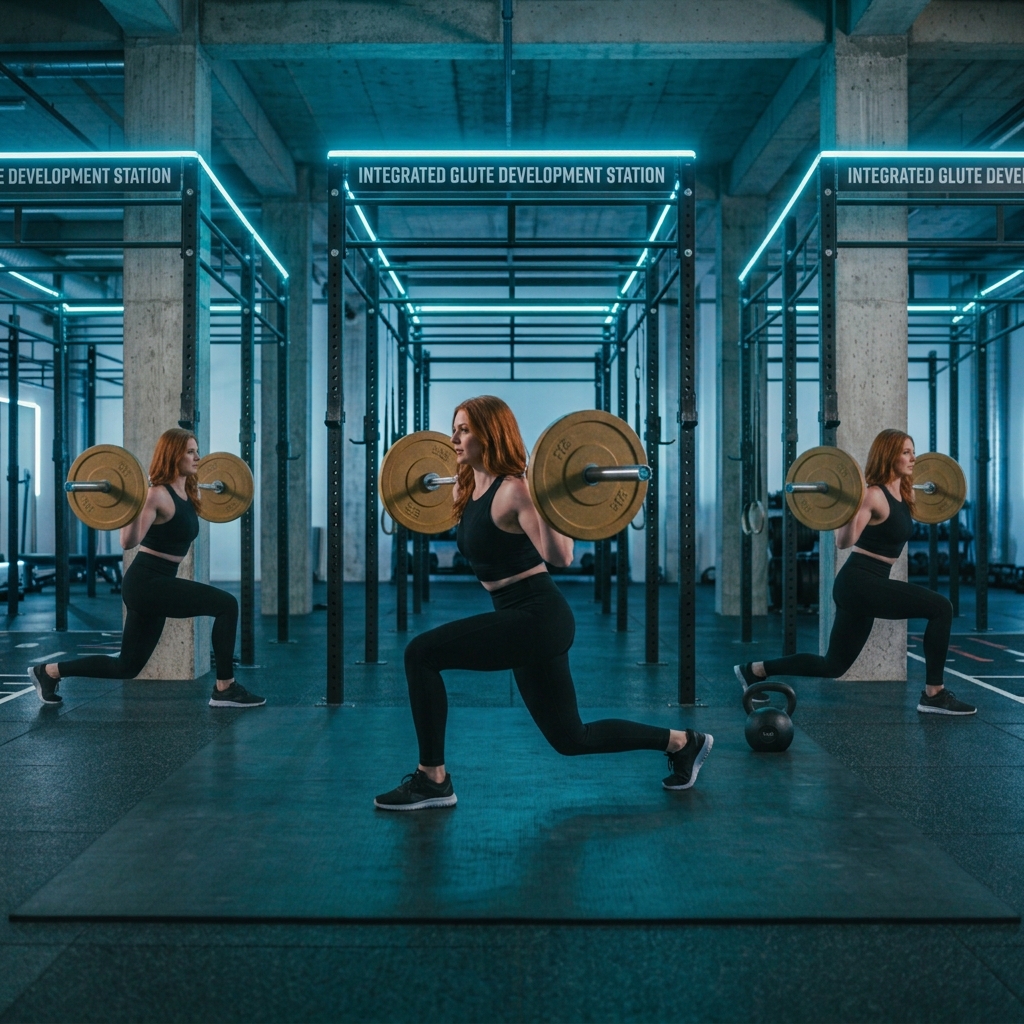
The Game Plan:
If you want a firmer booty and a more lifted-looking derriere, you do not have to rely only on squats. From my experience with simple fitness routines, glute exercises such as single-leg lifts, lateral lunges, and donkey kicks can make a workout feel fresh while supporting building strength, improving mobility, and sculpting the lower body. These exercises can also add a useful challenge without putting every session around deep squatting, which may be helpful for people with knee issues.
The goal is not an overnight change in glute size, but consistent strength training that helps develop the glute muscles, improve shape and tone, and create a stronger, more defined curved physique and curvaceous appearance.
Your glutes are important for everyday bodily movements as well as walking, running, and jumping, so training them has benefits beyond appearance. A balanced workout routine can include leg lifts, lunges, and controlled kicks as part of regular physical activity.
I also like rotating tried-and-true exercises with unique exercises, because repeating the same movements can become dull and make it harder to stay consistent with an exercise routine. With steady effort, proper form, and enough recovery, these movements can help boost your strength and support better results across your lower-body workout.
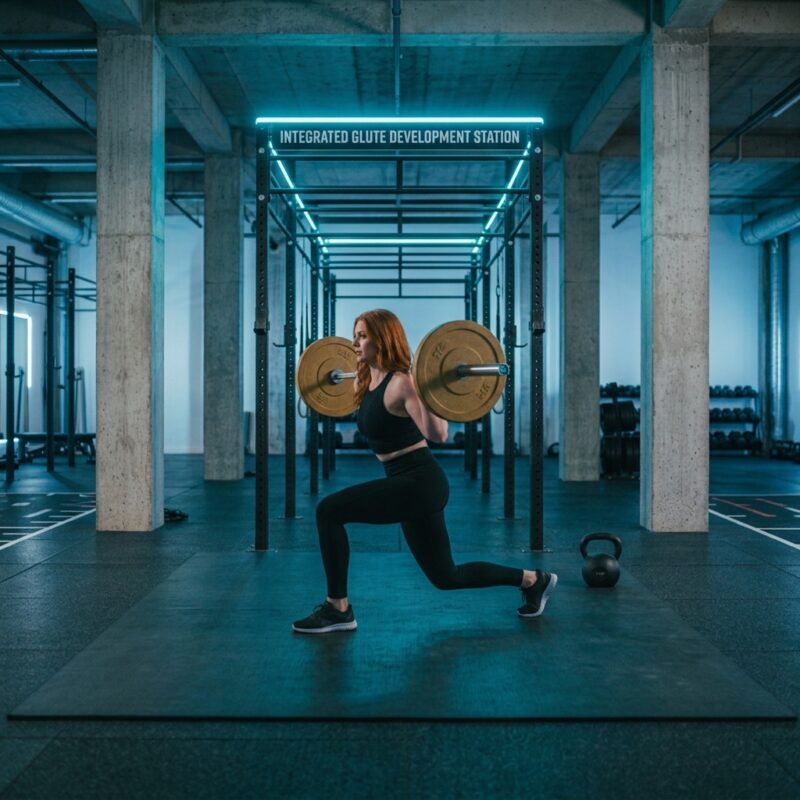
Exercises for an Instant Butt Lift
Bent-Knee Hip Extension
The fire hydrant and bent-knee hip extension are a simple barre-inspired move for your glutes, outer thighs, and core. I like this exercise because it gives your hips a controlled sculpting action without requiring heavy equipment. Keep your hips square and hips lifted, while your obliques and core stay active. Think of each repetition as a slow, controlled movement rather than a fast kick.
How to do it:
- Start in a tabletop position with your hands under your shoulders and your knees under your hips.
- Keep your right knee bent and lift your right leg until your right thigh is about parallel to the floor.
- Keep your right foot flexed, then extend the leg straight.
- Bring the right leg back toward the ground with the knee bent.
- Keep your shoulders, hips, and sides steady throughout the movement.
- Complete your desired reps, then switch sides.
Donkey Kicks
Donkey kicks directly train the gluteus maximus, the large muscle at the backside that helps with hip and thigh movement. They are also useful lower body exercises because the glute muscles work through a strong contraction while your body stays supported. Keep your lower ab muscles active and avoid letting your hips twist or sag. Unlike a squat, where the gluteus muscles work in a lengthened position, this movement lets you focus closely on squeezing the glutes.
How to do it:
- Get onto all fours in a tabletop position, with your knees hip-width apart, hands flat on the floor under your shoulders, and your spine neutral.
- Brace your core and keep your toes tucked or your foot flat, depending on the variation.
- Keep your right knee bent and your right foot flexed.
- Press your right foot toward the ceiling, using your glute muscles and squeezing glutes at the top.
- Keep your pelvis and hips facing the ground instead of rotating.
- Return to the starting position, then repeat on the left leg.
- Complete 6 to 12 reps on each leg for 3 sets, or adjust the volume to your fitness level.
Glute Bridges
Glute bridges are a classic booty-shaping exercise that trains the gluteus maximus, gluteus medius, and gluteus minimus. They can also work the hamstrings and help reduce feelings of tightness around the hips. The main goal is full extension without lifting your shoulders from the floor. In my experience, a slow lift and strong squeeze at the top usually feels much more effective than rushing through the reps.
How to do it:
- Lie on your back with your knees bent and feet flat on the floor.
- Position your feet a few inches away from your butt.
- Keep your arms at your sides, or raise them in front of you with your palms together.
- Press through your feet and lift your hips and butt into a bridge.
- Keep your shoulders grounded, your hips square, and your body in a straight line from your neck to your knees.
- Hold the top position for two breaths, then lower your hips and butt back to the ground.
- Complete 10 reps, focusing on controlled movement.
Clamshell
The clamshell is a useful exercise for mobility, hip rotation, and glute strength. It can be especially helpful after long periods of sitting, when your hips and thighs may feel stiff. You should feel a controlled burn in your glutes rather than swinging your leg. Keep your hips square and your abs engaged so the movement comes from the hip instead of the lower body twisting.
How to do it:
- Lie on your left side with your knees bent.
- Press up slightly on your left forearm to create a modified side plank position.
- Keep your hips square and place your right hand at your waist.
- Maintain a diagonal line from the top of your head toward the ground.
- Engage your abs, glutes, and thighs.
- Lift your top leg with the knee bent, opening the hip until your legs create a diamond shape.
- Close the clamshell and return to the starting position.
- Perform reps per side, keeping the movement slow and controlled.
Hip Thrusts
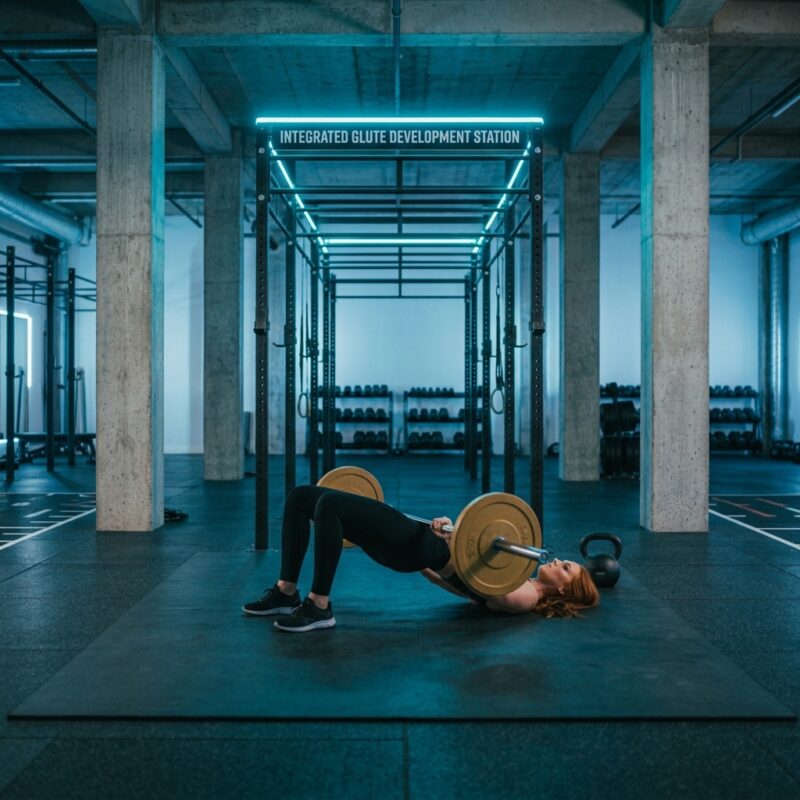
Hip thrusts are an efficient exercise for growing glutes and strengthening glutes. Some research suggests they can activate the gluteus muscles effectively compared with exercises such as traditional back squats and deadlifts. This is a more advanced movement, so technique matters more than adding a lot of weight. If you are new to hip thrusts, start with glute bridges and gradually progress before using a barbell.
How to do it:
- Sit on the floor with your legs straight and your shoulder blades resting against a secured bench.
- Place a barbell across the crease of your hips and hold the bar with your hands.
- You can use a barbell pad for comfort or hold a dumbbell instead.
- Bend your knees and position your feet about hip-width apart.
- Drive your heels into the ground, brace your core, and use your pelvis to drive the movement upward while squeezing glutes.
- At the top of the movement, keep your shins vertical, your torso parallel to the ground, and your knees at a 90-degree angle.
- Avoid pushing with your lower back.
- Lower the weight gently and maintain the same chest position throughout the movement.
- Complete 6 to 12 reps for 3 sets.
- Practice without a barbell until you can perform the movement accurately, then gradually add resistance.
Tips for Better Glute Results
- Form over weight: Focus on proper technique before lifting heavy or adding significant weight. Good exercise technique helps you activate muscles and work the right muscles during upper butt exercises.
- Challenge yourself: Once your form feels solid, challenge yourself, add weight, and push yourself toward stronger glutes. Lifting heavy can support building glutes, but it is not the only key ingredient.
- Change your reps: Mix heavy-weight, lower-rep exercises of 4 to 6 reps with lighter, higher-rep sets of 12 to 15 reps. This approach can challenge different muscle fibers and keep your glute exercises productive.
- Use progressive overload: Gradually increase your weight, reps, or intensity over time. This progressive overload approach can help you keep making progress and seeing glute gains.
- Add variety: Do not rely only on your favorites or the same exercises. Rotate lunges, squats, hip hinges, and hip abductions to keep progressing, improve results, and work toward a well-rounded bubble butt.
- Support training with nutrition: Frequency matters, so aim to train glutes at least twice a week. Pair your training with enough protein for muscle growth and muscle repair, a suitable calorie surplus to provide energy to build muscle, and complex carbs to fuel your upper butt workouts.
Summary
For a beginner, targeted exercises such as squats, donkey kickbacks, clamshells, lunges, and glute bridges can support better butt shape, volume, and firmness when paired with consistency and discipline. Starting with 10 reps and increasing the number of reps as the workout becomes easy can help you stay on track with a bubble butt workout plan performed every day.
While immediate results may be tempting, shapewear undergarments can create a temporary look, whereas cosmetic procedures, including butt lifts and implants, may offer quicker results but can be expensive and carry health risks.
FAQ’s
How can I build a bigger butt in 4 weeks?
A bigger butt in 4 weeks is possible to work toward, but noticeable muscle growth takes time. Focus on glute exercises such as squats, lunges, and hip thrusts 3-4 times a week, while following a protein-rich diet and allowing adequate rest for muscle recovery.
Do squats help increase glute size?
Yes. Squats train the gluteal muscles and can improve size and firmness when you use proper technique and consistent training. Adding resistance bands or weights and continuing to progressively increase intensity can support glute muscle growth and help boost results.
How can I get a toned and lifted butt?
Combine glute-focused exercises with a supportive nutrition plan and regular training. With steady progress, you may develop a more toned butt and lifted butt, but remember that building muscle is an ongoing journey, not an instant change.
How can I slim my hips and thighs?
Use aerobic exercises such as walking, jogging, and cycling, along with strength training that includes lunges, squats, and leg lifts. A balanced diet based on whole foods and fewer processed foods can support healthy fat loss, but spot-reducing does not work; you need to burn fat from the overall body over time.
Can resistance make a difference in glute training?
Yes. Adding resistance through weights or resistance bands can make your glutes work harder and support muscle growth. The key is to increase the challenge gradually while keeping proper technique, maintaining consistent training, and giving your muscles enough time for recovery.