The Game Plan:
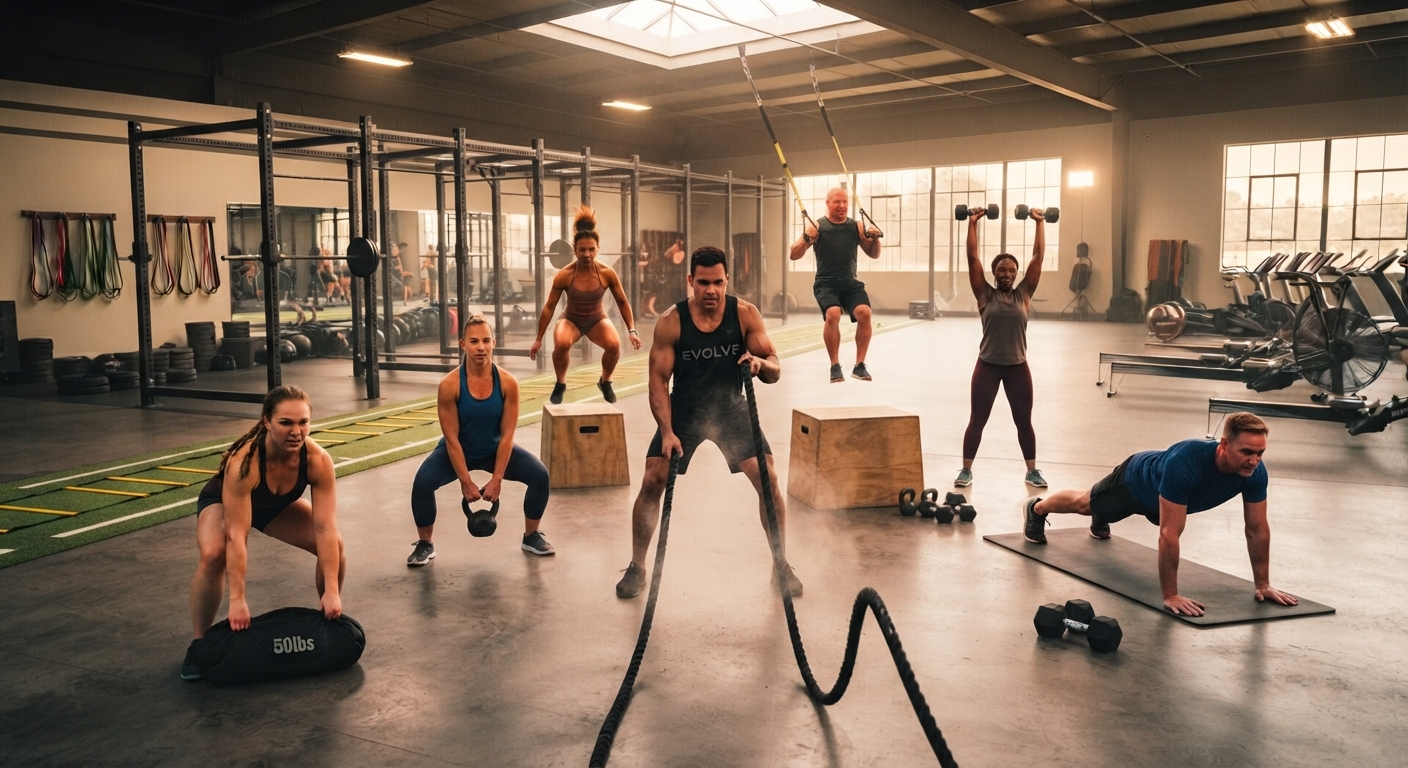
A Boot Camp Workout is a fast, intense, and efficient session that combines cardio, strength training, and speed elements with minimal equipment. Boot camp fitness is usually a coached group workout using a group class format, where a timed session moves through cardio intervals, bodyweight movement, and bodyweight exercises.
A typical real class may begin with a warm up, move through different exercises and circuit training, and finish with a cool down. The boot camp name is loosely linked to military physical training, but this workout is different from military recruit training and has nothing to do with the Apple macOS beta that shares the same name.
From my experience with workout programming, the biggest appeal is how a boot camp can challenge a beginner without requiring a complicated setup. The evidence around circuit training supports combining different movements and work periods, while a good coach helps participants start, progress, and train safely. The goal is not simply to move fast or train intensely every minute; it is to use smart pacing to gradually push beyond your comfort zone while building strength, fitness, and confidence.
What Is an Actually Boot Camp Workout?
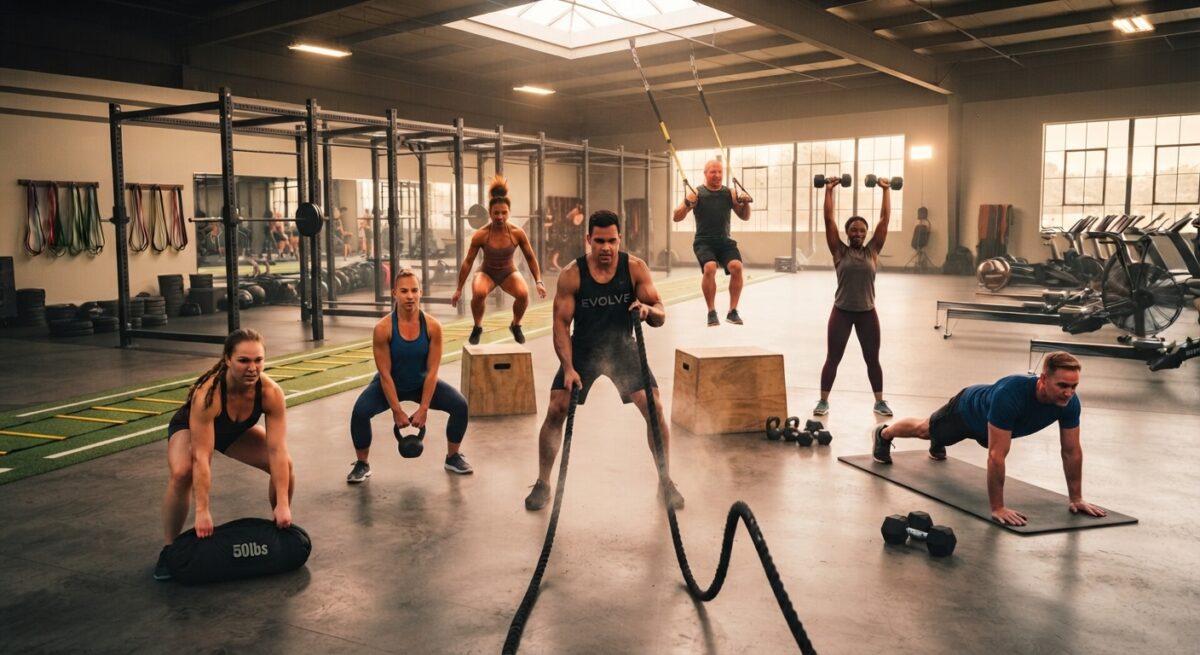
A boot camp workout is a fast-paced, full-body workout based loosely on military-style training, but you do not need to be a soldier to join one. The intensity is usually adjustable, making it suitable for someone getting started as well as people with more experience. A typical session combines strength training, cardio, and endurance through timed intervals and different stations.
A common format may last around 60 minutes as coached conditioning, mixing strength and movement without relying heavily on machines. Instead of standing in front of a mirror wondering what to do next, you focus on the work, follow the coach, and complete the workout with a clear structure.
Who’s Boot Camp Is Built For?
Bootcamp can suit many adults 40+, with a few caveats: if you can walk without pain, a modified version of a bootcamp class may work, as the coach can adjust movements to match what your body can handle. It can be especially useful if you have been sedentary and need structure, rather than relying on a gym membership to decide what to do. The variety of bootcamp training can also help reduce adaptation when you are already active but stuck in a rut.
For busy exercisers, these effective classes combine cardio and strength into a complete workout, making fitness bootcamp a practical choice when schedule and time are limited. If you want to take your workouts to the next level, become fitter and faster, or refresh your usual routine, the floor and cardio portions can create a challenging form of physical activity. Just remember that bootcamp can be invigorating but hard, so having a reasonable base of fitness can make the experience more manageable.
What Exercises Do Boot Camps Use?
Boot camp circuits usually mix bodyweight movements with light equipment to create a full body stimulus without complicated setup. In a typical class, stations may use dumbbells, kettlebells, plyo boxes, a mat, or a clear patch of floor. From my experience with simple workout programming, the best approach is to keep each movement controlled and focus on proper form before adding speed or weight.
Squats
- Target: glutes, hamstrings, quads.
- How to do: Stand with feet slightly wider than hip-width, keep your toes slightly out, push your hips back, and bend your knees until your thighs are near a 90-degree angle. Keep your weight balanced and return to standing.
Reverse Lunges
- Target: lower body, especially the glutes and legs.
- How to do: Step one leg backward, bend both knees with control, keep your upper body steady, then push through the front foot to return to the starting position.
Step-Ups
- Target: lower body and leg muscles.
- How to do: Place one foot on a stable plyo box or bench, press through that foot to stand, bring the other leg up, then step down carefully and switch sides.
Glute Bridges
- Target: glutes and hips.
- How to do: Lie on your back with your knees bent and feet on the floor. Press through your feet, lift your hips, squeeze your glutes at the top, and lower with control.
One-Legged Sit-to-Stands
- Target: legs, hips, and balance.
- How to do: Stand in front of a bench, use one leg as the main support, lower toward the seat with control, then drive through that leg to stand again.
Push-Ups
- Target: upper body, chest, triceps, deltoids, and biceps.
- How to do: Start on all fours, place your hands under your shoulders, and extend your legs into a plank. Keep your spine neutral, core tight, and back and hips in a straight line. Bend your elbows, lower your chest, then press the floor away to complete one rep.
Rows
- Target: upper back and arms.
- How to do: Hold dumbbells, hinge slightly at the hips, keep your back steady, pull the weights toward your body, then lower them slowly.
Overhead Presses
- Target: shoulders, arms, and upper body.
- How to do: Hold dumbbells near shoulder height, keep your core tight, press the weights overhead, then lower them back under control.
Triceps Dips
- Target: triceps, shoulders, and arms.
- How to do: Sit near a stable bench, place your hands beside your hips, move forward slightly, bend your elbows to lower your body, then press back up.
Burpees
- Target: full body, cardio, and conditioning.
- How to do: Lower into a squat, place your hands on the floor, move your legs back into a plank, return your feet forward, and stand or jump up.
Kettlebell Swings
- Target: hips, glutes, legs, and core.
- How to do: Hold a kettlebell, hinge at your hips, swing it between your legs, then drive your hips forward to swing it upward. Let your hips create the movement rather than lifting mainly with your arms.
Loaded Carries
- Target: grip, shoulders, core, and legs.
- How to do: Hold a suitable kettlebell or dumbbell in your hands, stand tall, keep your core tight, and walk across the room with controlled steps.
Jump Rope
- Target: full body, cardio, and conditioning.
- How to do: Stand with feet together and hold a jump rope handle in each hand. Swing the rope over your head and jump as it reaches your feet. Continue for 30 seconds. With a low ceiling, use another movement instead.
High Knees
- Target: cardio, legs, and conditioning.
- How to do: Stand with your feet together and hands in front of your stomach, with your palms facing the floor. Quickly lift your right knee toward your right hand, lower it, then lift your left leg. Keep alternating legs and increase the speed for an extra challenge.
Shuttle Runs
- Target: cardio, speed, and conditioning.
- How to do: Run between two marked points, changing direction under control at each end. Start at a manageable pace before increasing your speed.
Mountain Climbers
- Target: core, legs, and cardio.
- How to do: Begin in a high plank with your hands under your shoulders and spine neutral. Keep your core tight and drive one knee toward your chest, then switch legs quickly while keeping your body stable.
Plank Holds
- Target: core, shoulders, arms, and legs.
- How to do: Start in a traditional plank position with your hands or forearms supported. Keep your back, hips, and legs aligned, tighten your core, and hold without letting your hips drop.
Dead Bugs
- Target: core control and stability.
- How to do: Lie on your back, lift your arms and legs, then slowly extend the opposite arm and leg while keeping your lower back controlled against the floor. Return and alternate sides.
Hollow Holds
- Target: core and abdominal muscles.
- How to do: Lie on your back, tighten your core, lift your shoulders and legs slightly from the floor, and hold the position without losing control of your lower back.
Jumping Jacks
- Target: full body workout and cardio.
- How to do: Stand with your arms at your sides and legs together. Jump while moving your legs out and raising your arms overhead, then jump back to the starting position. Continue for 30 seconds.
Walking Plank
- Target: full body; arms, core, and legs.
- How to do: Make sure the area is clear of obstructions. Start in a traditional plank position, move your right hand and right foot one step to the right, then move your left hand and left foot to follow. Repeat for several steps, then move back in the other direction while keeping your core tight.
30-Minute Boot Camp Workouts for Beginners (4-Week Plan)
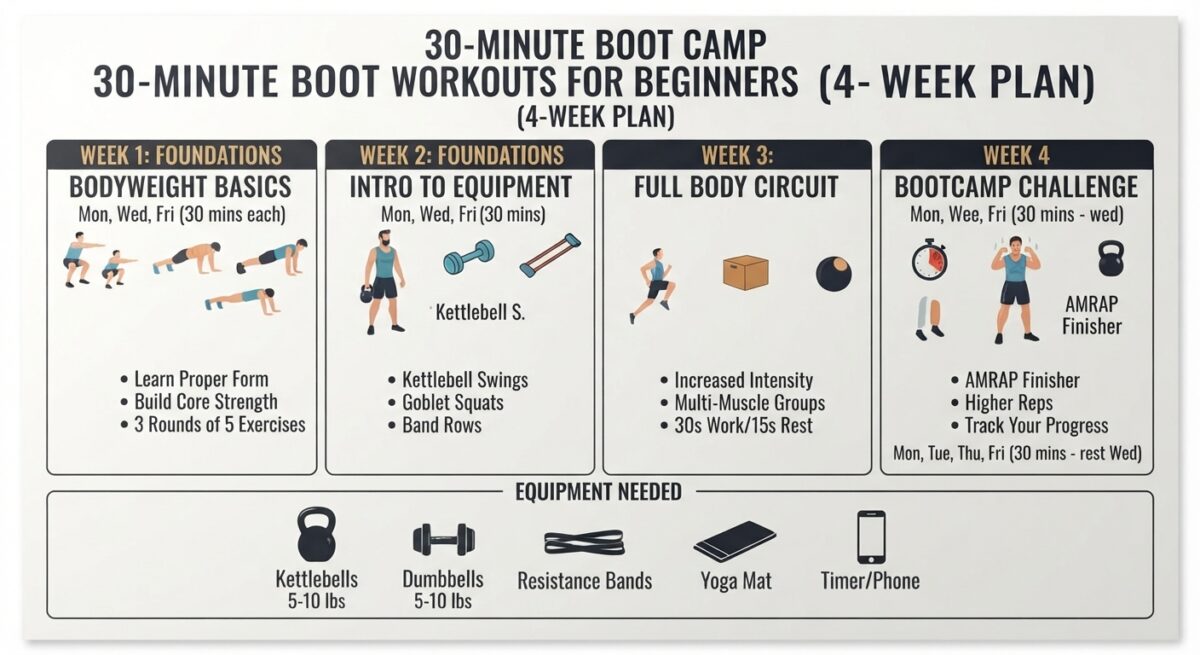
This boot camp plan is designed for beginners who want a gradual path from activation and adaptation to higher intensity. The idea is to learn movements, build a strong foundation, and improve coordination, mobility, and fitness without chasing extreme fatigue. I would keep the first week controlled, then add work slowly so progress feels manageable, not overwhelming.
Week 1 – Activation and Adaptation
The first week focuses on learning movements and activating muscles. Keep the workouts short, use longer rest periods, and pay close attention to technique.
| Plan | Details |
| Sessions | three sessions |
| Exercises | squats, lunges, modified push-ups, brisk walking |
| Circuit rounds | 3 rounds |
| Work | 30 seconds work |
| Rest | 30 seconds rest, with 90 sec between rounds |
| Training focus | activation, adaptation, technique, coordination, mobility, and learning each station |
| Equipment | bodyweight only |
| Approach | Use regressions when needed and keep fatigue manageable rather than overwhelming |
| Goal | Improve movement familiarity and let the body adapt without extreme fatigue |
Week 2 – Building the Foundation
In Week 2, the bootcamp program makes a slight increase in intensity. Rest periods become shorter, while exercises can flow into more dynamic sequences.
| Plan | Details |
| Sessions | 3 |
| Circuit rounds | 2 to 3 |
| Work | 35 seconds work |
| Rest | 25 seconds rest |
| Training focus | building the foundation, slight increase in intensity, cardiovascular work, and dynamic sequences |
| Progression | Add repetitions before adding load |
| Timing | Keep the same timing and same rounds |
| Exercise change | Drop one regression, usually the squat, for the standard version |
| Expected changes | increased endurance, faster recovery, and improved perception of your body |
| Goal | Support consolidating the habit and strengthen motivation |
Week 3 – Increasing Intensity
By Week 3, the plan moves toward increasing intensity through challenging variations of previously learned exercises.
| Plan | Details |
| Sessions | 3 |
| Circuit rounds | 3 |
| Work | 40 seconds work |
| Rest | 20 seconds rest |
| Training focus | increasing intensity, challenging variations, and a controlled structure |
| Equipment | Add light dumbbells or a kettlebell |
| Progression | Cut the rest between rounds from 90 seconds to 60 seconds |
| Exercise focus | Use previously learned exercises with more challenging variations |
| Goal | Stimulate muscles, challenge the cardiovascular system, and build progress |
| Approach | Keep everything else unchanged while allowing movements to become smoother and more natural |
Week 4 – Consolidation and Awareness
Week 4 is the final week and focuses on consolidation and awareness.
| Plan | Details |
| Sessions | 3 |
| Circuit rounds | 3, progressing to a fourth round |
| Work | 40 seconds work |
| Rest | 20 seconds rest |
| Training focus | consolidation, awareness, and sustainable intensity |
| Load | Keep the load from Week 3 |
| Form | Focus on cleaning up your form |
| Progression | Add a fourth round |
| Workout time | Increase from about 20 minutes to about 26 minutes |
| Goal | Build a complete, rewarding, and sustainable routine |
| Long-term focus | Turn the temporary program into a lasting lifestyle through improved physical condition and a positive mental shift |
Benefits of Boot Camp Workout
- Well-rounded fitness: Boot camp training creates a useful balance between lifting weights and cardio, working several fitness qualities in one of the most efficient workouts for everyday life. It can help you feel stronger, more energized, and more capable without focusing only on muscle size, pure strength training, or becoming a marathon runner.
- Full-body conditioning: A single session can train your entire body, including the upper body, lower body, and core. Functional movements, bodyweight exercises, and resistance tools can support daily strength and better movement quality.
- Cardiovascular improvement: During a boot camp, your heart rate can stay elevated through much of the workout. Regular training can improve cardiovascular endurance and stamina, while near-constant motion helps you fit more exercise into a shorter session.
- Strength and muscle development: Strength development comes from functional strength, repeated effort, strength training, and resistance training. Over time, these methods can support muscle development, muscle mass, and more visible muscles without requiring a traditional lifting-only routine.
- Calorie burn and weight management: Combining cardio and strength work can increase calorie burn during exercise and contribute to fat loss and weight management when paired with appropriate nutrition and consistent activity. The HIIT style used in some classes can also keep calories burning after the session as your metabolic rate remains elevated.
- Mental motivation and consistency: Fast-moving workouts can reduce boredom and improve focus, while group energy, music, and coaching can provide extra motivation. A clear format and predictable structure also make it easier to build consistent training habits.
- Bone and long-term health: Regular resistance training can support strong bones and bone density, which becomes increasingly important with age. Maintaining bone density may help reduce the risk associated with osteoporosis and fractures, while stronger muscles can provide additional support for bone health.
- Time efficiency: Boot camp combines different forms of training into one workout, so you do not need separate sessions for strength and cardio. Even the transition from a Peloton Bike, Tread, or Row to a mat can serve as part of the recovery intervals. Since time is a nonrenewable resource, this efficient approach can help you stay active without spending extra hours exercising.
What to Expect in Your First Boot Camp Class
Your first boot camp class may feel more challenging than your second class, and that is normal when your nervous system meets a new environment, new movements, and new demands. With professional instructors, these can be fun workouts and effective workouts, with your heart rate rising, your muscles working, and sweat coming quickly as constant movement and variety keep the energy level high.
Expect music, a positive group vibe, and a friendly group atmosphere rather than a competitive setting; the shared effort, motivation, and accountability can keep you moving. The coaching style usually includes demonstrations, clear cues, and encouragement, so you feel challenged but supported, with modifications available for your comfort level and confidence. Arrive 10 minutes early, introduce yourself to the coach, and mention any injuries or limitations so they can adjust the training.
For footwear, choose a training shoe or cross-trainer with lateral support rather than running shoes, which are built mainly for forward motion, because boot camp involves multiple directions. Bring water and pay attention to hydration as you learn and enjoy your first class.
Summary
Boot camp workouts are a fun, quick, and efficient way to get a good workout, combining cardio, strength training, and speed exercises in a simple structure. Most boot camps use different exercises that you repeat for a set number of rounds, depending on the exercises selected, your fitness level, and the time available. From my experience, this structure makes it easier to step up your fitness or try something new, especially when the coach sets the order, the clock controls the pace, and the group keeps you accountable.
This is why boot camp fitness often removes decisions and makes the format easy to follow; if you want to give boot camp workouts a shot, speak with your doctor before starting a new workout regimen. Although the format has roots in a military origin story, it has continued for decades as a practical way to stay active.
FAQ’s
How many times per week should you do a boot camp workout?
For beginners, 2-3 workouts per week is a practical start, while 3 to 4 workouts per week may suit experienced people. This workout frequency supports steady training frequency, boot camp training, and regular weekly workouts without ignoring recovery. In my experience, steady results usually come from consistency rather than training hard every day.
Can boot camp workouts help with weight loss?
Yes, boot camp workouts can support weight loss, fat reduction, and fat loss by combining calories, calorie burn, and exercise that can raise metabolism. With proper nutrition, nutrition, lean muscle, and muscle development, this approach can support sustainable weight loss and overall calorie expenditure. The exact elevated metabolism effect varies from person to person.
Do boot camp workouts build muscle?
Yes. Boot camp workouts can improve functional muscle, muscular endurance, strength, and functional strength, while helping you look more toned. They commonly use resistance training and physical conditioning, but they may not maximize muscle size like traditional strength-only programs. For many people, this style of muscle building is useful for everyday movement and fitness.
Do you need prior gym experience to join a boot camp?
No. A good boot camp provides coaching, demonstrations, and modifications for beginners, with a suitable pace, clear exercise instruction, and proper movement patterns. Training modifications can match your fitness level, and a coach can help you learn correct movement patterns even without previous gym experience. Your workout experience and exercise experience do not need to be extensive.