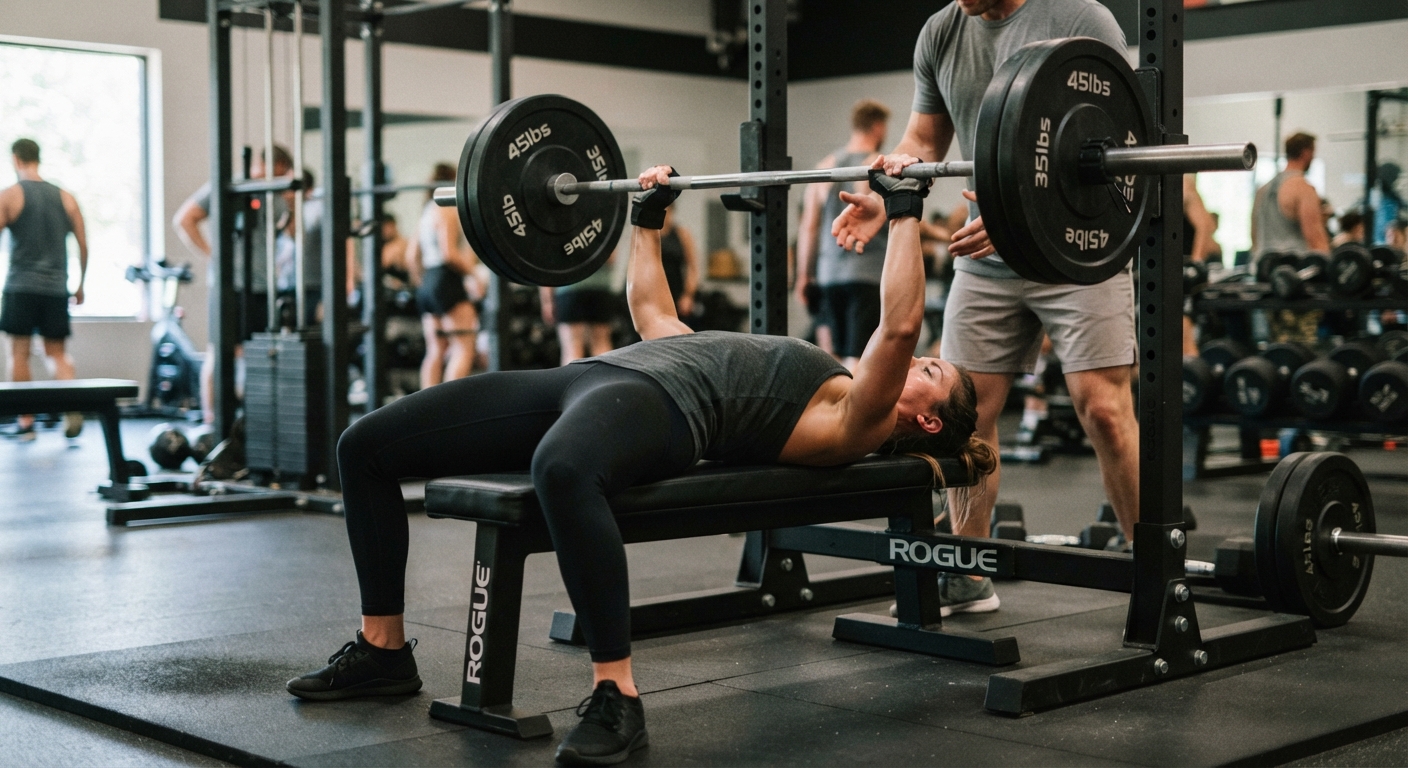
The Game Plan:
A bench workout can turn a small home gym into a practical training space without needing expensive machines. With an adjustable bench, a pair of dumbbells, and a stable bench, you have the basic foundation for an efficient full body routine that helps you build strength at home. The bench is a surprisingly versatile tool because you can use a flat bench for pressing and supported movements while changing the angles for maximum muscle targeting.
In my experience, this simple piece of equipment makes it easier to train the entire body in about an hour, working the chest, back, legs, glutes, and core. Instead of treating the bench as something used only on chest day, think of it as the center of a complete full-body workout that can support strength training, cardio, and better overall fitness. It can also help you improve posture, build strength efficiently, and target multiple muscle groups even when you have little space.
| ⚠️ Fitness Disclaimer: This fitness disclaimer explains that the information in this article is for informational purposes only, not a substitute for professional medical advice, diagnosis, or treatment. Before starting an exercise program, consult a qualified healthcare professional, especially if you have an existing medical condition, an injury, or other health concerns. |
20 Home Bench Workout
A home workout with a bench can be surprisingly complete. You do not need a large home gym filled with machines with one solid exercise bench, a pair of dumbbells, and, if appropriate, a barbell can give you many ways to train.
Step-Ups
Step-ups are one of the easiest ways to turn a bench into a lower-body training tool. They mainly challenge the leg muscles, but they also require balance, stability, and coordination.
How to do it:
- Stand in front of the bench with your feet hip-width apart.
- Place your left foot securely on the bench.
- Drive through the left leg and bring the right foot up.
- Add a controlled knee raise if you want more balance work.
- Step down and alternate sides.
- Keep the knee controlled and avoid rushing the step.
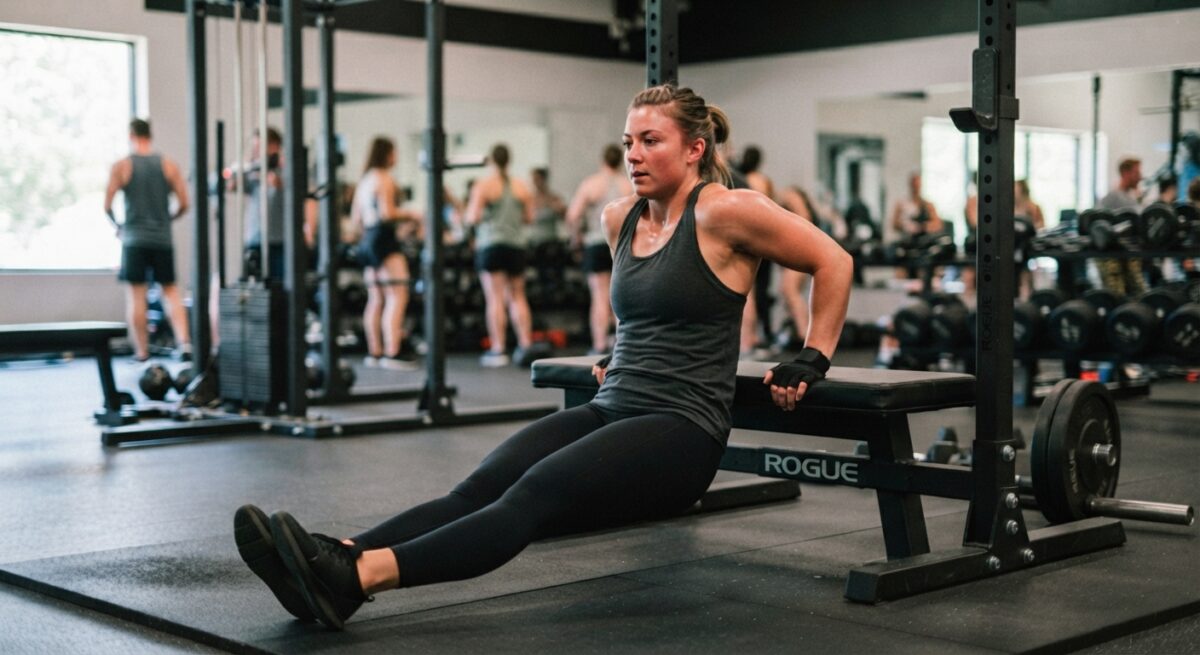
Bench Dips
Bench dips are a convenient bodyweight movement for the triceps and arm muscles.
How to do it:
- Sit on the edge of the bench and place your hands beside your hips.
- Keep your palms firmly supported.
- Slide forward until your hips are clear of the bench.
- Keep your elbows close as you bend your arms.
- Lower your body only a comfortable few inches.
- Press through your hands to raise your body.
- Keep your feet closer and knees bent if you need an easier version.
Straddle Hop
The straddle hop gives your bench routine a faster, more athletic element. Unlike slow resistance exercises, this movement uses repeated hops to challenge your legs, coordination, and cardiovascular system.
How to do it:
- Start standing with your feet comfortably positioned.
- Lower into a shallow squat.
- Push against the ground and perform small hops.
- Move the feet outward and then return them toward the center.
- Land softly with slightly bent knees.
- Keep the movement controlled rather than chasing speed.
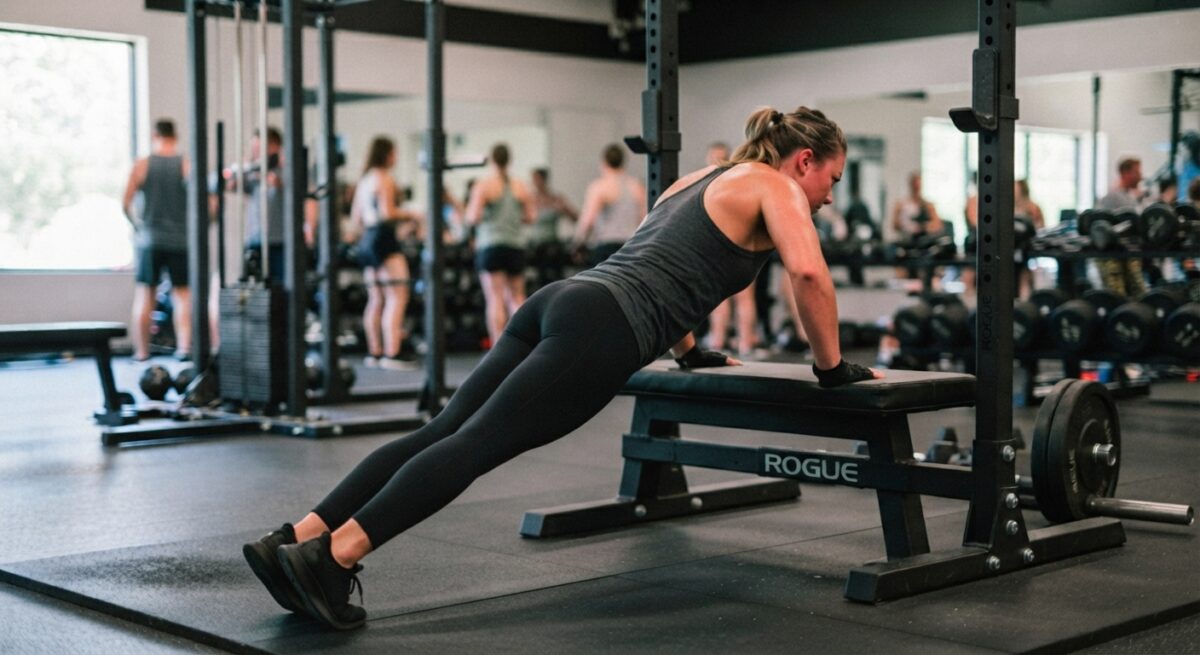
Incline Pushups
Incline pushups are a beginner-friendly way to train the chest, triceps, shoulders, and core muscles with a bench. They are easier than floor push-ups because your hands are elevated, reducing the amount of bodyweight you have to press. This makes them useful for people who are developing their pressing strength.
How to do it:
- Put your hands on the edge of the bench.
- Walk your feet on the ground backward until you reach the pushup position.
- Brace your core and keep your body aligned.
- Lower your chest toward the bench.
- Push through your hands to return to the starting position.
- Keep the movement smooth and controlled.
Spiderman Pushup
The Spiderman pushup combines an incline pressing movement with a demanding knee movement. It trains the chest and triceps while asking the core and hips to stabilize the body. Start with your hands on the bench and your feet on the floor. Your body should resemble the position used for an incline push-up.
How to do it:
- Start in an elevated push-up position.
- Keep your hands secure on the bench.
- Lower your chest with control.
- Bring one knee toward the outside of your elbow.
- Return the leg while pressing upward.
- Repeat on the opposite side.
- Keep the hips controlled throughout the movement.
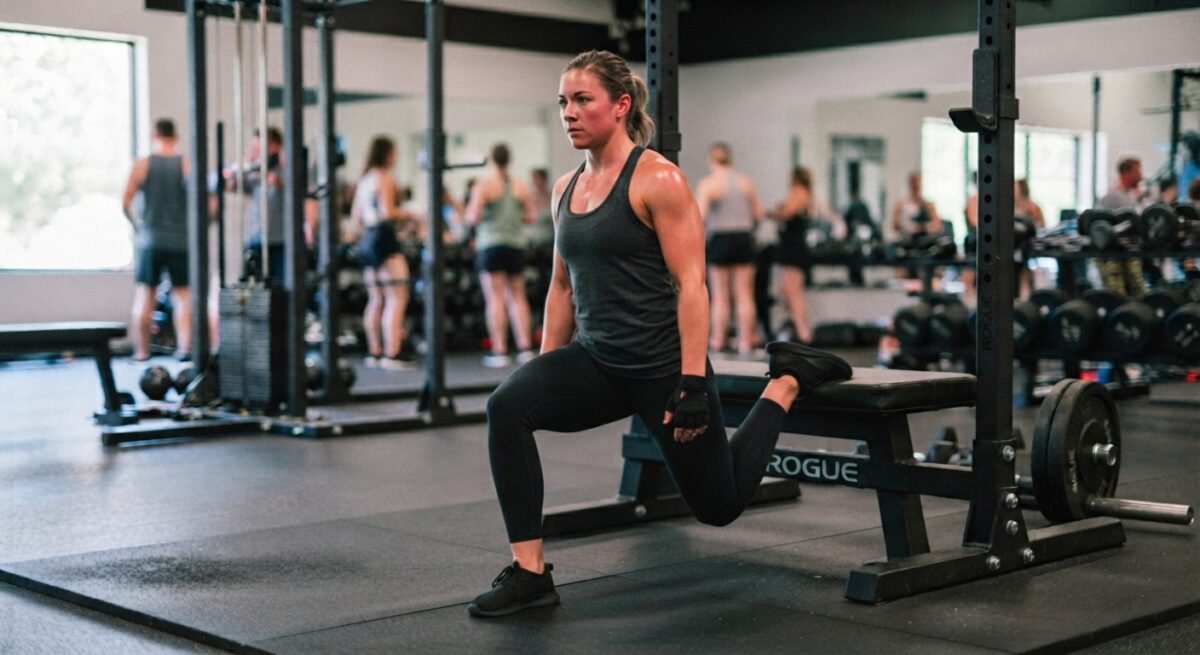
Bulgarian Split Squats
Bulgarian split squats are excellent for building one-leg strength. They also expose differences between the two sides, which can make them useful for improving balance, stability, and lower-body coordination.
How to do it:
- Stand with your back to the bench.
- Place your right foot resting on the bench.
- Keep the front foot firmly on the floor.
- Bend the front knee and lower your body.
- Push through the front foot while driving upward.
- Complete your repetitions and switch legs.
- Use bodyweight first before adding dumbbells.
Inclined Mountain Climbers
Inclined mountain climbers are ideal when you want to make your bench routine more active.
How to do it:
- Place your hands on the bench.
- Walk your feet on the ground backward into a plank position.
- Brace your core.
- Bring one knee toward your chest.
- Return it and alternate with the other leg.
- Gradually move more quickly if your form stays solid.
- Slow down if your hips begin bouncing.
Seated Bicep Curls
Seated bicep curls provide a simple way to train the biceps muscles while using the bench for support.
How to do it:
- Sit on the bench with your feet flat.
- Hold a dumbbell in each hand.
- Begin with palms facing forward.
- Keep your arms extended and elbows close to your sides.
- Curl the weight without swinging.
- Lower it slowly.
- Alternate sides or perform one arm at a time.
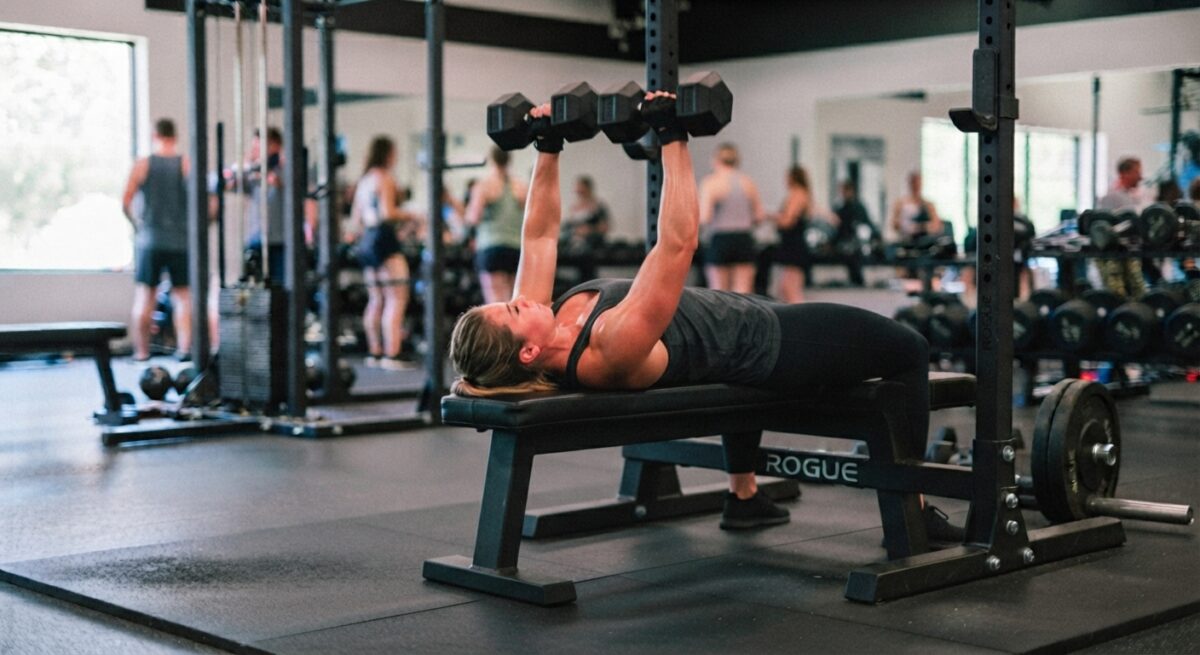
Dumbbell Chest Flies
Dumbbell chest flies train the chest through a wide movement rather than the pressing pattern of a bench press.
How to do it:
- Lay flat on the bench.
- Keep your feet planted firmly.
- Hold the dumbbells above your chest.
- Keep your arms straight with a slight bend at the elbows.
- Open your arms toward each side.
- Lower until you feel a comfortable stretch.
- Bring the weights back together with control.
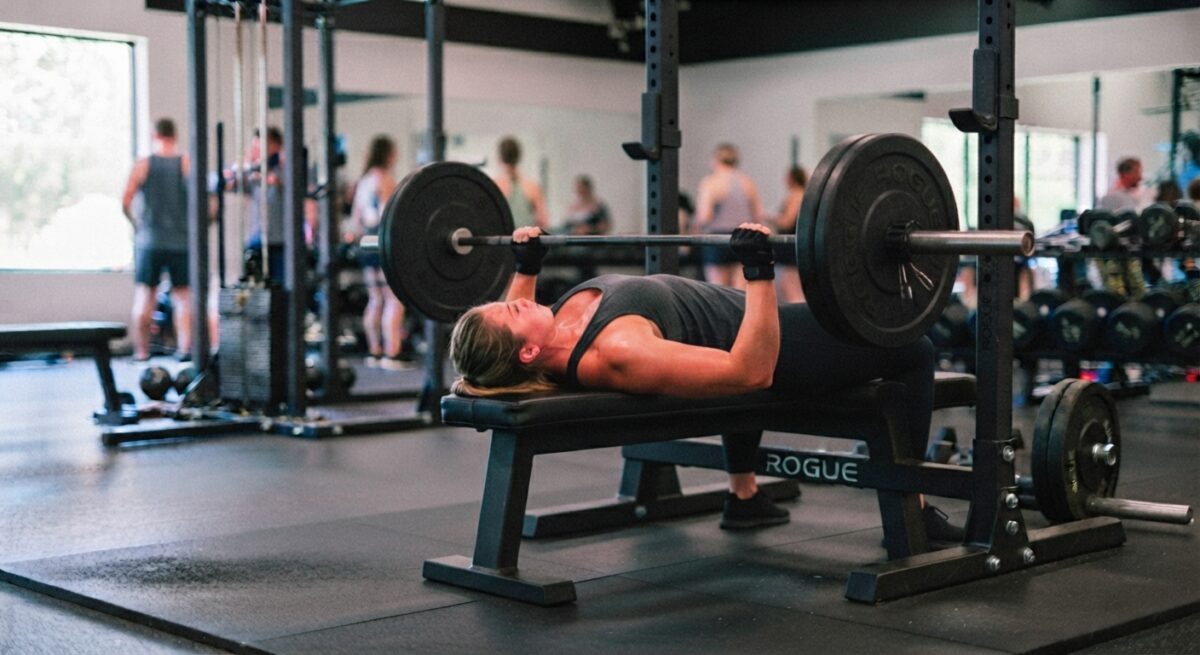
Bench Presses
Bench presses are a foundation exercise for the chest, triceps, and front deltoids. A barbell bench press can produce substantial pressing strength, while dumbbell versions allow each side to work independently.
How to do it:
- Lie on the bench and set your feet firmly.
- Position your shoulder blades and retract them.
- Grip the bar at a comfortable width.
- Unrack the barbell with control.
- Lower it toward the middle of the chest.
- Pause if your program calls for one.
- Press upward using a smooth, controlled motion.
- Finish with the arms fully extended without losing position.
Pin Presses
Pin presses are a specialized variation that requires a secure power rack and properly placed safety pins. The bar begins from a dead stop rather than from the usual top position of a bench press. This allows you to focus on a selected part of the movement and can help train specific areas of pressing strength.
How to do it:
- Set the bench inside a secure power rack.
- Position the safety pins at the desired height.
- Place the bar on the pins.
- Load an appropriate weight.
- Get into position and grip the bar.
- Press the unracked bar upward from the pins.
- Lower it under control until it contacts the pins.
- Repeat without bouncing the bar aggressively.
Pullovers
Pullovers give your chest, shoulders, and upper-body muscles a different movement pattern.
How to do it:
- Lie securely on the bench.
- Hold the bar above your chest or use a dumbbell.
- Keep your core stable.
- Move the weight backward in an arc.
- Stop before the shoulders feel uncomfortable.
- Return the weight to the starting position.
- Use a lighter load when learning the movement.
Skull Crushers
Skull crushers are a direct triceps exercise that works well on a bench. The name can sound intimidating, but the movement itself is simple when performed with appropriate resistance.
How to do it:
- Lie on the bench and establish a secure grip.
- Hold the weight above you.
- Bend your elbows under control.
- Lower the weight toward your forehead.
- Stop at a comfortable depth.
- Straighten arms to return to the starting position.
- Keep the elbows from flaring excessively.
Box Squats
Box squats use a stable bench or box to give you a consistent depth reference. Stand in front of a sturdy surface and position your feet so your hips and knees can move naturally. With bodyweight, this is a simple technique exercise. With experience, you may use a bar across shoulders, but only with appropriate equipment and safety.
How to do it:
- Stand with your feet in a comfortable stance.
- Brace your body and prepare your hips.
- Send your hips backward.
- Bend your knees while lowering.
- Let your butt gently contact the box.
- Maintain proper form instead of collapsing.
- Push through your feet to propel yourself upward.
Incline Dumbbell Bench Press
The incline dumbbell bench press changes the pressing angle and can place greater emphasis on the upper chest.
How to do it:
- Set the bench to a 30–45° incline.
- Sit back with the dumbbells at chest level.
- Keep your core engaged.
- Maintain stable shoulders.
- Lower the dumbbells with control.
- Press them upward smoothly.
- Avoid excessive shoulder shrugging.
Dumbbell Flyes
Dumbbell flies focus on the pectoral muscles by moving the arms outward and inward. They can be performed on a flat bench or an incline bench, depending on the desired angle.
How to do it:
- Lie comfortably on the bench.
- Hold the dumbbells over the chest.
- Keep a slight bend in your elbows.
- Open the arms slowly.
- Stop when you feel a manageable stretch.
- Bring the arms back together while squeezing the chest.
- Avoid overextending the shoulders.
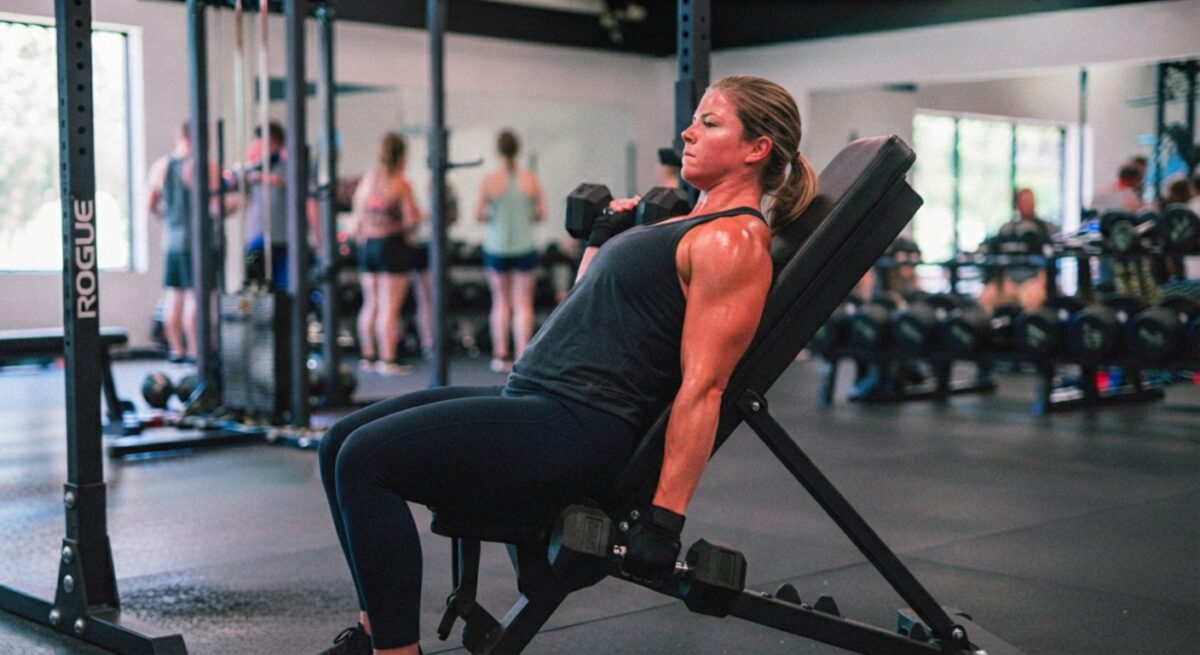
Incline Bicep Curl
The incline bicep curl uses an incline bench to place the arms behind the body. This creates a larger range of motion than many traditional bicep curls.
How to do it:
- Set the bench at a comfortable 45-degree angle.
- Sit back and keep your shoulders supported.
- Let your arms hang toward the floor.
- Start with the arms fully extended or comfortably close to it.
- Curl the dumbbells upward.
- Squeeze the biceps at the top.
- Lower slowly without swinging.
Dumbbell Skull Crusher
The dumbbell skull crusher is a useful alternative to a bar version because each arm controls its own weight.
How to do it:
- Lie on the bench and hold the weights securely.
- Raise the dumbbells into the starting position.
- Keep your shoulders stable.
- Bend your elbows and lower the dumbbells toward the temples.
- Maintain control throughout the lowering phase.
- Extend the elbows and return to the top.
- Keep the elbows aligned rather than letting them flare widely.
Bench Lifts and Overhead Lifts
Bench lifts and overhead lifts can add another layer to a bench workout, particularly when you use adjustable benches and dumbbells.
How to do it:
- Set the bench to a stable position.
- Sit or stand according to the exercise.
- Hold the weights securely.
- Brace the core before lifting.
- Keep your shoulders controlled.
- Maintain elbows aligned with the movement.
- Press upward without forcing the joint.
- Lower the weights slowly.
Common Mistakes
- Skipping the warm-up: Avoid heavy lifting with cold muscles. Start with a warm-up of 5-10 minutes, including light cardio, dynamic stretches, and warm-up sets with lighter weights on the bench. This improves muscle preparation, supports injury prevention, and lowers injury risk from strains and tears during lifting and your fitness journey.
- Using the wrong bench position: Set the utility bench to the correct bench settings—flat, incline, or decline—based on the exercise requirements. Check the bench angle for an incline bench press or decline exercise to avoid excessive pressure on the shoulders, protect range of motion, and maintain workout effectiveness. Complete the bench adjustment and make sure it is securely locked and locked in place before choosing the right exercise position.
- Overarching the back: During bench presses, keep a gentle curve rather than an excessive arch. Too much arch may cause lower back pain or injury, increase stress on the spine, and reduce workout effectiveness for the chest muscles. Maintain back support, a natural curve, and good proper form while keeping the core muscles active for stability and spinal stability. Keep your feet on the ground in a stable flat bench position.
- Unsupported lifting: Use the utility weight bench as a support system, but do not exceed your lifting capacity with heavy loads. Build good exercise technique and form with lighter weights before moving to heavier loads. Unsupported lifting can contribute to muscle imbalances and injuries. A spotter or fitness expert can provide technique guidance, while steady weight progression and adequate support make workouts safer.
- Poor foot placement: Good foot placement improves stability and balance during a bench press. Keep your feet or flat feet firmly on the floor, with proper knee position and alignment. Stable, grounded feet help create power during lifts, while better lower-body stability improves overall exercise stability. Poor positioning can cause poor form and increase injury risk.
- Not engaging the core: A weak core can make poor form more likely when using heavy weights. Maintain core engagement throughout weight training to support spine protection, spinal support, and overall stability. Better muscle activation and core stability help maintain proper form, improve workout effectiveness, and reduce injury risk.
- Lifting too fast: Control your lifting speed instead of using fast repetitions or rushed repetitions. Fast training can reduce exercise effectiveness, weaken form, and limit muscle performance. Use slow movements and controlled movements to improve muscle engagement, support strength gains, and aid injury prevention. Focus on repetition control and a steady movement tempo during resistance training.
- Ignoring bench height: Adjust the bench to match your body proportions and body alignment. A high bench or low bench may cause joint strain or muscle strain. In a seated position, keep your feet stable on the floor and aim for a 90-degree angle at the knees. Correct bench height, bench adjustment, proper posture, and ergonomic positioning support injury prevention.
Summary
A workout with a bench is not just a warm-up before real training; it can be complete training with simple equipment such as a pair of dumbbells. From personal experience, a bench makes home sessions much easier because you can train every major muscle group without a commute, waiting, or a crowded gym floor. It also lets you move beyond chest day by using a full exercise library and practical routine guides.
For home gym athletes, a full body routine using a quality adjustable bench and a set of dumbbells can target nine major muscle groups. A structured schedule of a 2-3 day weekly schedule gives you a simple path to consistent training, while progressive overload helps build strength over time. If you are buying equipment, a heavy-duty bench can be viewed as a 20-year purchase, rather than a six-month item, so a reliable buying guide can help you choose wisely.
FAQ’s
Can I build a full home workout with only a bench and dumbbells?
Yes. A bench and dumbbells, especially an adjustable pair of dumbbells, can train your chest, back, shoulders, arms, legs, glutes, and core. For most people, this is a practical minimum-viable home gym and a useful compact home gym setup.
Do I need an Olympic barbell for bench exercises?
No. Most bench exercises can be done with adjustable dumbbells or bodyweight. A solid bench and dumbbells cover most needs, while an Olympic barbell or barbell simply gives you more options.
Can a weight bench replace a gym membership?
For general strength and conditioning, it can for many people. A weight bench and pull-up bar can cover every major movement pattern in a bench-centered home gym. Competitive powerlifters and bodybuilders may eventually need a full rack and barbell, but most home trainees can train effectively without them.
What exercises can I do for each major muscle group?
You can press for the chest and shoulders, row for the back, dip for the triceps, and curl for the biceps. For your legs and glutes, try Bulgarian split squats and hip thrusts. Leg raises are a simple option for the core.
How often should I train with a bench?
Two to three days per week works well for most beginners. This lets each muscle group receive enough training for muscle growth while giving your body at least 48 hours to recover. A Monday, Wednesday, and Friday schedule is an easy starting point.