The Game Plan:
The fascial system is a web of fibrous connective tissue that runs throughout your body, surrounding your muscles, bones, joints, and vital organs. This delicate connective tissue layer, also called the connective tissue layer, provides muscle support, bone support, organ support, body support, and fascial support. However, repetitive movements, injury, poor posture, stress, and a lack of physical activity can contribute to tissue restriction, connective tissue restriction, and fascial restriction.
Over time, tight fascia, restricted fascia, or tight or restricted fascia may contribute to muscle knots, muscle tension, muscle stiffness, and tissue stiffness, leading to discomfort, pain, fascial pain, and muscle discomfort. These problems can create movement limitations, limited movement, and restricted movement, resulting in a reduced range of motion, reduced flexibility, reduced mobility, and lower overall mobility.
| ⚠️ Fitness Disclaimer: This fitness disclaimer explains that the information in this article is for informational purposes only, not a substitute for professional medical advice, diagnosis, or treatment. Before starting an exercise program, consult a qualified healthcare professional, especially if you have an existing medical condition, an injury, or other health concerns. |
What Is Fascia, and Why Does It Matter for Mobility?
Fascia stretching exercises focus on the fascia tissue, a type of connective tissue that surrounds and supports your muscles, bones, joints, and other body structures. Healthy fascia is flexible fascia with a soft, pliable fascia texture that allows smooth muscle movement and muscle gliding.
These changes may affect movement quality, range of motion, and joint mobility, sometimes leading to pain, stiffness, muscle stiffness, and restricted movement. Maintaining fascia health and connective tissue health supports muscle function, body mechanics, and functional movement.
For example, a 90-second hold or ninety-second stretch may feel different from completing ten repetitions, but longer holds aren’t automatically better for everyone. The right stretching duration, exercise selection, and exercise technique depend on comfort, ability, and the area being stretched. With consistent practice, suitable stretching exercises and mobility exercises may support tension relief, flexibility, fascial flexibility, tissue elasticity, tissue adaptability, and mobility improvement.
What Are the Benefits of Fascia Stretching?
Fascia stretching exercises may help your body move more comfortably by improving flexibility, supporting circulation, and reducing feelings of stiffness. Healthy fascia connects muscles, joints, blood vessels, and nerves, helping different body structures work together. Here are 10 potential benefits of adding gentle fascia stretching to your routine.
Pain Relief: Gentle fascia stretching may support pain relief by easing tension around tight fascia and reducing discomfort associated with restricted movement. Gradual tension release can encourage muscle relaxation, reduce feelings of deep-level tension, and make everyday activities more comfortable. Although stretching may help some types of chronic pain, it doesn’t guarantee pain reduction or completely eliminate discomfort.
Supports Soft Tissue Flexibility: Fascia stretching moves and lengthens the soft tissue gradually. When included in a consistent stretching routine, it may support flexibility, muscle health, and fascia health. Daily stretching can help maintain comfortable movement, especially if you spend long periods sitting.
Encourages Healthy Blood Flow: Regular movement and stretching may support circulation improvement and blood flow to skeletal muscles. Some research has examined changes in vascular volume following stretching. However, the results depend on the type of stretching, the individual, and the study conditions.
May Help Reduce Inflammation: Some research studies suggest that stretching may influence inflammation reduction in fascial tissue. Researchers have also explored its effects on pain-causing inflammation and tissue adhesions. More evidence is needed to establish a reliable treatment protocol, so fascia stretching shouldn’t replace medical care for persistent pain or inflammation.
May Reduce Muscle Knots: Slow, comfortable stretching may help relax tight areas that feel like muscle knots or trigger points. Combined with controlled movement and breathing, it can encourage muscle relaxation and make everyday movement feel easier. Avoid forcing a stretch or pressing painfully into a sensitive area.
Supports Long-Term Movement & Flexibility: Consistent fascia stretching can become a useful part of a balanced fitness plan. By combining comfortable joint movement, regular activity, and gradual stretching, you may support mobility and flexibility over time. Remember that improvements vary, and fascia responds as part of a connected system of muscles and other tissues rather than in isolation.
Stretches to Try: 15 Fascia Stretching Exercises
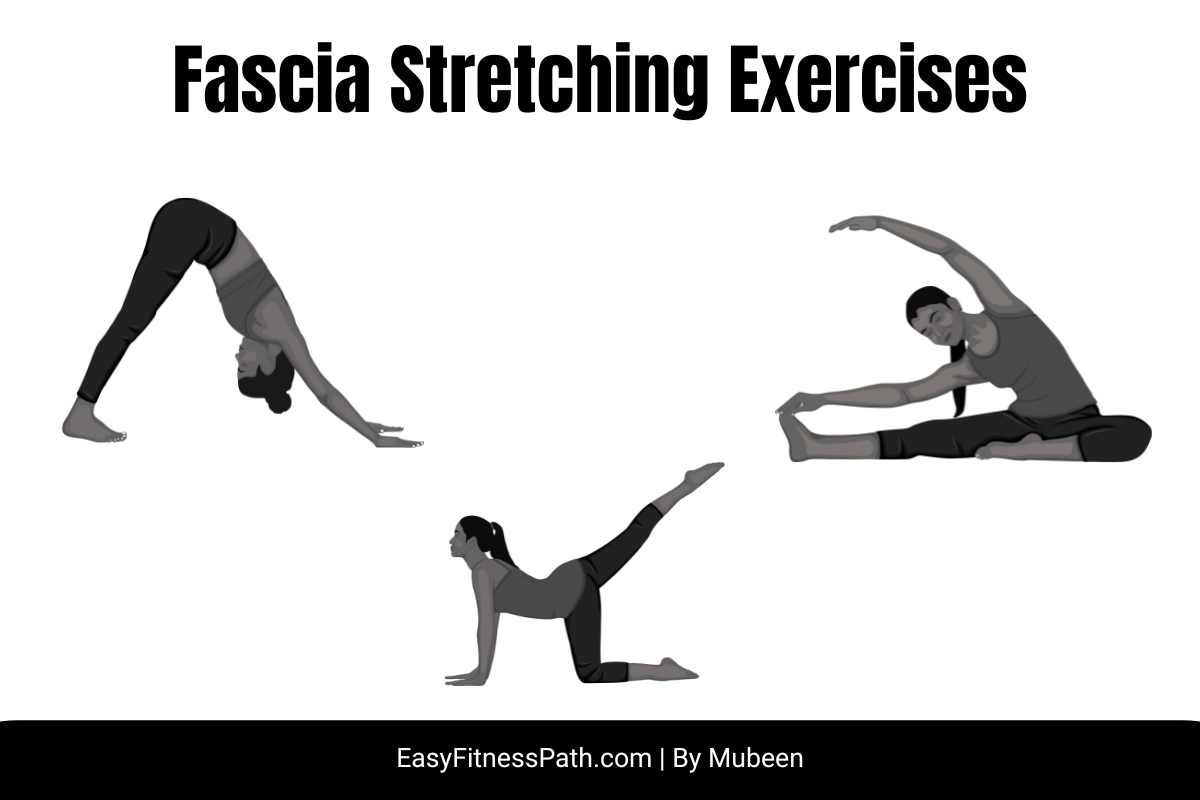
These fascia stretching exercises focus on different areas of your body, from your feet and calves to your hips, back, and shoulders. Move slowly, breathe normally, and never force a stretch. Some exercises may help ease tightness and improve mobility, but stop if you feel sharp pain, numbness, or tingling.
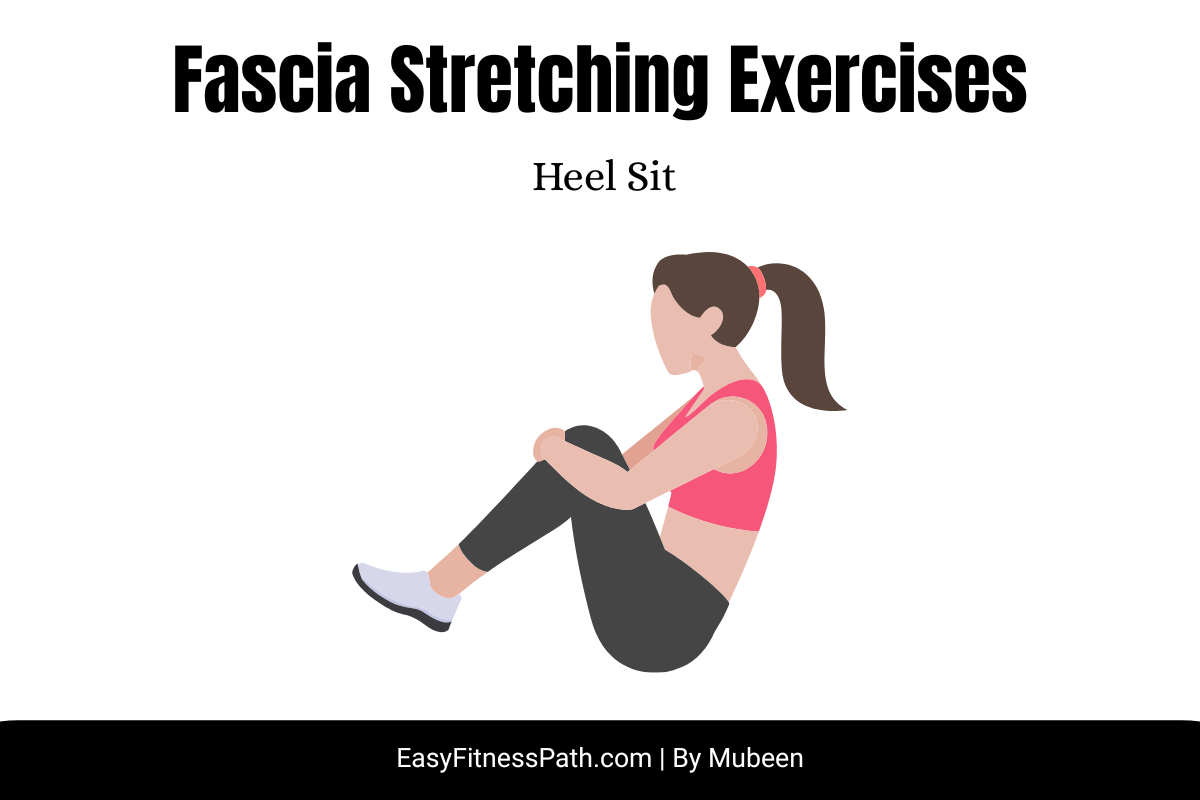
1. Heel Sit
The heel sit is a simple foot stretch that targets the tissues around your toes, soles, and heels. Gentle practice may help ease fascia tightness, but it isn’t a treatment for plantar fasciitis.
How to do it:
- Start in a kneeling position with your bent knees and shins parallel to the floor.
- Curl your toes under and slowly begin sitting back on your heels.
- Check your ankle bone alignment and keep your knees comfortable to support knee protection.
- Maintain a straight back and adjust with a small forward lean or backward lean to change the stretch intensity.
- Hold for up to a three-minute hold, but start with less time if needed.
- Repeat 1 to 3 times only if comfortable.
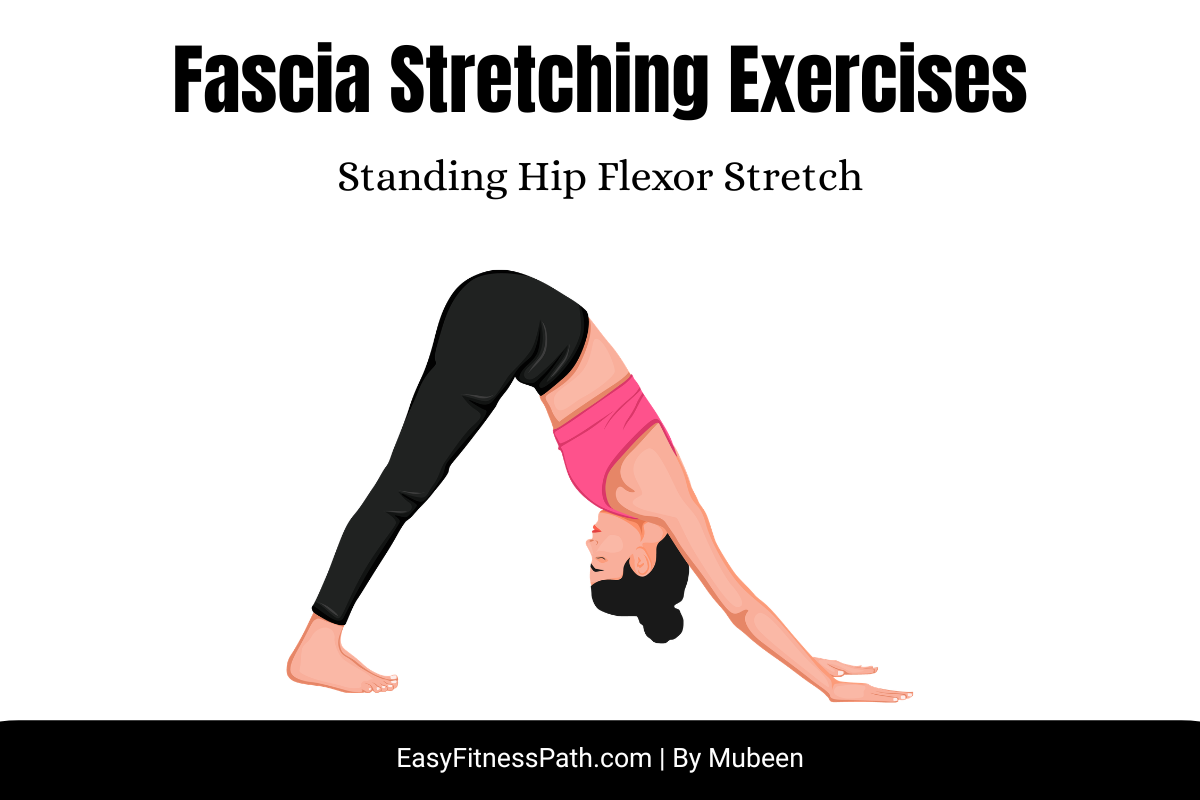
2. Standing Hip Flexor Stretch
This standing hip flexor stretch is useful if prolonged sitting leaves your hips feeling tight. It gently targets the hip flexors and may support muscle lengthening, posture improvement, and pain relief related to stiffness.
How to do it:
- Stand beside a wall, table, or chair for balance and support.
- Place your weight on your left foot, applying gentle big toe pressure to help you balance.
- Keep your gaze on a fixed point and use your opposite hand for support.
- Bend your right knee and bring your heel toward the glute.
- Reach back to grasp your ankle with your right hand, if comfortable.
- Focus on spine elongation and maintain a slight knee bend in your standing leg.
- Engage your core muscles and glute muscles gently.
- Keep your knee aligned and avoid pulling it too far across the midline of the body.
- Rest your free hand on your hip or try a gentle overhead arm extension if you can remain balanced.
- Hold for up to a one-minute hold, then repeat on the opposite side.
3. Foam Rolling for the Upper Back
Foam rolling can help you relax your upper back and reduce feelings of tension. It may also support tension relief, posture improvement, and comfortable body alignment.
How to do it:
- Lie on your back with a foam roller positioned to support your upper back, avoiding direct pressure on your neck.
- Keep your head supported and position your body so the roller contacts the upper spine, not the neck or the tailbone.
- Bend your knees and place your feet firmly on the floor.
- Extend your arms sideways, with your palms facing upward.
- Practice deep abdominal breathing and allow your body to relax.
- Hold the relaxed position for up to a one-minute hold, breathing normally.
- Repeat 1 to 3 times if comfortable.
4. Foam Rolling for the Low Back
Gentle movement can sometimes ease muscle tightness and help maintain your range of motion. However, direct foam rolling over the lower back can place unwanted pressure on the spine, so use a safer variation.
How to do it:
- Lie on your back with your knees bent and feet supported on the floor.
- Avoid placing a foam roller directly beneath your lumbar spine or using aggressive pressure for low back support.
- Bring your knees toward the chest only as far as comfortable.
- Place your hands behind thighs or gently hold your hands on shins.
- Rock your knees slowly to the right, using controlled movement rather than forceful right-side rolling.
- Return to the middle and gently move toward the opposite side.
- Avoid lifting lower back aggressively or pressing directly into painful areas of the left lower back.
- Continue this gentle opposite-side movement and side-to-side rolling pattern for up to a one-minute duration.
- Repeat 2 to 3 times if it feels comfortable. Stop if symptoms increase.
5. Standing Forward Fold
The standing forward fold stretches the backs of your legs and can ease feelings of tightness along the hamstring fascia, calf fascia, and lower back fascia. It may support tension release, overall mobility, and fascia relaxation.
How to do it:
- Stand with your feet hip-width apart.
- Begin a gentle hip hinge, gradually allowing your upper body to move forward toward the floor.
- Keep your knees slightly bent and your neck relaxed.
- Allow gravity to assist the stretch without pulling yourself down.
- Hold for 30–60 seconds, breathing deeply to encourage fascia relaxation.
- If comfortable, extend the hold toward two minutes, but don’t force a deeper stretch.
- Avoid no bouncing movements or no forced floor touching; keep the movement gentle.
This stretch targets the posterior fascial line, a connected pathway of connective tissue running along the soles of feet, backs of legs, glutes, spine, and toward the skull. Restrictions in this pathway may occur alongside tight hamstrings, lower back tension, or neck stiffness. With restricted fascia, use soft knees, gravity-assisted stretching, and gradual leg straightening only when comfortable.
6. Cat-Cow Stretch
The cat-cow stretch uses slow spinal movement to encourage fascia release and improve back flexibility and shoulder flexibility.
How to do it:
- Start on all fours, with your hands beneath shoulders and knees beneath hips.
- During inhalation, gently arch your back, lift your head, and raise your tailbone into cow pose.
- During exhalation, slowly curve your back and bring your tucked chin toward your chest into cat pose.
- Move between the two positions with slow movement and fluid motion.
- Complete 8–10 repetitions, stopping if the movement causes pain.
This exercise gently moves the spinal fascia and may help with tight fascia. Keep the movement controlled rather than forcing your spine into a deep arch.
7. Foam Rolling for Fascia Release
Foam rolling for fascia release is a form of self-myofascial release. It applies pressure to selected areas and may help some people manage tightness and improve comfort.
How to do it:
- Choose a foam roller suitable for your experience level.
- Position it beneath a fleshy area of your calves, thighs, or upper back.
- Begin slow rolling with light, controlled pressure.
- When you find tight spots or tension areas, pause for 15–30 seconds if comfortable.
- Use steady movement and avoid rolling over bones, joints, or the front of the neck.
- Continue for a short period, checking how your body responds.
Gentle rolling may support blood flow, mobility improvement, and comfort around areas of restricted soft tissue. It may also affect the sensation of fascial adhesions, but it shouldn’t be described as literally breaking up adhesions in every case. Slow, comfortable pressure is preferable for effective fascia release.
8. Lunge with Side Stretch
The lunge with side stretch combines a lower-body position with an overhead reach. It targets the hip fascia, thigh fascia, and side-body fascia while encouraging lower-body mobility.
How to do it:
- Step your right foot forward into a comfortable lunge position.
- Place your left hand on the ground or a stable surface for ground support.
- Reach your right arm overhead.
- Add a gentle side bending movement, leaning slightly to the left.
- Keep your hips stable and avoid twisting your knee.
- Hold for 20–30 seconds on each side.
- Repeat on both sides, using gentle movements and avoiding forced stretching.
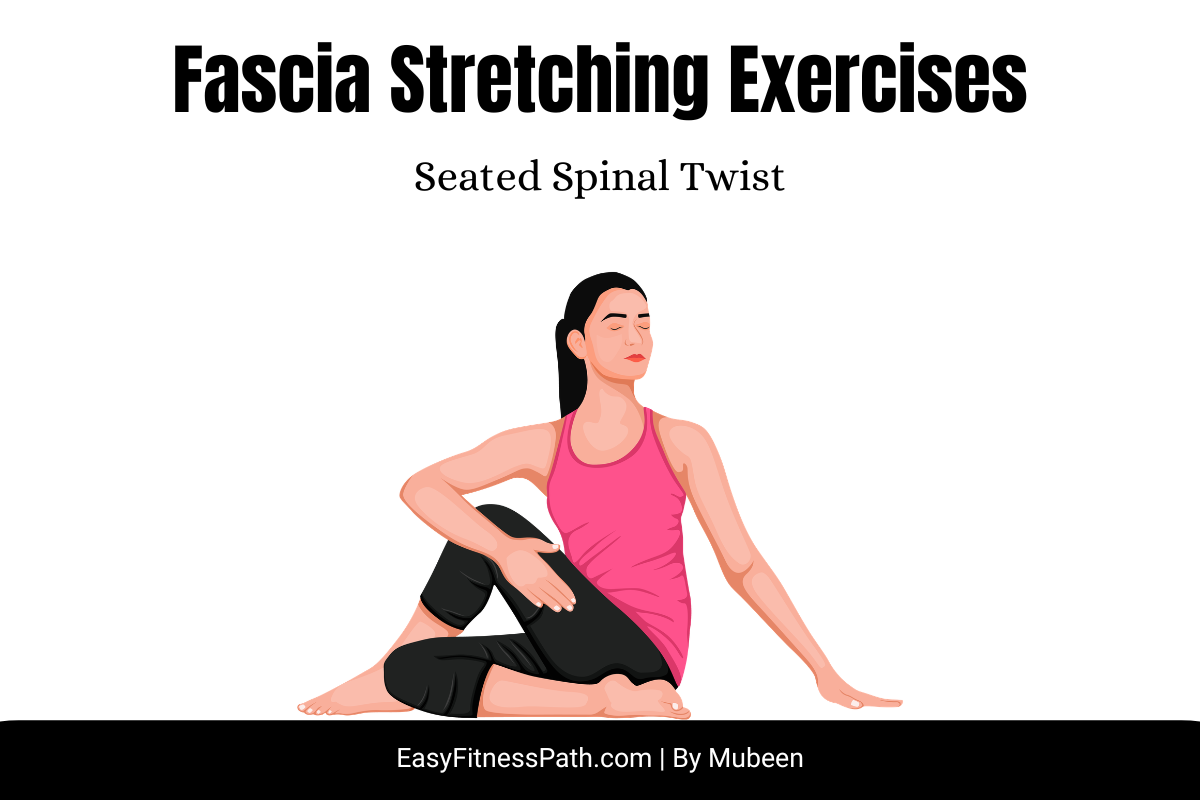
9. Seated Spinal Twist
The seated spinal twist encourages comfortable rotation through your torso and hips. It may support rotational mobility and help you relax the muscles surrounding the spinal fascia and hip fascia.
How to do it:
- Sit with your extended legs in front of you.
- Bend your right knee and place your right foot outside your left thigh.
- Position your right hand behind your body for support.
- Gently rotate your torso into a rightward twist.
- Use your left elbow support against the outside of your bent knee only if comfortable.
- Keep your spine tall and avoid pulling yourself into a deep twist.
- Hold for 20–30 seconds while using deep breathing to encourage fascia relaxation.
- Return to the middle before switching sides. Keep the movement controlled to avoid controlled twisting becoming forceful.
10. Chest Opener Against the Wall
A chest opener is a simple wall stretch that may help ease tightness associated with poor posture and repetitive movements. It targets the chest muscles, shoulder muscles, chest fascia, and shoulder fascia.
How to do it:
- Stand beside a wall in a comfortable standing position.
- Perform an arm extension at shoulder height and place your palm against the wall.
- Keep your arm in position and gently rotate your body away from the wall.
- Stop when you feel a mild stretch across your chest and shoulder.
- Hold for 20–30 seconds and repeat on both sides.
- Use gentle movement and avoid excessive deep stretching that causes discomfort or muscle tightness.
- Focus on strain prevention by keeping your shoulder relaxed.
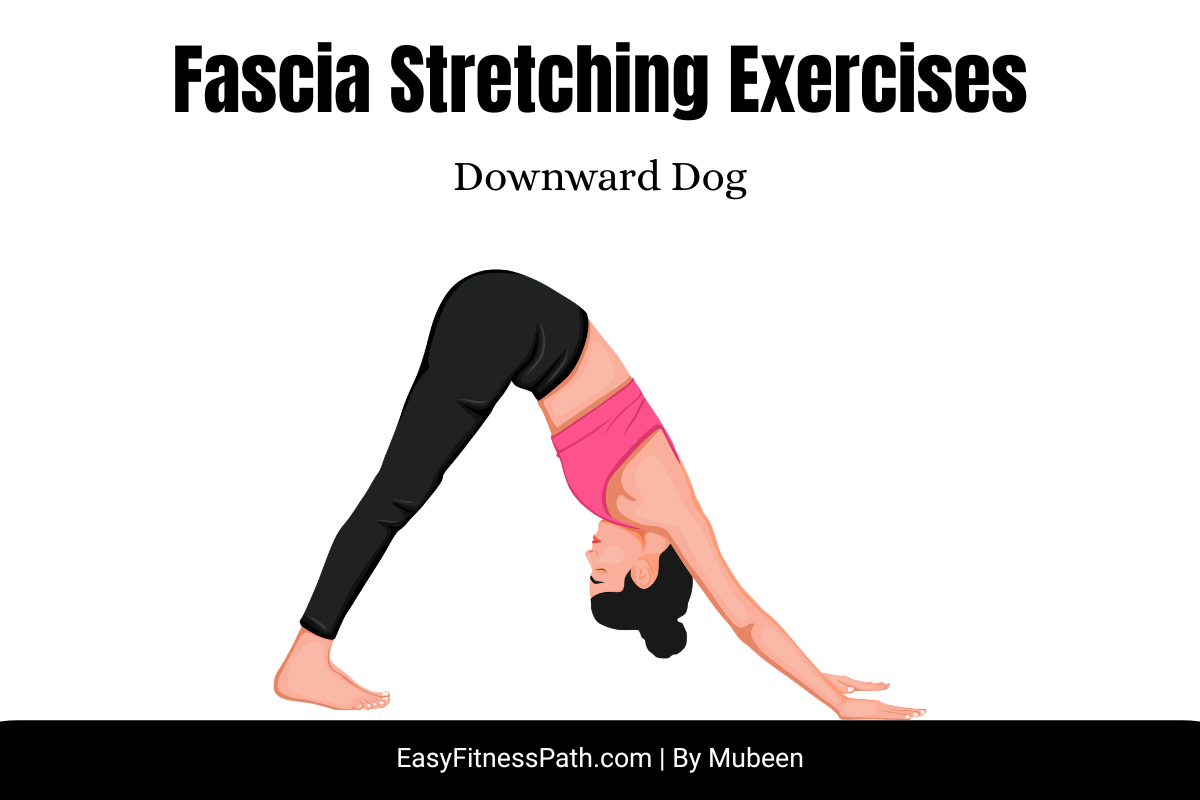
11. Downward Dog
Downward dog is a yoga position that stretches several areas at once, including the calf fascia, hamstring fascia, back fascia, and shoulder fascia. It can help support overall mobility and comfortable fascia stretching.
How to do it:
- Start on your hands and knees.
- Curl your toes under and move into a position with your raised hips pointing toward the ceiling.
- Gradually straighten your legs as much as is comfortable, allowing a little bend if needed.
- Keep your hands pressing into the floor and your fingers spread for support.
- Let your head relax between your arms without forcing your neck.
- Focus on spinal elongation and deep breathing.
- Hold for 30–45 seconds, then gently lower your knees to rest.
12. Thoracic Spine Opening Over a Rolled Towel
The thoracic spine can feel stiff after prolonged sitting and frequent screen use. This gentle position encourages movement through the middle back and may help ease mid-back compression and tension along the thoracic fascial line.
How to do it:
- Take a bath towel and roll it into a firm cylinder to make a towel roll.
- Lie on your back and position the roll horizontally across your mid-back, around shoulder blade height.
- Support your head if needed and let your arms relax out to the sides.
- Allow your head to relax and breathe naturally.
- Let your body weight provide gentle pressure rather than pushing your back down.
- Stay for up to a two-minute hold, provided the position feels comfortable.
- Carefully move the towel slightly lower to change the vertebra positioning, avoiding direct pressure on the neck or lower back.
- Repeat if comfortable to encourage spinal decompression, spinal mobility, mid-back tension relief, gentle opening, and relaxation.
13. Standing Forward Fold with Soft Knees
This variation of the standing forward fold uses soft knees to reduce strain while gently targeting the posterior fascial line. That connective tissue pathway includes the soles of feet, backs of legs, glutes, spine, and tissues extending toward the skull.
How to do it:
- Stand with a hip-width stance.
- Begin slow forward folding, bending your knees as much as needed.
- Keep your knees bent and let your head hang comfortably.
- Allow your arms to dangle without pulling on your body.
- Hold the position for up to a two-minute hold, shortening the duration if needed.
- Focus on gradual tension release instead of trying to reach the floor.
- Try gentle leg straightening only if it feels comfortable.
- Maintain gravity-assisted stretching, with no bouncing and avoiding forced movement.
This variation may be helpful when fascial restrictions, tight hamstrings, lower back tension, or neck stiffness make a straight-legged forward fold uncomfortable.
14. Doorframe Chest Opener
The doorframe chest opener targets the front of the chest and may help counter the effects of rounded shoulders and poor posture. The pectoral fascia and shortened chest tissue can feel tight after long periods of sitting, sometimes alongside upper back pain or neck pain.
How to do it:
- Stand in a stable doorframe.
- Raise your arms to 90 degrees, placing your forearms on door jambs.
- Step forward slightly and use a gentle forward lean until you feel a mild chest stretch.
- Avoid arching your lower back or pushing your shoulders too far behind you.
- Hold for up to a 90-second hold, starting with a shorter duration if needed.
- Use deep breathing and relax your front chest as you breathe out.
- Maintain comfortable shoulder alignment and repeat regularly.
- With consistent practice over several days, you may notice changes in chest comfort and posture improvement.
15. Pretzel Fascia Stretch
The pretzel fascia stretch combines hip rotation with a gentle upper-body opening. It targets areas around the glutes, iliotibial band, or IT band, latissimus dorsi, also known as the lats, as well as the lower back and areas involved in arm mobility.
How to do it:
- Begin by lying on your back with your straight legs extended in front of you.
- Keep your left leg on the floor and perform a straight leg lift with your raised right leg.
- Bend your right knee bent at 90 degrees.
- Use your left arm to hold your right shin and guide your leg across your body.
- Continue pulling your leg across your body until your right foot flat on the floor, if your mobility allows.
- Extend your right arm overhead, allowing your arm resting behind your head to relax toward the floor.
- Keep your shoulders comfortable and breathe slowly for three deep breaths.
- If comfortable, guide your bent knee a little closer toward the floor without forcing it.
- Take an additional three breaths if you extend the stretch.
- Maintain the position for up to a one-minute hold, then begin switching sides.
- Follow the repeated steps on the other side, using gentle rotational stretching to encourage glute mobility and fascial mobility.
Summary
Maintaining healthy fascia requires more than regular stretching. A consistent joint mobility routine, suitable physical activity, and a balanced stretching routine can support flexible fascia, tissue health, tissue flexibility, fascia mobility, and fascia flexibility. Choose fascia stretching exercises based on your individual needs and body needs, and adjust them to your fitness level. Combine gentle movement with enough rest, relaxation, and sleep to support physical fitness, performance improvement, healthy movement, and overall well-being.
For better fascia health and maintenance, focus on regular movement, hydration, and staying hydrated throughout the day. Include stretching exercises and joint mobility exercises for flexibility maintenance, alongside stress management and managing stress through suitable relaxation techniques. Prioritize recovery, rest and recovery, and good sleep quality as part of a healthy lifestyle. These habits can contribute to overall health and long-term well-being improvement.
FAQ’s
What Happens When You Stretch Fascia?
Stretching fascia may help reduce tissue stiffness, support blood flow, and improve your range of motion. Gentle movement can also improve flexibility, encourage tissue mobility, and support fascia release.
What Are the Benefits of Fascial Stretching?
Fascial stretching and fascia stretching may improve flexibility, support joint mobility, and provide muscle pain relief. Healthy connective tissue depends partly on tissue hydration and tissue elasticity, which help maintain elastic connective tissue. These are common topics in stretching benefits discussions, including content from Healix Wellness about the benefits of fascia stretching.
How Long Should I Stretch My Fascia?
A fascia stretch may involve 90 to 120 seconds of continuous holding or sustained holding, depending on the technique and comfort level. Unlike regular muscle stretches, which often use 20 to 30 seconds, a prolonged stretching or sustained stretch approach should feel gentle, not painful. There is no proven universal stretch duration that guarantees fascia release.
What Vitamin Is Good for Fascia?
Vitamin C and Vitamin D are important vitamins for overall fascia health and connective tissue health. A balanced diet supports tissue health and connective tissue support, but supplements are usually needed only when dietary intake or a confirmed deficiency makes them appropriate.
What Are the Signs of Tight Fascia?
Tight fascia may feel like a deep sensation, pulling sensation, or dragging sensation along a line of the body, rather than a sharp pain in one spot. Fascial tightness, tissue restriction, and body tension can have several causes, so persistent or severe localized pain should be assessed by a healthcare professional.