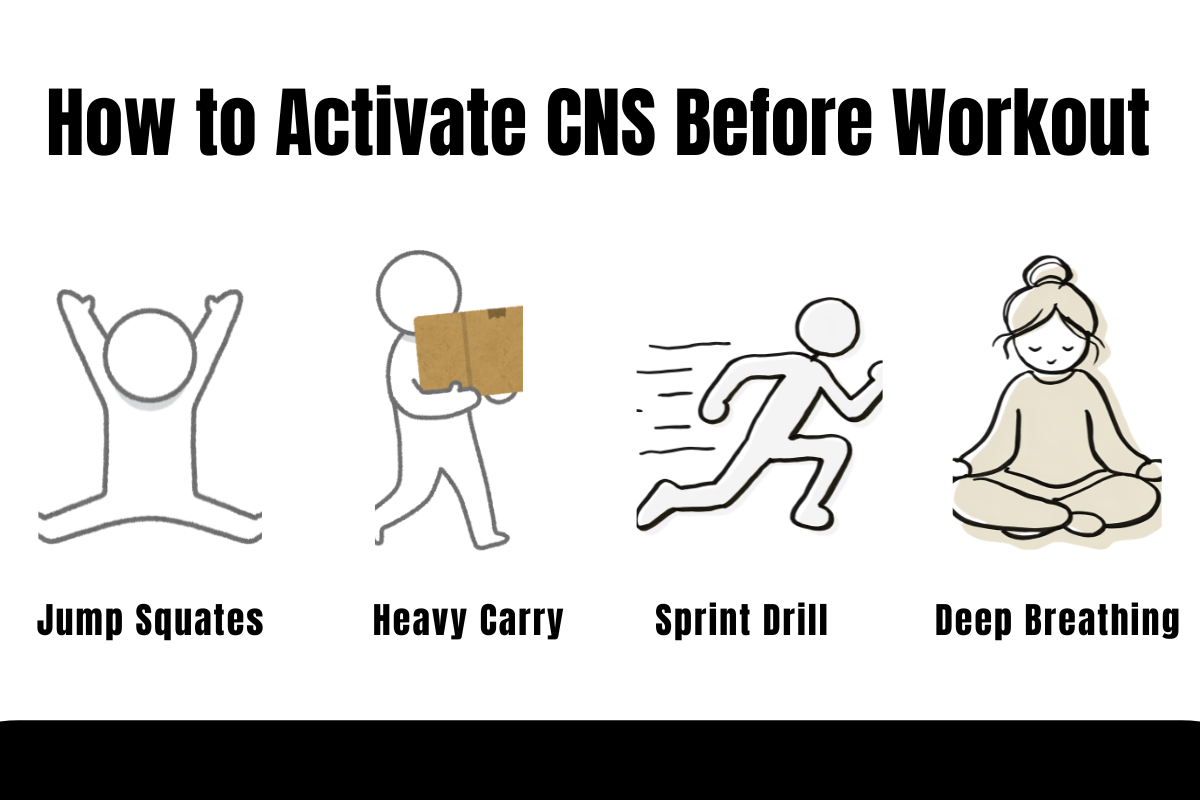
The Game Plan:
Activating the CNS before workout is an important part of workout preparation. A proper warm-up helps your brain, spine, and nerve cells send clear electrical signals to your muscles, improving muscle activation, neuromuscular coordination, and workout performance. During a weight lifting session, this process can support enhanced performance, better muscle preparation, and injury risk reduction.
Think of CNS activation as turning on your body’s communication system before asking it to perform hard work. It creates a physical transition from rest to movement and a mental transition from daily tasks to your training intentions. Whether you are a beginner fitness enthusiast or an advanced lifter, CNS priming can help improve nervous system readiness, mental focus, and physical readiness.
| ⚠️ Fitness Disclaimer: This fitness disclaimer explains that the information in this article is for informational purposes only, not a substitute for professional medical advice, diagnosis, or treatment. Before starting an exercise program, consult a qualified healthcare professional, especially if you have an existing medical condition, an injury, or other health concerns. |
In my approach to pre-workout preparation, I would begin with easy warm-up exercises, then increase movement speed and effort gradually. This simple high-level strategy helps prepare the body for strength training, supports training progress, and builds a stronger mind-body connection without wasting energy before the main workout.
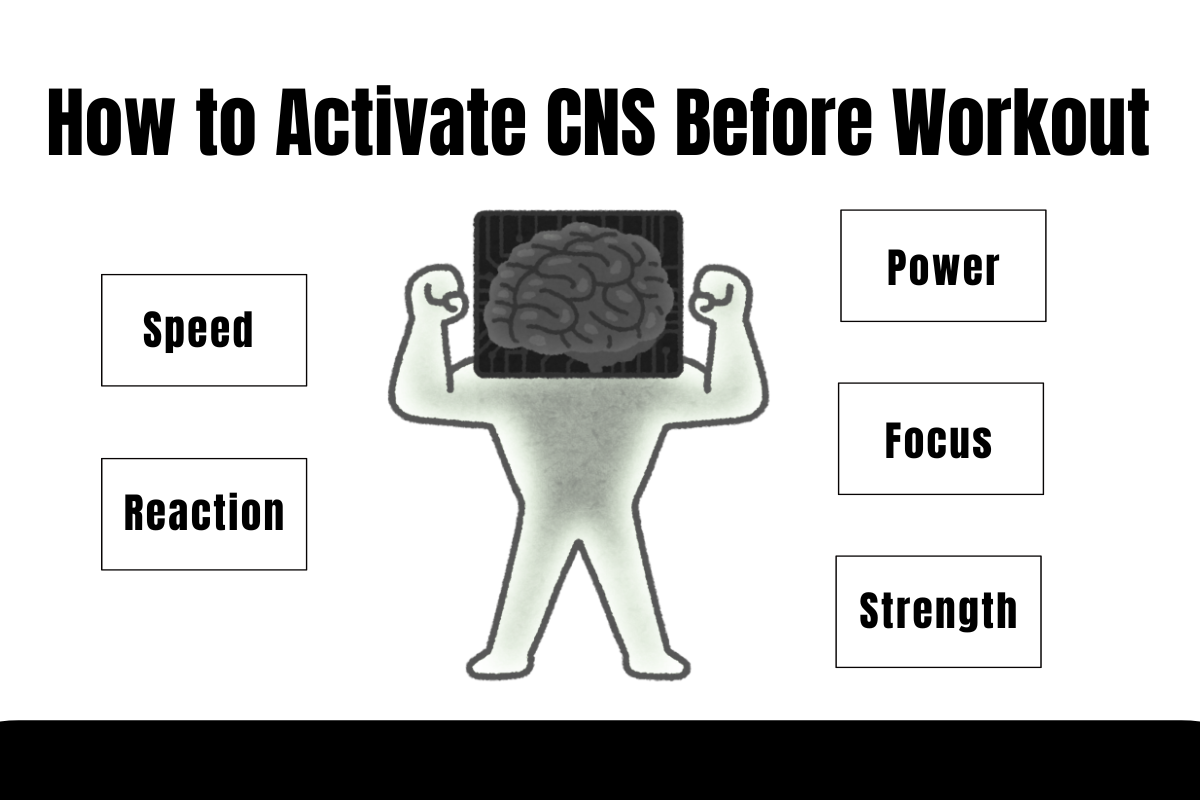
Why CNS Activation Matters Before a Workout?
Activating your CNS, or central nervous system, before a training session helps prepare your entire body for physical stress. Think of nervous system activation as waking up your brain and muscles before you start lifting weights. This workout preparation improves body awareness, brain preparation, and nervous system readiness, helping your body respond to each movement with better control.
From a practical training perspective, I recommend starting with light movement patterns and gradually increasing effort to support muscle activation, motor unit recruitment, and neural signaling. Your brain communicates with your muscles through the central nervous system, supporting voluntary movement, involuntary movement, muscle recruitment, and force generation.
This process can improve neuromuscular coordination, brain-muscle communication, motor control, and the mind-muscle connection. One related concept is post-activation potentiation (PAP), which describes a temporary improvement in muscle performance after an appropriate conditioning activity. When used carefully, this approach may support force production, power production, muscular force, and power output during weight lifting, potentially improving weight lifting performance and overall exercise performance.
However, the goal is not to exhaust your muscles before training; it is to improve exercise readiness, intentional movement, and movement efficiency while supporting injury prevention and injury risk reduction.
CNS Training Warm-Up: Step-by-Step Guide
- General warm-up — Spend 5–10 minutes on low intensity aerobic activity using a treadmill, rowing machine, elliptical trainer, stair climber, jumping jacks, or jogging in place to engage large muscle groups and prepare your central nervous system and entire body for the actual work.
- Improve circulation — Support blood flow, oxygen delivery, nutrient delivery to working muscles, and oxygen release involving hemoglobin and myoglobin; these processes support normal muscle contraction, force production, and metabolic waste removal of metabolic by-products.
- Check your effort — Use the rating of perceived exertion scale (RPE), also called the RPE scale, to maintain an exertion rating of 5–6 out of 10, similar to a moderate-paced walk or slow jog, while breathing comfortably and speaking clearly.
- Perform a dynamic warm-up — Combine dynamic movements, bodyweight movements, bodyweight exercises, dynamic stretches, and stretching exercises to improve joint mobility, muscle mobility, and dynamic flexibility.
- Practise breathwork — Use deep breathing and conscious breathing to reduce external distractions and improve breathing control, mental focus, and mind-body preparation.
- Use visualization — Apply visualization and muscle contraction visualization by imagining each exercise repetition to improve movement awareness and prepare for the training session.
- Add resistance-based movement — Begin resistance-based movement with light resistance exercises, such as controlled kettlebell swings, using a manageable weight; 3–5 pounds may suit certain light exercises, but choose the load according to the movement and your ability.
- Prepare for explosive movements — Introduce brief fast-paced movements, intense movement bursts, and appropriate high-intensity movements, such as sprints, lateral bounds, jumps, directional changes, and burpees, when your fitness level allows.
- Practise isometric holds — Perform isometric holds by lowering into a push-up and holding the bottom position hold for 5–10 seconds, completing a few repeated sets with proper exercise technique.
- Rest between efforts — Use appropriate rest intervals, especially during high-intensity intervals, and allow sufficient recovery between sets to reduce excessive muscle cramping and muscle fatigue.
- Check your readiness — Look for comfortable movement, steady breathing, and good movement control before increasing exercise intensity or starting resistance training.
- Support coordination and performance — Gradual preparation supports neuromuscular coordination, normal nerve impulse speed, and physiological functions and neuromuscular functions involved in exercise.
- Build muscle readiness — Use the warm-up routine to improve movement preparation, muscle readiness, and muscle acclimation before demanding exercise.
- Improve training quality — Consistent workout preparation supports exercise readiness, training readiness, workout endurance, muscle performance, muscular endurance, and athletic performance.
- Prioritize safe training — Use gradual CNS priming to support injury risk reduction and injury prevention, while remembering that no warm-up can guarantee freedom from injury.
- Focus on long-term progress — A sensible approach to training preparation supports workout effectiveness, physical performance, and exercise safety without exhausting your body before the main session.
- Keep the routine practical — Adjust your workout routine to your training goals and experience to support cardiovascular activity, muscle conditioning, physical readiness, and sustainable progress.
Parasympathetic & Sympathetic State
| Feature | Sympathetic State | Parasympathetic State |
| Main role | Prepares the body for action | Supports rest and recovery |
| Common response | Fight or flight response | Rest and digest |
| Heart activity | Increased heart rate and heart contraction | Supports a lower resting heartbeat |
| Breathing | Increased breathing rate when needed | Supports calmer breathing |
| Pupils | Pupil dilation | Generally supports pupil constriction |
| Digestion | Digestion inhibition during acute stress | Supports digestive stimulation |
| Muscle function | Helps increase readiness for effort | Supports muscle relaxation |
| Energy use | Supports energy mobilization | Supports routine maintenance and recovery |
| Exercise relevance | Helps prepare for demanding movements | Helps restore balance after exercise |
| Overall aim | Readiness and rapid action | Relaxation and recovery support |
Actions of The Central Nervous System
- Brain and spinal cord control: The central nervous system (CNS) includes the brain and spinal cord, while the peripheral nervous system (PNS) connects them to the entire body through nerves. Together, they support CNS communication, PNS communication, and overall nervous system function.
- Signal transmission: The CNS processes sensory information and sends signals, nerve impulses, and electrical signals through motor neurons and other specialized nerve cells. This nerve signaling, neural signaling, and peripheral nerve communication allow effective message transmission between the brain, muscles, and organs.
- Voluntary and involuntary actions: The somatic nervous system controls many voluntary actions and voluntary efforts, such as lifting weights. The autonomic nervous system regulates involuntary actions, including breathing and heartbeat, supporting automatic physiological activity and bodily activity.
- Movement instructions: During physical activity, the motor cortex, also called the brain motor cortex, generates conscious commands and movement instructions. These signals travel through the spinal cord to help control muscle activation, muscle movement, and muscle recruitment.
- Muscle communication: At the neuromuscular junction, neurotransmitters such as acetylcholine enable chemical signaling between nerves and muscle fibers. This process supports neuromuscular communication, muscle contraction, contraction control, and force production during a strength training session or other intense exercise.
- Coordination and movement control: The nervous system manages muscle coordination, motor control, movement control, and balance control. These functions help you perform complex movements, maintain balance, and coordinate actions such as sprinting, lifting, and changing direction.
- Exercise preparation: Before training, appropriate exercise preparation, body preparation, and autonomic nervous system activation support nervous system readiness and training readiness. A gradual warm-up helps prepare your body for increasing exercise demands and may improve exercise performance.
- Injury protection: Through sensory feedback, brain processing, and spinal cord processing, the nervous system makes quick movement adjustments. The stretch reflex can trigger automatic muscle contraction after a rapid muscle stretch, helping protect against excessive stretching and supporting overextension protection and injury prevention.
- Recovery and relaxation: After exercise, the parasympathetic nervous system, or parasympathetic branch, helps the body return toward a resting state. It supports the reduction of heart rate, breathing rate, and blood pressure toward resting levels while promoting energy conservation and exercise recovery.
- Repair and adaptation: During the recovery phase, the body carries out muscle repair, physiological recovery, and exercise adaptation. With consistent exercise training, appropriate rest, and nutrition, these processes support strength improvement, endurance improvement, coordination improvement, and neural adaptation.
Summary
Warming up the body is an important part of work preparation because it prepares the central nervous system (CNS) for exercise. Through CNS activation, nervous system priming, and priming the nervous system, you can improve motor neuron recruitment, stimulate the sympathetic nervous system, and support better physical performance. A simple light aerobic activity, aerobic warm-up, or cardiovascular warm-up increases readiness before explosive movements, strength training, or running.
From a practical fitness perspective, combining a dynamic warm-up, muscle activation, muscle engagement, and movement preparation helps support neuromuscular activation, neuromuscular readiness, and brain and body coordination. These muscle engagement techniques prepare your motor neurons, improve muscle recruitment efficiency, and encourage nervous system stimulation before intense physical exertion.
FAQ’s
How to stimulate the central nervous system?
Use targeted physical warm-ups, mental engagement, and proper nutrition to support central nervous system (CNS) stimulation, nervous system activation, and motor neuron recruitment. These habits help improve mental focus, cognitive alertness, physical readiness, brain and body coordination, and workout efficiency.
Is lifting heavy bad for your CNS?
No, heavy weightlifting is not automatically harmful. Proper resistance training and strength training help the brain, spinal cord, and motor neurons coordinate muscle fibers, supporting neural adaptation, muscular strength, and efficient muscle recruitment when balanced with suitable workout recovery and training loads.
How do I strengthen my CNS?
Combine low-rep training, controlled explosive movements, and heavy resistance training with proper recovery. Balanced workout programming, adequate rest periods, and sensible workout intensity support neuromuscular adaptation, strength development, physical resilience, and athletic performance.
How to tell if your CNS is overtrained?
Persistent nervous system fatigue, physical exhaustion, mental exhaustion, decreased strength, and sharp drops in physical performance may indicate poor recovery or excessive training stress. These symptoms do not confirm CNS overtraining; reduce training demands and seek medical advice if fatigue or impaired coordination continues.
How to repair the central nervous system naturally?
Support nervous system recovery with regular physical exercise, targeted breathwork, a nutrient-dense diet, and quality sleep. These habits promote stress management, brain health, cognitive function, and physical recovery, while supporting the brain’s neuroplasticity and overall well-being.
What does CNS fatigue feel like?
CNS fatigue may feel like whole-body exhaustion, sluggishness, poor coordination, and reduced physical or mental performance after heavy training or prolonged stress. Unlike localized muscle fatigue, it can affect your overall readiness; persistent physical weakness, cognitive fatigue, or slow workout recovery deserves attention.