The Game Plan:
The psoas muscle is one of the key hip flexors, linking the upper body and lower body through a deep muscular connection around the upper inner thighs, thigh, pelvis bone, pelvic bone, and sides of spine. Its main jobs include hip flexion, thigh lift, and helping lift your thigh when you move your knees or bring your knees toward body and knees toward chest. This makes the psoas muscles active during standing, walking, bending, running, jumping, marching, a march, walking upstairs, and everyday tasks such as stand, sit, walk, bend, run, and jump.
A healthy psoas function supports muscle stability, spine stability, a stable spine, spinal stability, spinal support, posture support, posture control, and an upright posture or upright position. From my experience with movement-focused writing, I find it useful to think of this area as a bridge: when the psoas anatomy and psoas role are understood, psoas stretches, muscle stretches, stretching, stretching exercises, and psoas exercises make much more sense.
| ⚠️ Fitness Disclaimer: This fitness disclaimer explains that the information in this article is for informational purposes only, not a substitute for professional medical advice, diagnosis, or treatment. Before starting an exercise program, consult a qualified healthcare professional, especially if you have an existing medical condition, an injury, or other health concerns. |
How daily movement affects the psoas
Your physical activity, activity level, and physical demands can change how the psoas responds. A long walk, long-distance walking, hilly road, or hilly walking session may create different physical activity demands from an unfamiliar activity, while repeated everyday movement and daily movement require steady muscle adaptation. The same is true when you maintain posture, hold a body position, or spend too long in a standing position or sitting position.
Good psoas strengthening, psoas muscle strengthening, and balanced strengthening exercises should work alongside sensible psoas stretches and exercises, rather than forcing painful movement. Better walking ability, ability to walk, walking mechanics, standing mechanics, bending mechanics, running mechanics, lower-body movement, leg movement, and knee movement depend on coordinated hip movement and knee lift, not just flexibility.
For pain management, identifying the pain source matters, so anyone with persistent or severe symptoms should discuss them with a healthcare provider, physical therapist, board-certified physical therapist, strength and conditioning specialist, or certified strength and conditioning specialist. Done thoughtfully, appropriate stretching exercises can help relieve aches, relieve stiffness, and support psoas relief, while gradual strengthening can address muscle weakness, muscle imbalances, and reduced mobility without treating every case as the same problem.
Where is the psoas muscle located, and how does it work?
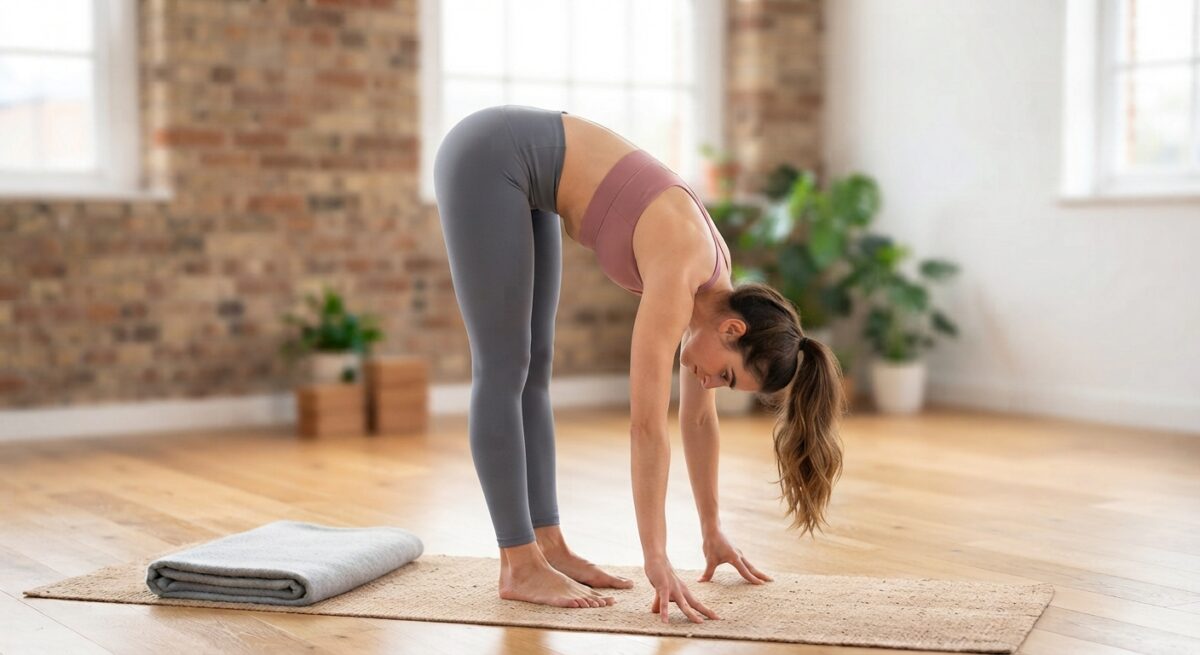
The psoas muscle is one of the deep muscles in the body and belongs to the iliopsoas muscle group, along with the iliacus. It begins around the lumbar spine in the lower back, passes through the trunk and pelvis, crosses the hip joint, and connects near the top of the femur, or thigh bone. Because of this muscle attachment and femur attachment, it links the upper body with the lower body. The psoas is a hip flexor and one of the primary hip flexors, so hip flexion lets it lift the thigh and helps with a thigh lift or leg lift.
You use this action during everyday movements, especially walking, climbing stairs, running, and when you lift your leg. From a movement perspective, I find it helpful to picture the psoas as a bridge between the spine and hip because its position explains why psoas function matters when planning psoas muscle stretches.
The psoas does more than move the leg. It contributes to movement coordination and helps coordinate movement between the spine, pelvis, and hip while supporting spine stabilization and pelvis stabilization during standing and sitting. The iliopsoas also works with the iliacus to support hip movement, while the psoas can assist with lateral bending, or side to side bending, and trunk bending.
This connection between the pelvis and spine influences postural alignment, posture, pelvic movement, spinal movement, movement mechanics, and hip movement mechanics. Understanding this iliopsoas function makes it easier to see why balanced stretching and movement can matter: the psoas is not simply a muscle that pulls the femur upward; it is part of a larger system that helps the body manage position, stability, and movement.
Benefits of Stretching the Psoas Muscle
- Pain relief: Regular psoas stretches may help reduce pain, discomfort, and stiffness linked with a tight psoas, muscle tension, and tight surrounding muscles, supporting pain prevention and pain reduction.
- Better hip mobility: Stretching can support hip mobility, lower back mobility, and pelvis mobility, giving you a better range of mobility for walking, exercising, and everyday hip movement.
- Improved muscle flexibility: A consistent stretching routine can encourage muscle flexibility, helping the psoas muscle feel more loose muscle and limber muscle while supporting comfortable movement during sports and workouts.
- Better posture: A flexible psoas can support the natural curvature of the spine, spine curvature, pelvic alignment, and proper posture during standing and sitting, which may help reduce some musculoskeletal issues.
- Improved pelvic stability: Balanced psoas flexibility may support pelvic stability and reduce the effects of a forward pelvic tilt, helping maintain better postural alignment and stability.
- Easier breathing: Better postural alignment can give the diaphragm more room to work efficiently, which may support efficient breathing, deeper breaths, and more relaxed breaths.
- Muscle relaxation: Gentle regular stretching can promote tension release and muscle relaxation. In my experience, controlled stretching often feels more useful than forcing a deep stretch, especially when the lower back or hips already feel tense.
- Stress support: Because the psoas is connected with the body’s stress response, gentle movement may encourage relaxation and a sense of calm, supporting stress management.
- Better mental well-being: The combination of physical benefits, relaxation, and regular movement can contribute to emotional well-being and mental health as part of a balanced routine.
- Greater body awareness: Slow stretching can improve body awareness and strengthen the mind-body connection, encouraging a more mindful approach to movement.
- Better daily movement: Adding psoas work to daily life, sports, and exercise mobility routines can support a balanced approach to movement, combining mobility, stability, walking, exercising, and general overall well-being.
What are the best psoas muscle stretches?
The best psoas stretches are gentle movements that place the psoas muscle into hip extension rather than forcing a deep stretch. Since the psoas muscles help with hip flexion, these movements can be useful when hip, front of hips, or lower back pain is related to tightness. I prefer controlled movement over forcing the body into a position; if a stretch causes sharp hip pain, lower back pain, or knee discomfort, stop and adjust the position.
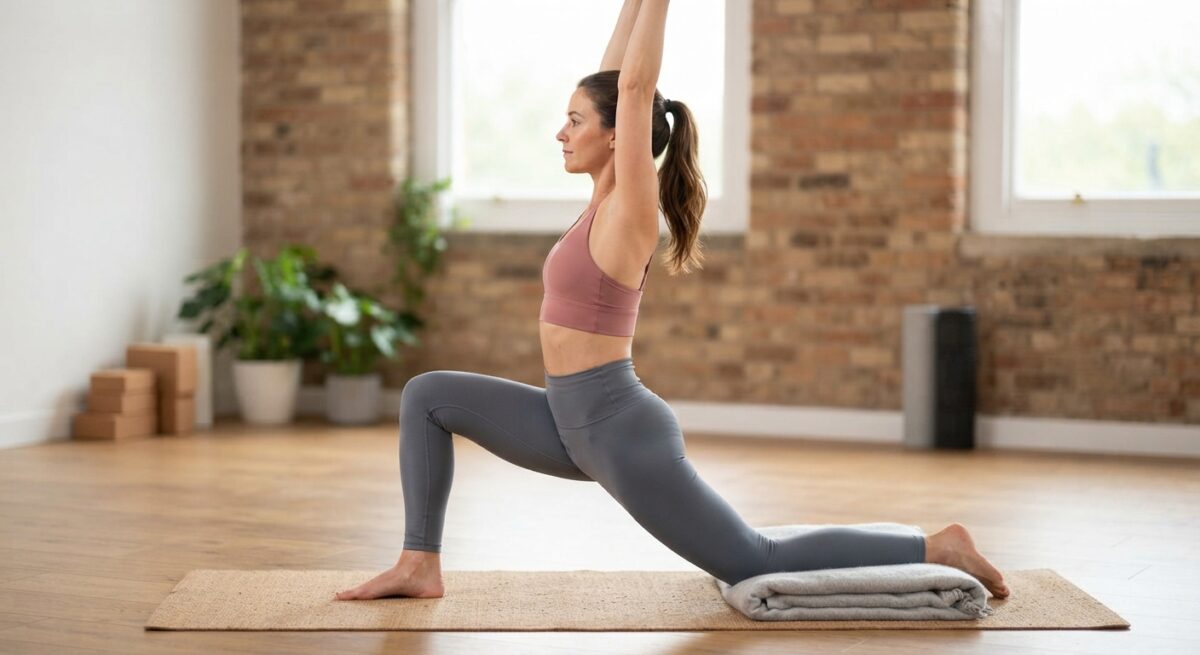
1. Kneeling Lunge Stretch
- Start in a half-kneeling position with your front leg forward and your back leg on the floor.
- Keep the foot flat, with the knee and ankle of the front leg forming a 90-degree angle.
- Slowly shift your weight forward and move your hips forward until you feel a stretch at the front of your hip.
- Keep the back leg comfortable. If there is knee discomfort, use a standing lunge instead.
- Gently squeeze the glute of the back leg to increase the stretch.
- Hold for 30 seconds, then relax.
- Repeat on the right side and left side, alternating sides, for three times on each leg.
2. Camel Pose
- Begin in a kneeling position with your knees hip distance apart and your shoulders back.
- Place your hands on hips and gently move your hips forward as you arch your back.
- This yoga posture stretches the front of the body and the iliopsoas muscles.
- For a deeper stretch, reach your hands toward your heels or ankles.
- Keep your glutes and thighs active while moving the hips forward.
- Because this creates spinal extension, anyone with a spinal condition should ask a professional before trying it.
- Hold for 30 seconds, then relax and repeat three times.
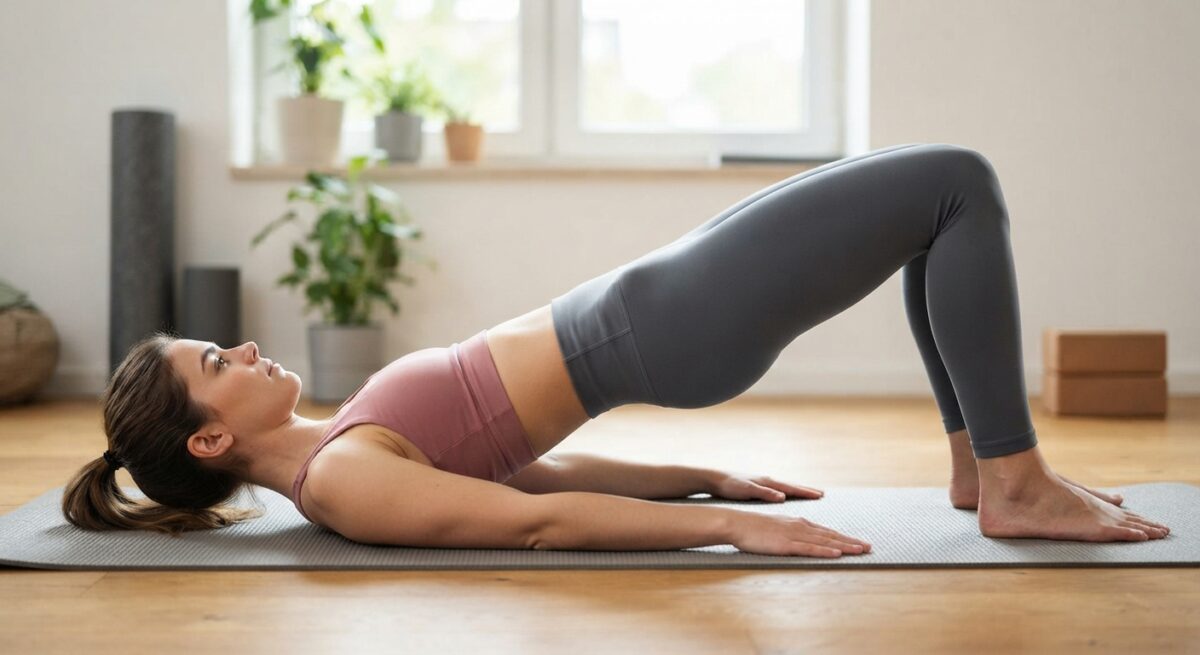
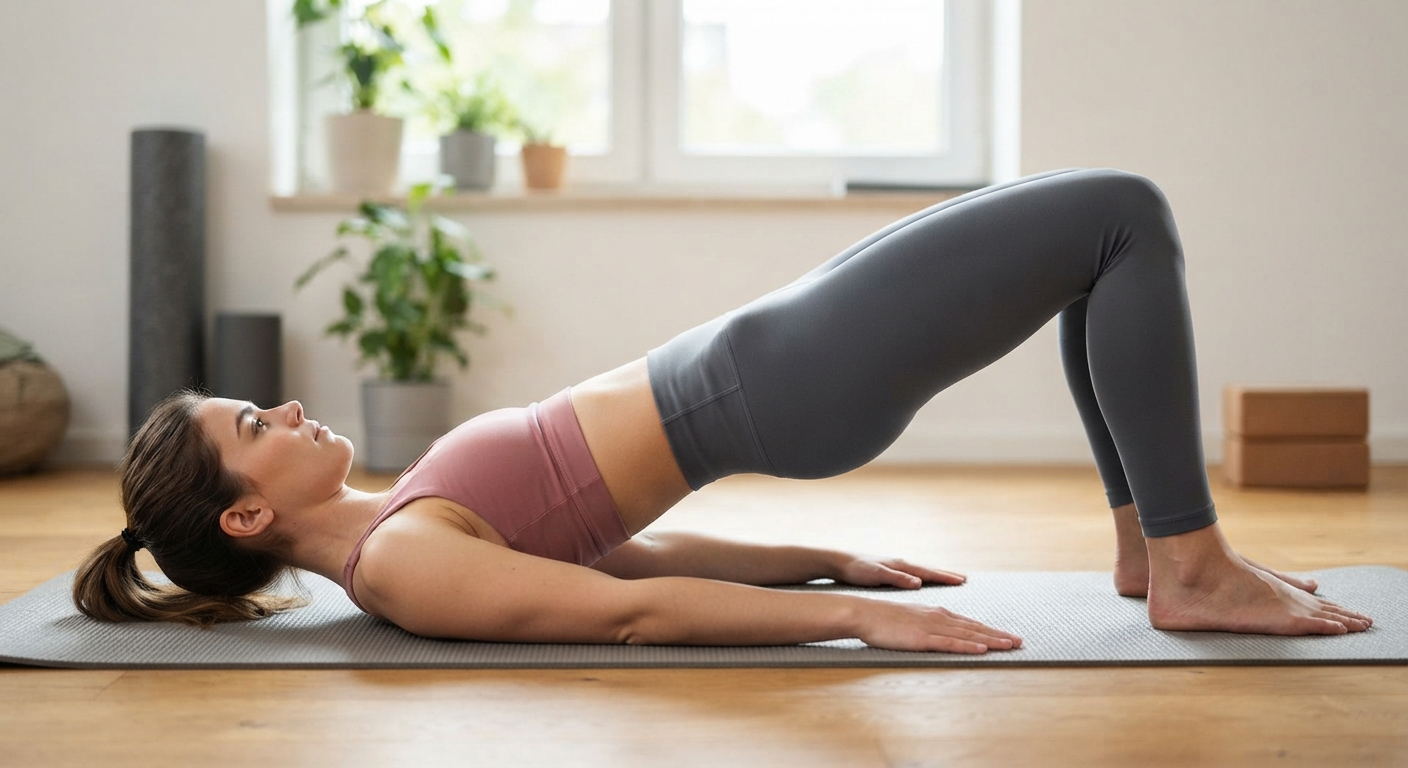
3. Glute Bridge
- Lie on your back with your knees bent and feet flat on the floor.
- Engage your core by gently pressing your lower back toward the floor.
- Keep your back straight as you lift hips into hip extension.
- At the top of the bridge, squeeze glutes to create a deeper stretch at the front of hips.
- This glute bridge exercise also supports spine stabilization and may help with muscle tension, hip bursitis, and discomfort involving the hip flexors.
- Hold for 5 to 10 seconds, then lower slowly to the starting position.
- Complete 15 to 20 repetitions.
4. Side-Lying Psoas Stretch
- Lie on your side with your legs straight and stacked legs on top of each other.
- Use your bottom arm for head support if needed.
- Bend your top leg and bring the heel toward your buttocks.
- Reach with your top hand and hold the ankle or foot.
- Pull the foot closer to the buttocks, then squeeze your glute and move the hip forward.
- Gently pull the leg back behind the body to increase the stretch.
- This position may support psoas release and stretch the quadriceps muscles in the thighs.
- Hold for 20 to 30 seconds and repeat three times on each side.
5. Half-Kneeling Hip Flexor Stretch
- Start in a half-kneeling position with one knee on the floor and the other foot flat in front.
- Keep your torso upright and use core engagement to stabilize the spine.
- Slowly move your weight forward toward the front leg.
- Continue until you feel a gentle stretch in the front of the hip of the kneeling leg.
- Keep the movement controlled instead of forcing hip extension.
- Hold for 20 to 30 seconds, then switch sides and repeat.
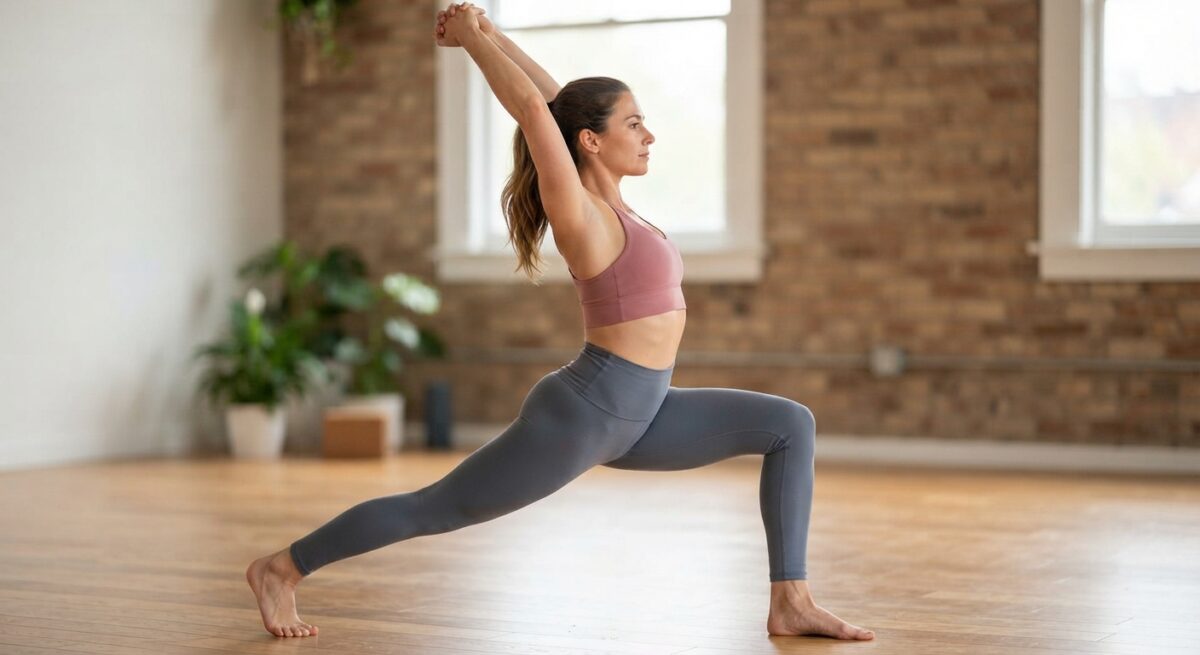
6. Standing Psoas Stretch
- Stand with your feet hips’ width apart.
- Step one foot back and bend both knees into a lunge position.
- Keep your torso upright and your pelvis tucked so you do not end up overarching your lower back.
- Move gently forward until you feel the stretch at the front of the hip of the back leg.
- Hold for 20 to 30 seconds.
- Switch sides and repeat.
7. Low Lunge With Quad Stretch
- Start in a low lunge with quad stretch, keeping one knee on the floor and the other foot flat in front.
- Reach the hand on the same side as the back leg toward the ankle or use an ankle grasp.
- Pull the foot gently toward the glute to deepen the stretch through the front of the hip and quadriceps.
- Keep your chest lifted and hips square throughout the movement.
- Avoid pulling hard; the goal is controlled stretching of the psoas and quadriceps.
- Hold for 20 to 30 seconds, then switch sides and repeat.
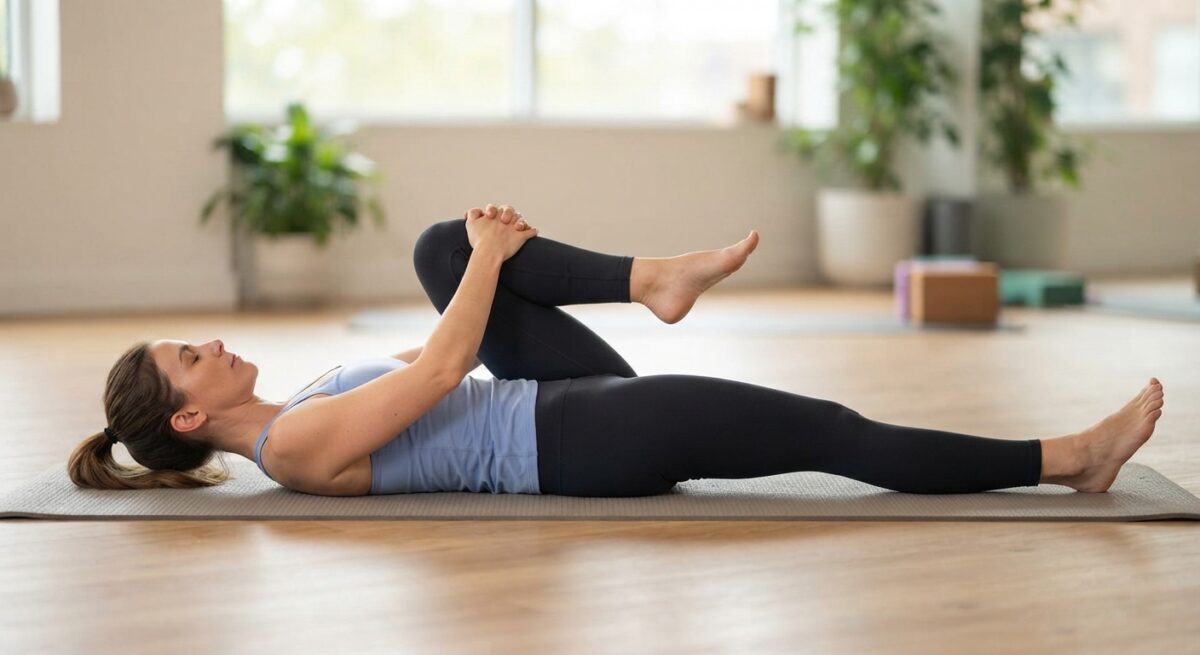
8. Supine Psoas Stretch
- Begin lying on your back with both knees bent and feet flat on the floor.
- Bring one knee toward the chest and hold it with both hands.
- Slowly straighten the other straight leg along the floor.
- You should feel a stretch through the front of the hip and possibly the front of the thigh.
- Keep your body relaxed and avoid forcing the hip extension.
- Hold for 20 to 30 seconds, then switch sides and repeat.
9. Seated Psoas Stretch
- Sit on the edge of a chair or bench with your feet flat on the floor.
- Extend one leg straight out with the heel resting on the ground.
- Lean back slightly while lifting the toes of the extended leg toward the ceiling.
- Keep the knee straight and maintain a comfortable position.
- You should feel the stretch in the front of the hip of the extended leg.
- Hold for 20 to 30 seconds, then switch sides and repeat.
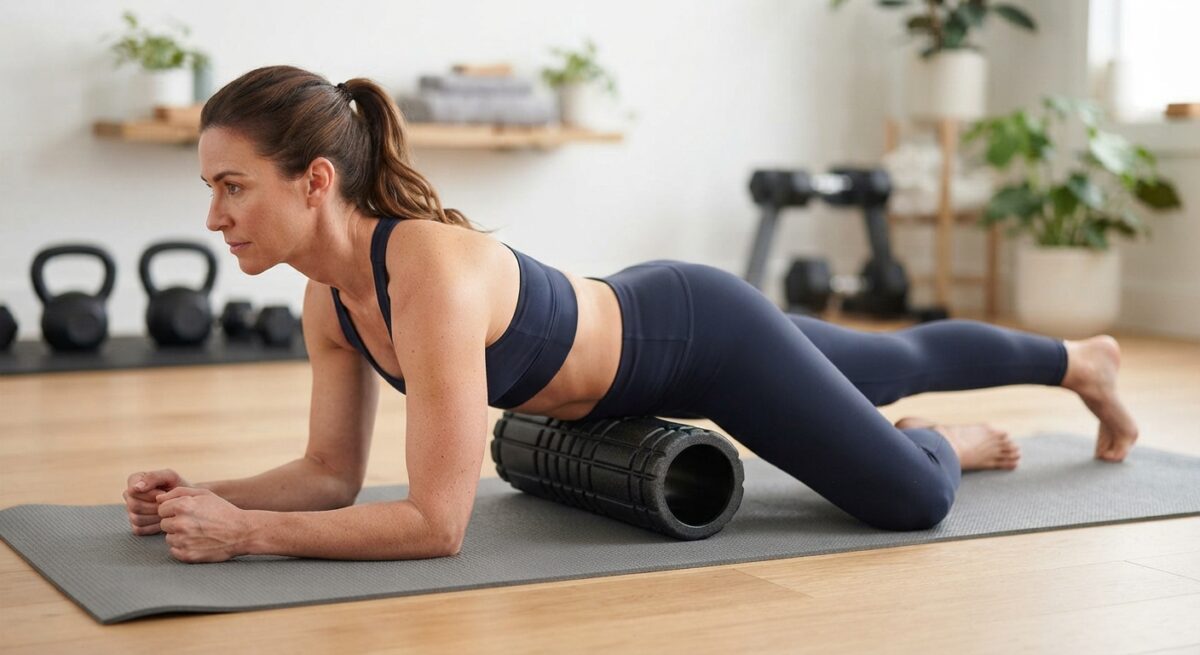
10. Psoas Release With Foam Roller
- Lie face down with a foam roller placed horizontally under the pelvis.
- Support your upper body with your forearms and elbows.
- Slowly roll back and forth from the bottom of the rib cage toward the top of the hip bone.
- Use gentle pressure and focus on areas of tightness or discomfort rather than pressing aggressively.
- Continue the rolling movement for 1 to 2 minutes, then rest.
- This technique is different from active stretching, so keep the pressure controlled and comfortable.
What Causes Psoas Muscle Tightness or Pain?
Psoas muscle tightness and psoas tightness can build slowly, so you may not notice the problem until pain, tension, or discomfort appears. From a practical movement perspective, the psoas often reacts to how you sit, move, train, and handle stress. These are some common causes:
- Prolonged sitting: Office workers may spend long periods in a seated position because of desk jobs, long commutes, or hours on the couch. When the hip flexors stay seated for too long, they remain in a shortened position, which can contribute to muscle shortening, muscle stiffening, psoas tightness, and imbalances.
- Inactivity and weak muscles: Inactivity can contribute to a weak psoas and reduced movement. A muscle that does not get enough regular activity may become both tight and weak, making everyday standing and movement less comfortable.
- Overuse or improper use: Overuse, improper use, and excessive strain can also affect the psoas muscle. Running, cycling, and other sports can repeatedly load the muscle, particularly when proper stretching and strengthening exercises are missing.
- Poor posture and alignment: Poor posture and poor alignment during sitting, standing, or physical activity can place extra demand on the psoas muscle and surrounding areas. Over time, this may contribute to chronic pain, stiffness, and a painful psoas.
- Stress and emotional tension: Stress, emotional tension, and difficult emotional states can encourage persistent muscle contraction. This can be part of the body’s natural response to perceived threats, but ongoing stress may leave the psoas feeling chronically tight.
- Tension around the hip and pelvis: When the psoas becomes tight and sore, symptoms may be felt around the lower back, buttocks, groin, hip, and pelvis. Finding the root of discomfort matters because these symptoms can have more than one cause.
- Lifestyle habits: Modern lifestyles can combine prolonged sitting, low activity, repetitive exercise, and stress. Small lifestyle adjustments, along with appropriate targeted stretching, may help reduce tension and improve comfort.
Summary
The psoas muscle works as an important hip flexor and spine stabilizer, but prolonged sitting and sedentary behavior can contribute to tight psoas, weak psoas, and muscle imbalances. Regular psoas exercises can support strength, flexibility, and overall psoas flexibility. In my experience, choosing movements based on your fitness level, needs, and current physical activity is more useful than chasing the deepest stretch. The main stretching benefits come from using the right intensity and building a steady stretching routine.
A good routine can combine dynamic movements and static stretches. Leg swings and lunges can work well for warming up, improving blood flow, supporting muscle elasticity, and injury prevention, while a low lunge or seated butterfly stretch can help lengthen the psoas muscle and ease accumulated tension.
Whether you begin with simple exercises or progress toward advanced exercises, consistency and regular stretching matter. Use your body signals to control stretch intensity, avoid overexertion, and build a safe stretching practice and effective stretching practice. The seven psoas stretch exercises can therefore form a comprehensive approach to muscle preparation and mobility, with each exercise adjusted to your individual target and needs.
FAQ’s
What does the psoas muscle do?
The psoas muscle connects the lower spine to the thigh bone and supports leg lift, stabilization of the spine, spine stabilization, and smooth hip movement. Good psoas function can help you move with better control during everyday activities.
Can a tight psoas cause hip pain?
Yes. A tight psoas or poorly functioning psoas may affect pelvic position and hip mechanics, which can increase stress around the hip joint and contribute to hip pain. Gentle stretching may help when stiffness is limiting comfortable movement.
Why does sitting make the psoas tight?
Sitting keeps the hip in hip flexion for long periods, which can encourage muscle shortening in the hip flexor muscles. Over time, this may reduce hip mobility, especially when daily movement is limited.
Can stretching the psoas help back pain?
Stretching tight hip flexors may support mobility and reduce tension linked with lower back discomfort and back pain. I generally view stretching as one part of the plan, alongside strength exercises, rather than relying on stretching alone.
How long does it take to strengthen the psoas?
Many people may notice improvements in hip control within a few weeks when consistent stretching, consistent strengthening, and psoas strengthening are performed regularly. Exercise consistency matters more than trying to progress too quickly.