The Game Plan:
For seniors after 60, staying active does not have to mean running on the pavement or forcing yourself through sore joints. Low-impact cardio exercises are practical options when knees, hips, or the back need more care. In my experience, the best cardio plan is one that feels gentle on the joints but remains effective enough to support heart health, stamina, and energy levels. This type of aerobic exercise raises your heart rate without putting the same stress on your body as high-impact workouts, making it a joint-friendly choice for improving overall fitness and well-being.
As aging brings changes in time, resources, hormonal changes, body changes, and sometimes injury, it can become harder to stay fit. Activities you once enjoyed, such as Zumba or heavy lifting at the gym, may no longer feel safe or comfortable. Regular low-impact exercises can still help with healthy weight, reduce the risk of serious health problems such as heart disease and stroke, and support daily movement and health without demanding a long recovery. The key is to build a comfortable routine and aim for activity every week, choosing exercise that works with your body rather than against it.
| ⚠️ Fitness Disclaimer: This fitness disclaimer explains that the information in this article is for informational purposes only, not a substitute for professional medical advice, diagnosis, or treatment. Before starting an exercise program, consult a qualified healthcare professional, especially if you have an existing medical condition, an injury, or other health concerns. |
Why Low-Impact Cardio Is Beneficial for Seniors
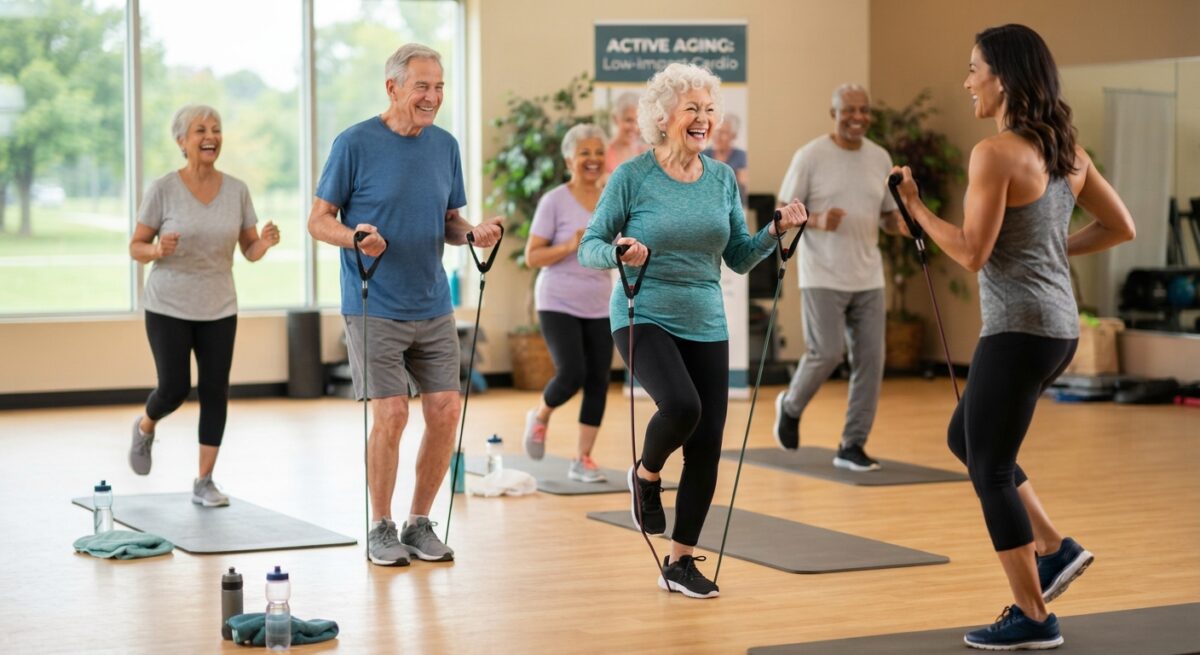
For seniors and older adults, low-impact cardio is a smart way to stay active without putting unnecessary jarring forces on the joints. The goal is not to compete with intense exercise, but to choose a sustainable routine that supports everyday life and helps older people reach their activity targets.
- Supports heart health: Regular aerobic activity can improve cardiovascular health, blood circulation, and circulation while helping maintain a healthy heart rate. Over time, this supports a strong heart, healthier blood pressure, and may reduce the risk of heart disease. Current research consistently links regular physical activity with better heart health.
- Improves mobility and flexibility: Activities such as gentle stretching routines can improve flexibility and help maintain a full range of motion. Better mobility can make ordinary movements easier and support physical independence.
- Helps with balance and fall prevention: Better balance, stronger leg strength, and improved coordination can reduce the risk of falls. This can also increase confidence when walking on uneven ground or moving around the home.
- Builds useful everyday endurance: A regular moderate session can gradually improve endurance. These functional gains matter day to day because activities such as getting up from a chair or completing a grocery run may feel easier with better fitness.
- Supports mental well-being: Regular physical activity can help manage stress, anxiety, and depression. Exercise encourages the release of endorphins, which act as natural mood boosters, while the ability to complete a workout can create a sense of accomplishment and greater capability. These effects can support overall mental health and improve mood.
- Encourages social connection: Exercise classes and physical group activities give older adults a chance to build social engagement and meaningful interpersonal connections. This can be especially valuable for reducing loneliness and isolation.
- May support better sleep: Keeping a regular movement routine can positively affect sleep. When daily activity becomes consistent, many people find that improved physical tiredness, reduced stress, and a better mood make healthy sleep easier to maintain.
- Makes regular exercise easier to maintain: Low-impact activity can be repeated without the same joint stress associated with harder workouts. Frequency matters, so exercising four times a week with a manageable routine may be more useful than doing one punishing session and stopping after a fortnight. This is one reason low-impact exercise can be a practical long-term choice for seniors.
Low Impact Cardio Exercises
For seniors, the best low-impact cardio exercises are those that feel comfortable, controlled, and easy to repeat. I usually recommend starting slowly and focusing on good movement rather than speed. The following options cover different fitness levels, including people who need extra joint support or have mobility challenges.
Walking
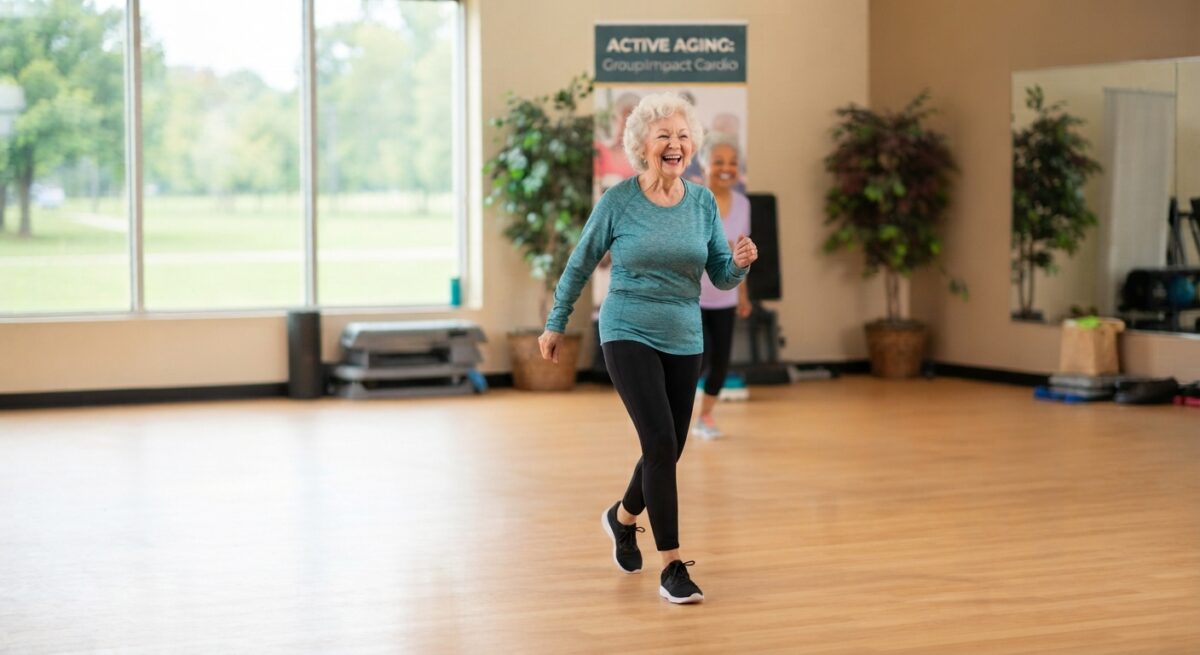
Walking is one of the easiest and most accessible forms of low-impact cardio. It supports cardiovascular health, improves mobility, and helps seniors stay active.
How to do it:
- Start with a comfortable pace and walk for a short period.
- Walk indoors or outdoors on safe, pleasant walking paths in your community.
- Gradually increase your time as your fitness improves.
- Make daily exercise part of your wellness routines, while avoiding anything that increases your risk of injury.
- At The Pointe at Lifespring, residents can use walking paths as part of a regular activity routine.
Resistance Training
Resistance training can fit into a low-impact cardio routine and help build muscle strength, balance, and coordination without placing excessive pressure on the joints.
How to do it:
- Use light weights, resistance bands, or your body weight.
- Choose exercises that work different muscle groups.
- Keep movements slow and controlled rather than forcing heavy resistance.
- Seniors can use guided resistance training to make exercises safe, effective, and adaptable to their individual needs.
- Stop if an exercise causes unusual pain or discomfort.
Chair Exercises
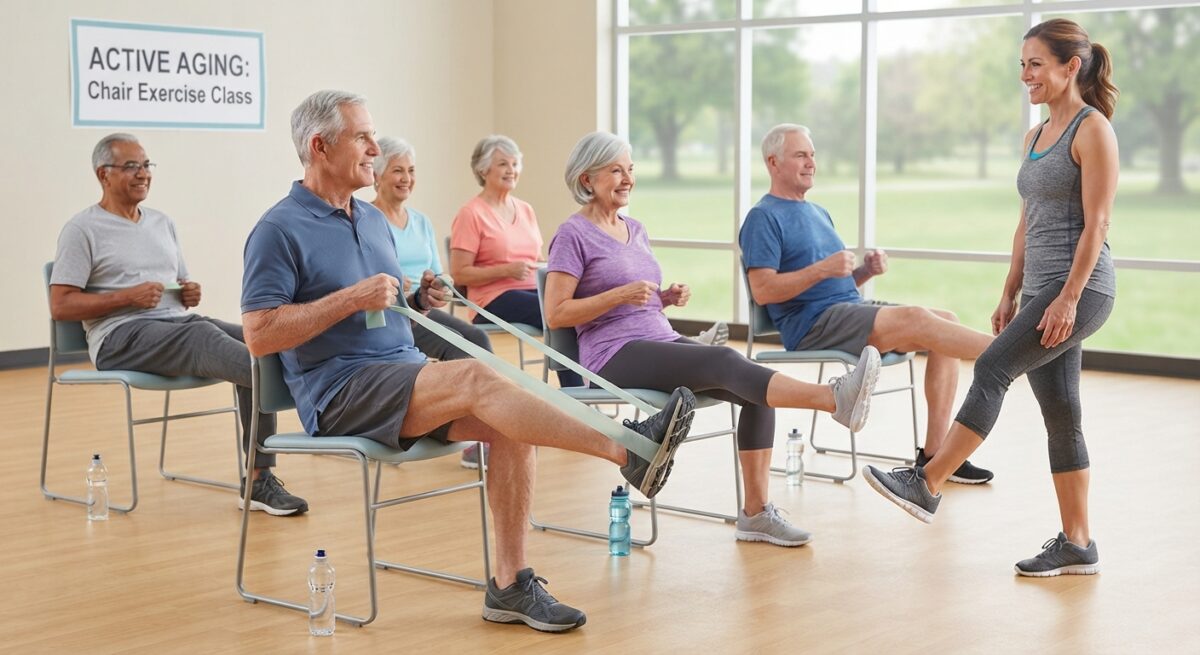
Chair exercises are useful for seniors with limited mobility who want to stay active without standing for long periods. Chair-based cardio also provides extra support.
How to do it:
- Sit upright in a stable chair with your feet supported.
- Perform seated marches by lifting one knee and then the other.
- Add leg lifts and gentle arm movements.
- Keep the movements controlled to encourage better circulation and keep your muscles engaged.
- Use a sturdy chair and keep the surrounding area clear.
Yoga
Yoga combines physical movement, breathwork, and meditation. Gentle poses can work the core and other large muscle groups while supporting flexibility.
How to do it:
- Begin with gentle stretching and simple poses.
- Use modified poses if you are a beginner practitioner or have mobility challenges.
- Coordinate slow movements with comfortable breathing.
- If a traditional yoga routine feels difficult, try chair yoga.
- Avoid forcing your body into a pose; the goal is controlled movement and comfort.
Cycling
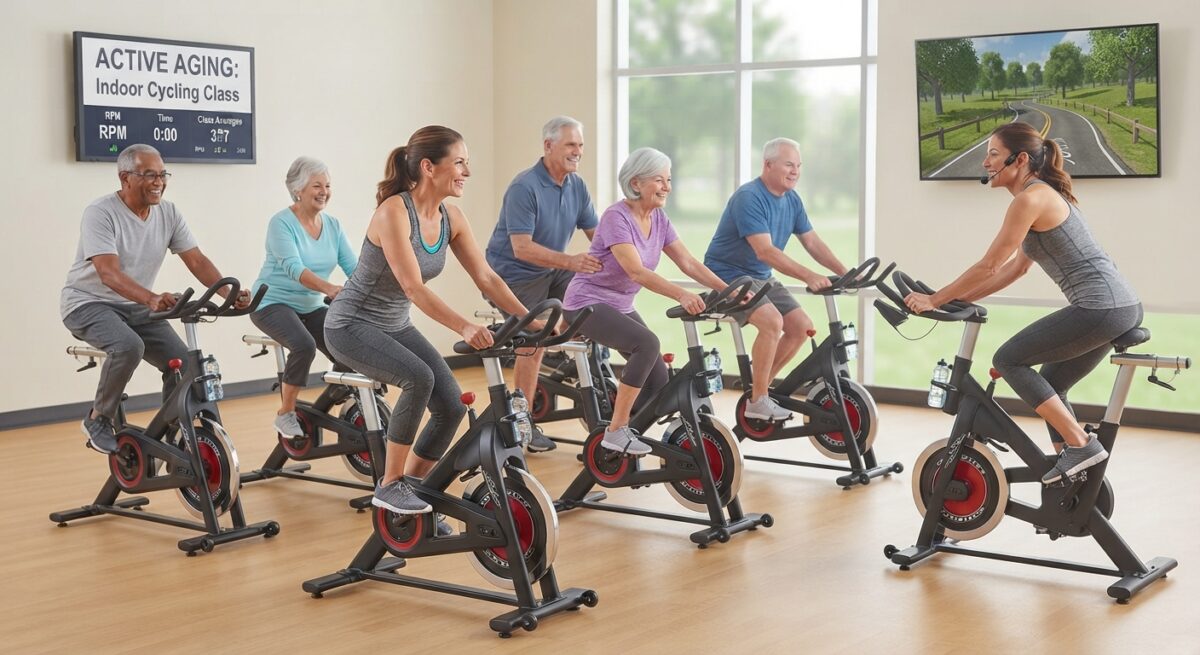
Cycling is a low impact activity that gets older adults moving while offering a chance to exercise outdoors. Modern manufacturers also produce comfortable, lightweight bicycles for older adults.
How to do it:
- Choose a bicycle that feels stable and comfortable.
- Begin riding on a flat, familiar route.
- Keep your pace easy enough to maintain control.
- Electric bikes (e-bikes) can provide extra assistance when hills or longer distances become challenging.
- Increase riding time gradually rather than trying to go too far at first.
Swimming
Swimming is a useful low impact aerobic exercise for seniors because the water supports the body and can be gentle on the bones and joints. It can work the muscle, raise your heart rate, support healthy blood pressure, and benefit mental health.
How to do it:
- Start with easy laps in a comfortable pool.
- Try a water aerobics class if swimming laps is not appealing.
- Use the water to stay cool and soothe joints while exercising.
- Check community centers for swimming fitness programs designed for seniors.
- These programs may be available year-round, rather than only during summer.
Rowing
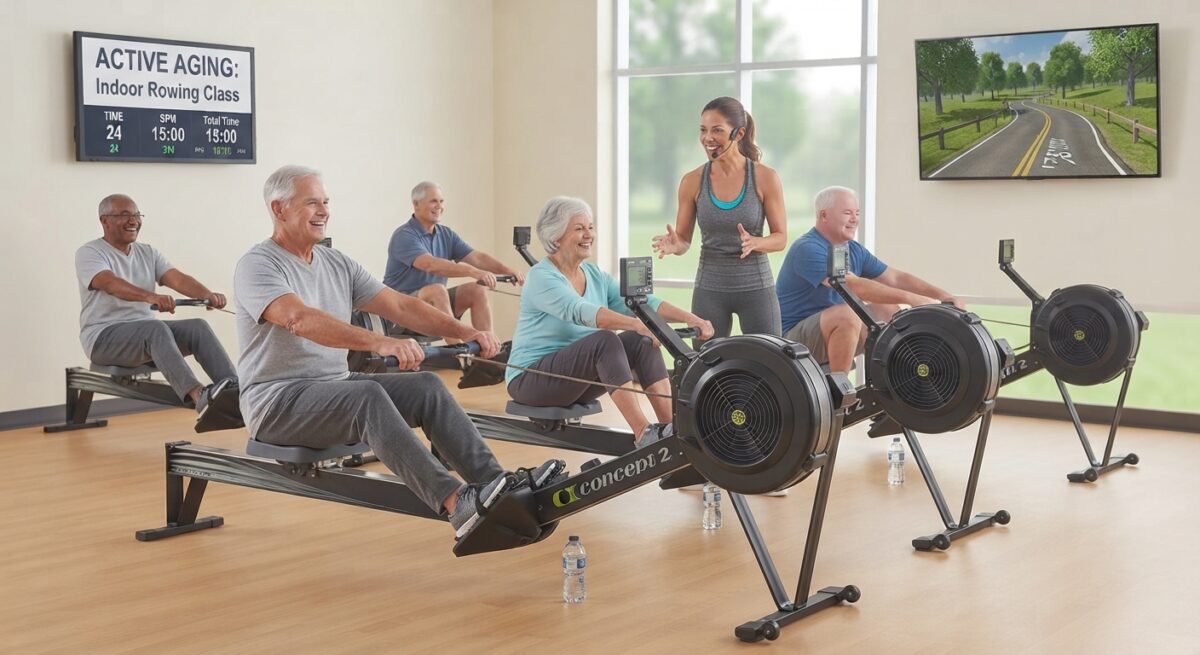
Rowing can strengthen the upper body while using a simple resistance band setup. It is particularly useful when you want a seated movement that works against gentle resistance.
How to do it:
- Sit comfortably on a chair.
- Place the band under the bottom of your feet.
- Hold both ends of the band.
- Bend your elbows and pull the ends toward your body.
- Move slowly to strengthen the upper body without jerking the band.
Leg Lifts
Leg lifts are a simple exercise that can be adapted for a gentle routine. They can be performed with a band placed around the ankles for added resistance.
How to do it:
- Lie on your side with the band positioned above your ankles.
- Slowly lift the top leg.
- Pause briefly at the top of the movement.
- Lower your leg back to the resting position.
- Repeat 7-11 times, then switch legs.
- Keep the movement slow and controlled rather than lifting higher than is comfortable.
Dancing: Fun and Fitness Rolled into One
Dancing makes exercise more joyful while helping raise your heart rate, improve coordination, and add fun to a regular routine. Styles such as ballroom and line dancing offer different ways to stay active, and there is usually a style to suit different preferences.
How to do it:
- Look for beginner dance classes or themed days at neighborhood centers.
- Try online tutorials for dancing at home.
- Start with simple steps and gradually build your exercise routine.
- Meet new people through group classes or social dance sessions.
- Partner dancing can add a valuable social component while keeping you moving.
Summary
For older adults, low-impact cardio and low impact exercises such as walking, yoga, and resistance training offer a simple way to stay physically active while supporting the joints, mobility, balance, coordination, cardiovascular fitness, and strength. In my experience, the best activity is one that matches your personal needs, feels fun, and is sustainable, whether that means a morning swim, time on a dance floor, or a neighborhood stroll.
Regular movement can support mental well-being, mental health, staying fit, an independent life, and better management of chronic conditions, while helping protect the heart, build stamina, and improve quality of life; speak with your doctor about suitable exercises when needed. Low value is not what low-impact means: with joint support and daily movement, even ten minutes or two rounds can be a manageable entry point, because the body responds to regular effort and consistent activity over weeks, rather than occasional bursts of intensity.
Over time, simple movement can make everyday tasks, such as climbing a flight of stairs, walking through a market, or catching your breath, feel easier when practised every day.
FAQ’s
How often should seniors do low-impact cardio?
Seniors can start a low-impact cardio workout at home for three days a week after a long break, then build toward every day as the routine becomes comfortable. For adults 65 and older, a common target is 150 minutes of moderate aerobic activity, such as 30 minutes for five days, or 20 to 25 minutes on most days. Add muscle-strengthening and balance practice as well.
Is low-impact cardio enough to prevent muscle loss?
Cardio supports heart health, stamina, and aerobic fitness, but it does not fully address muscle loss. Resistance training helps strengthen the body and maintain muscle tissue. A practical routine can combine low-impact cardio with resistance work for better overall fitness.
What should seniors do if their knees hurt during exercise?
If the knees feel uncomfortable, try seated marching or sit-to-stand before harder movements. Avoid locking the knee, and stop if you develop sharp pain or worsening pain. If joint pain continues, a doctor or physical therapist can provide appropriate medical guidance, especially with a diagnosed condition.
Can low-impact cardio help with weight management?
Yes. Moderate-intensity cardio can burn calories and support metabolic function over time. Because low-impact routines are often sustainable and may require fewer recovery days, they can make regular movement easier to maintain. With consistent effort, some people notice early results in two to three weeks, although progress varies.
Is a rebounder safe for seniors with joint pain?
A rebounder has a soft surface that may feel easier than hard ground because it can reduce peak impact during landing. However, it still requires standing and balance, so a support handlebar and cautious start are important. Unlike running or jumping, the softer surface can reduce jarring landing forces, but individual circumstances matter.
What equipment-free cardio can seniors do at home?
There are several equipment-free choices. Brisk walking requires only comfortable shoes, while seated chair cardio needs a sturdy chair. Other options include marching in place, stair walking at a gentle pace, or dancing around the kitchen to favorite songs. The best option is often the one that gets you moving safely and regularly.